For older adults with diabetes, there is no single normal blood sugar value. The right target depends on general health, independence, other medical conditions, life expectancy and, above all, the risk of hypoglycemia.
Three ranges of values should be considered separately: values that diagnose diabetes, treatment targets, and values at which there is acute danger.
Why there is no single standard value
Age alone is not enough to set a target. Two 80-year-olds can need very different goals: a physically active, mentally sharp person with few health conditions can be treated differently from a frail person with dementia, kidney failure and irregular food intake. German and international recommendations share this view.
The current German National Disease Management Guideline for type 2 diabetes is valid until May 2028 and gives a guideline range of 6.5 to 8.5 percent for HbA1c. HbA1c is the long-term blood sugar value: it shows average blood sugar over the previous 8 to 12 weeks or so. The German Diabetes Society also names this range in its 2025 practice recommendation. The target is set together with the treating doctor and is based on the individual situation, not on age alone.
Which values are measured
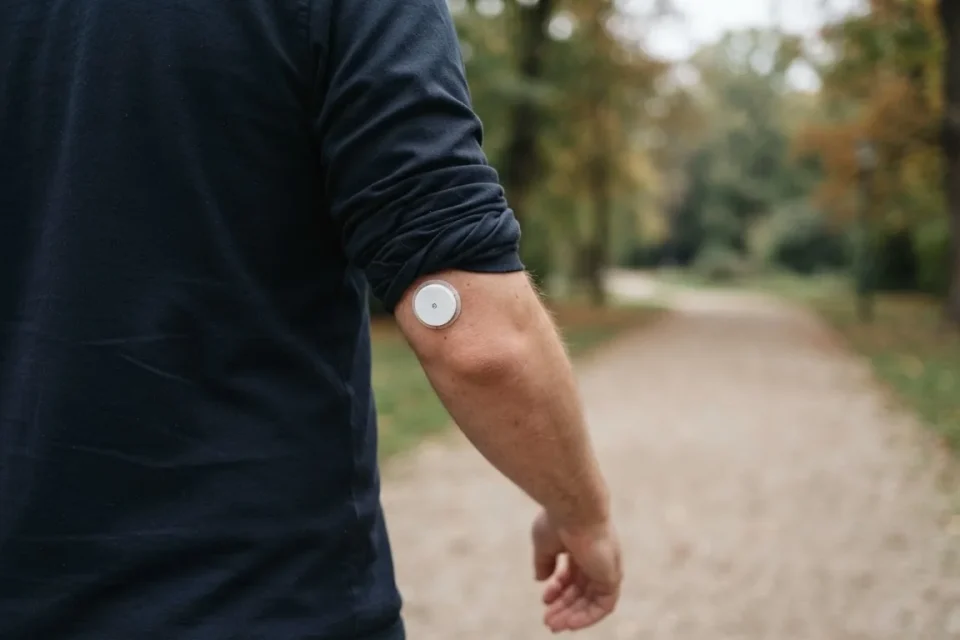
Four measurements matter in everyday life: fasting blood sugar, blood sugar after eating, HbA1c and, for some people, continuous glucose monitoring (CGM), in which a sensor continuously measures blood sugar levels.
As a general guide, a fasting blood sugar of 100 to 125 mg/dl and a value of 140 to 199 mg/dl one to two hours after eating apply. However, these ranges are not rigid treatment targets for older people with diabetes. They must be considered together with HbA1c, symptoms and treatment.
HbA1c is the most important long-term value, but it does not show short-term fluctuations. A good HbA1c does not rule out that a person repeatedly has dangerously low values. In older adults, HbA1c can also be less reliable, for example with severe kidney disease, blood loss, blood transfusions or conditions that change red blood cell turnover. In such situations, direct blood sugar measurements or a CGM system help with assessment.
HbA1c targets by health status
For relatively fit older adults with few, stable health conditions, good mobility and intact cognition, an HbA1c target of about 7.0 to 7.5 percent can be appropriate. However, a lower value is not automatically better. It only makes sense if it can be reached without severe or recurrent hypoglycemia, without excessive medication burden and without unduly restricting daily life.
For multiple chronic conditions, limited ability to manage daily activities, or mild to moderate cognitive impairment, less strict targets are recommended. The American Diabetes Association (ADA) gives an HbA1c below 8.0 percent here. The German guideline places such situations in a broader range that can extend to about 8.5 percent. This value is not a blanket recommendation for everyone over 70, but a possible guide when health is less favorable.
With a very complex health status, advanced dementia or limited life expectancy, the focus is no longer on getting the HbA1c as low as possible. The aim here is to avoid hypoglycemia and symptomatic high blood sugar. Treatment goals can be based more on thirst, frequent urination, weakness, dehydration, infections, wound healing and quality of life.
Why hypoglycemia is dangerous
A blood sugar value below 70 mg/dl is considered hypoglycemia. In older adults, the typical warning signs such as trembling, restlessness or palpitations may be absent. Instead, hypoglycemia shows up as confusion, weakness, dizziness, unsteadiness when walking or unusual behavior. This increases the risk of falls, injuries and subsequent complications. The German Diabetes Society therefore names avoiding hypoglycemia as a priority treatment goal.
People on insulin therapy or taking sulfonylureas, a group of diabetes medications that lower blood sugar and can cause hypoglycemia, are at particular risk. Other risk factors include irregular or reduced food intake, impaired kidney function, acute illness, dementia and taking several medications at the same time. If severe hypoglycemia recurs, the treatment should be reviewed and, where appropriate, simplified or made less strict. If the person is unconscious, has seizures or can no longer eat or drink on their own, call the emergency number (112) immediately.
Avoiding high values too
A less strict target does not mean accepting very high values in the long term. Marked high blood sugar can contribute to thirst, frequent urination, dehydration, weakness, infections and poorer wound healing. Even with a very complex health status, symptomatic high blood sugar should be avoided.
With increasing age, treatment goals often become less strict, but not arbitrarily so. Older people should not generally have higher blood sugar values. What matters is the balance between protection from long-term damage and avoiding acute low and high blood sugar.
When medical evaluation is needed
Different standards apply to diagnosing diabetes than to treating it. As a rule, two abnormal lab values are needed to diagnose type 2 diabetes reliably. For borderline values, the diagnosis should be rechecked over time. Individual measurements with a home device are not enough for a reliable diagnosis, nor for adjusting a prescribed treatment on your own.
HbA1c rises somewhat with age even in people without diabetes. For people without diabetes aged 60 and over, reference ranges of up to about 6.4 or 6.6 percent are given, depending on the population group. These reference ranges are not treatment targets and do not replace medical diagnosis. Anyone who notices unclear values or symptoms such as intense thirst, frequent urination or unexplained tiredness in themselves or a relative should see a doctor.