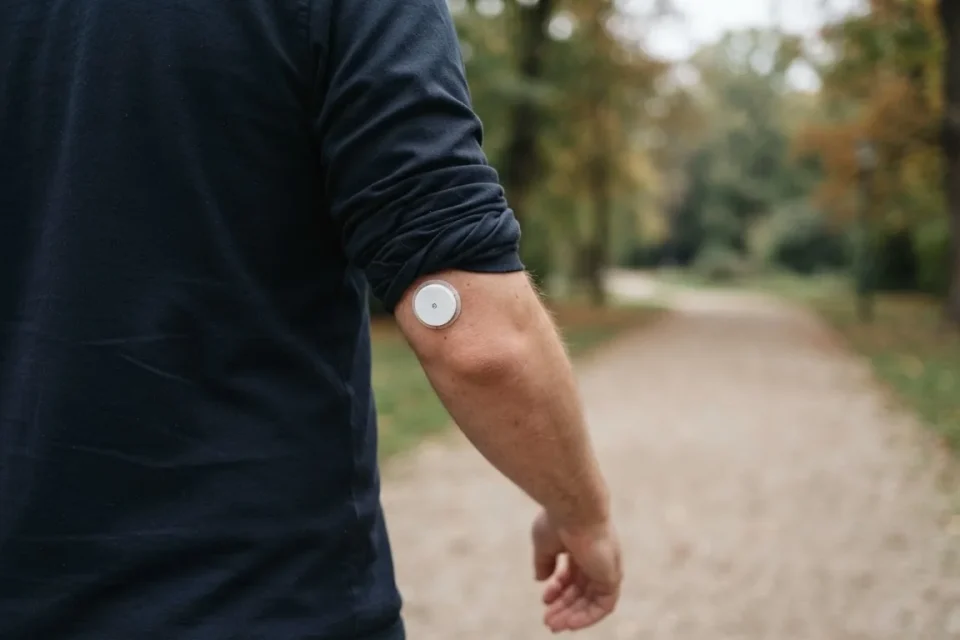
Blood sugar levels fluctuate throughout the day: they rise after eating, fall between meals, and are influenced by physical activity, medication, sleep and stress. These fluctuations are normal, but they are often more pronounced in people with diabetes. When interpreting a reading, timing matters: fasting, before a meal or after a meal. There is no universal ideal value; what a reading means depends on the individual situation, any diabetes diagnosis and personal treatment goals.
Why Blood Sugar Fluctuates During the Day
The body regulates the concentration of glucose in the blood through hormones, above all insulin. After a meal, glucose from food enters the bloodstream and the level rises. The hormone insulin causes cells to take up glucose, and the level falls again. In people with diabetes, this regulation is impaired, so levels can rise higher and stay elevated for longer.
Other factors also affect blood sugar. Physical activity often lowers it because the muscles use up glucose. Stress and illness can raise it, as can lack of sleep. Medications act in different directions. A single rise after eating is therefore not a sign of illness, and a single normal reading does not give a general all-clear. Only the pattern across several measurements and days provides insight.
How Levels Change Over the Day
There is no fixed standard curve for every hour of the day. However, levels follow typical patterns that can be described.
At night and in the early morning hours, levels remain relatively stable in many people. In some people with diabetes, however, glucose rises in the early morning hours or up to breakfast. This pattern is known as the dawn phenomenon. It does not occur in everyone, and the specialist literature discusses various possible causes, including the release of growth hormone and increased glucose production by the liver. No single universal explanation can be drawn from this.
A standardized fasting value is determined in the laboratory in the morning, that is, before breakfast and after at least eight hours without food. A measurement taken at home in everyday life cannot automatically be equated with this laboratory value, because the conditions are different.
After breakfast, lunch or dinner, glucose generally rises. In people with diabetes, the peak is often reached about one to two hours after the start of the meal. This is a rough guide, not a fixed point in time for every person and every meal. A brief rise after eating cannot be judged in a blanket way.
Between meals, levels fall again. How much and how quickly depends, among other things, on the amount and composition of the food, physical activity, medication and the time since the last meal. Exercise, stress, illness and little sleep can change levels in different directions; there is no reliable prediction for every person.
Reference Values for Diabetes
For many non-pregnant adults with diabetes, the American Diabetes Association (ADA) gives general guideline values in its Standards of Care 2026. These values are not diagnostic thresholds and not targets for people without diabetes. Nor do they automatically apply to pregnant women, children or every individual with diabetes.
| Time of measurement | General guideline |
|---|---|
| Before a meal | 80–130 mg/dl (4.4–7.2 mmol/l) |
| One to two hours after the start of the meal | below 180 mg/dl (below 10.0 mmol/l) |
The ADA points out that stricter or less strict targets may be appropriate. Individual target values depend on factors such as age, coexisting conditions, treatment risks and the type of treatment. What is a good target for one person may be too strict or too lenient for another.
With continuous glucose monitoring (CGM), in which a sensor measures the level continuously, time in range is often considered. For many non-pregnant adults with diabetes, the ADA gives a general CGM target of spending more than 70 percent of the time in the range of 70–180 mg/dl (3.9–10.0 mmol/l). For older adults with complex health status, the standard gives a lower guideline of more than 50 percent. These figures are also population-based guidelines, not an assessment of an individual daily profile.
Diagnostic Values Are Not Everyday Targets
Diabetes is diagnosed through standardized laboratory tests, not with a blood glucose meter for home use. The German National Disease Management Guideline for Type 2 Diabetes describes laboratory thresholds for diagnosis, such as fasting plasma glucose and values in the oral glucose tolerance test. In this test, the person drinks a defined sugar solution, and blood sugar is measured at set times.
These diagnostic values cannot be directly applied to self-measurements in everyday life. A value from a home test after an ordinary meal cannot be equated with a value from the standardized glucose test. The measurement conditions differ. A single abnormal reading from everyday life does not allow a diagnosis. Conversely, a single normal value does not rule out diabetes.
When Readings Are Worth Discussing
Recurring abnormalities, marked fluctuations or uncertainty about how to interpret readings should be discussed with healthcare professionals. This applies especially if values repeatedly fall outside the individually agreed target range or if symptoms such as intense thirst, frequent urination, fatigue or unexplained weight loss occur.
Anyone new to self-monitoring should discuss their own target values with their doctor. The general guideline values do not replace an individual target. Even those without a diabetes diagnosis who measure abnormal values should have them medically evaluated rather than drawing their own diagnosis.