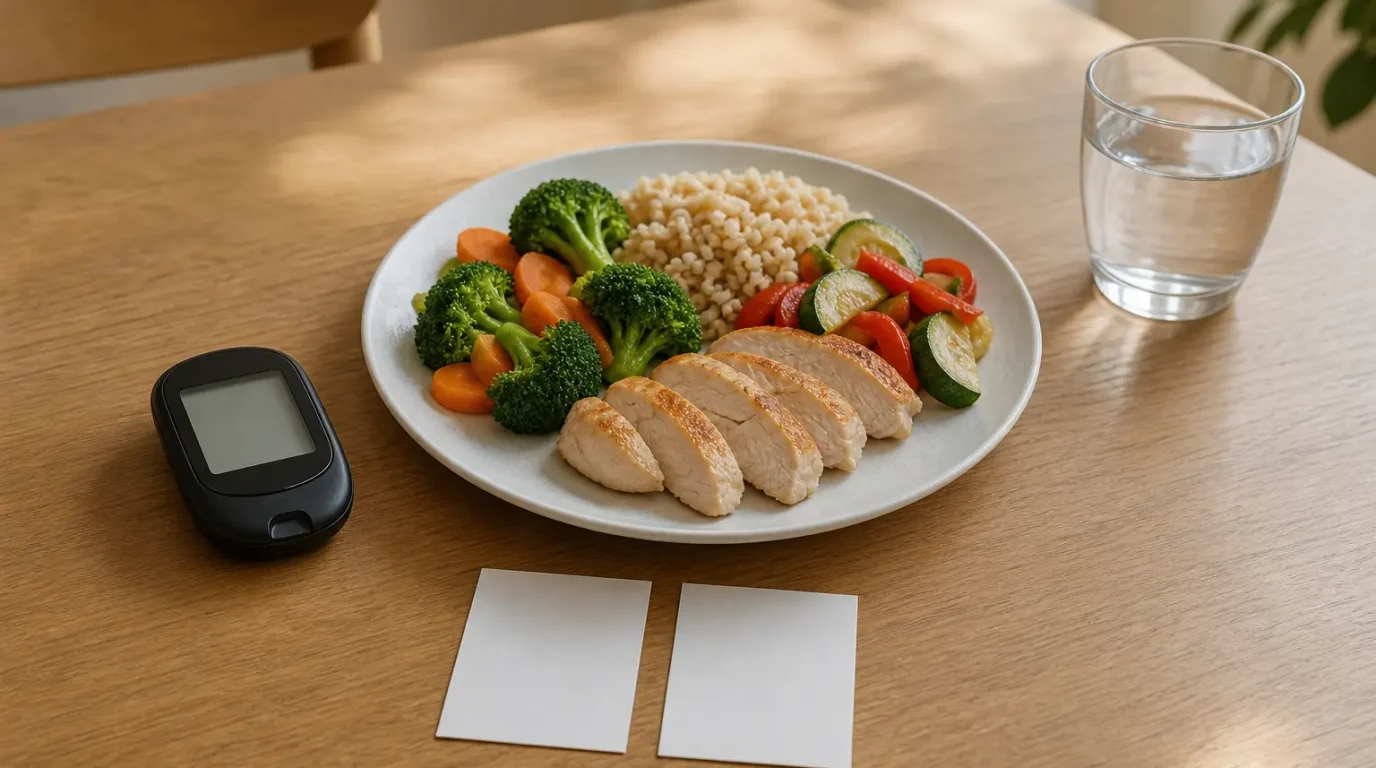
Blood sugar rises temporarily after eating, which is a normal response of the body. Whether a measured value is abnormal depends on when and how it was measured. The composition of the meal also plays a role, as does whether the person already has diabetes or is pregnant. Without this context, no general normal value after eating can be given.
A rise after eating is normal
After a meal, the body absorbs glucose from food. How high the rise goes and when the peak is reached depends on the amount and composition of the meal. Starting glucose levels and the body’s own regulation also play a role. In people without diabetes, physiological overviews describe a typical peak about 30 to 60 minutes after the start of a meal. In many people, the value returns toward the baseline within two to three hours. These are guideposts from studies and overviews, not individual limits for every person and every meal.
The timing of the measurement also changes how a result should be interpreted. A reading one hour after eating can differ from one taken after two hours. Fat can delay stomach emptying and shift the timing of the glucose rise. Meal size and time of day also influence the course, as do activity and medication.
Post-meal measurements and glucose tolerance tests are different
A typical postprandial value, meaning a value measured after a meal, is taken after a normal meal. In the oral glucose tolerance test (oGTT), by contrast, a person drinks a standardized glucose solution after a defined fasting period; among other things, the value is measured two hours after this challenge. For this reason, oGTT thresholds must not simply be applied to any arbitrary meal.
For the oGTT in non-pregnant adults, diabinfo gives the following guidance: a value below 140 mg/dl (7.8 mmol/l) after two hours corresponds to normal glucose tolerance. Values from 140 to below 200 mg/dl (7.8 to below 11.1 mmol/l) fall in the range of impaired glucose tolerance. A value of 200 mg/dl (11.1 mmol/l) or higher is in the diabetes range. These are values from a standardized test in venous plasma, not reference ranges for a self-measured response to any given meal.
Treatment targets are not normal values
For diagnosed diabetes, treatment targets apply, not universal normal values. The American Diabetes Association’s Standards of Care in Diabetes 2026 guideline gives a peak postprandial value below 180 mg/dl (10.0 mmol/l) for many non-pregnant adults with diabetes. Measurement should take place one to two hours after the start of the meal. The guideline also stresses that stricter or less strict targets may be appropriate depending on the person. Postprandial values can be particularly relevant when HbA1c targets (long-term blood sugar value) are not met despite appropriate preprandial values (before eating). This target is a treatment goal for a defined group, not the general boundary between healthy and ill.
For type 2 diabetes, the German diabinfo expert information lists a range of 140 to 199 mg/dl (7.8 to 11 mmol/l) one to two hours after eating. It notes itself that these postprandial figures come from an earlier version of the National Care Guideline from 2014. For a current guide, this range should therefore not be presented without qualification as a current, universal target range. The expert information also states that treatment targets are set individually.
Stricter values apply during pregnancy
For gestational diabetes, stricter self-monitoring targets formulated specifically for pregnancy are used. For gestational diabetes, the 2026 ADA guideline gives below 140 mg/dl (7.8 mmol/l) one hour after eating or below 120 mg/dl (6.7 mmol/l) two hours after eating. The German patient guideline for the S3 guideline on gestational diabetes gives the same postprandial limits. Such values must not be applied to people who are not pregnant.
A single value is not a diagnosis
A non-fasting value of 200 mg/dl (11.1 mmol/l) or higher can be a possible diagnostic criterion if typical diabetes symptoms are present; the diagnosis should also be confirmed. At the same time, a random value is not suitable for ruling out diabetes. The diagnostic criteria refer to clinical tests and venous plasma, not to a person deriving a diagnosis themselves from a single reading on a home meter.
Diagnostic tests can also produce differing results. Health professionals may confirm results with a further test. A single value after a normal meal is therefore no substitute for professional evaluation.
Putting timing and measurement method in context
Guideline figures often refer to the time from the start of the meal. For many adults with diabetes, the ADA specifies one to two hours after the start of a meal. If you don’t know the timing, you can’t interpret a value.
A blood glucose meter and a continuous glucose monitor (CGM) do not measure the same thing. A CGM measures glucose in interstitial fluid and can lag behind capillary blood glucose during rapid changes. The ADA describes a delay of roughly 5 to 15 minutes. This matters when values are rising or falling.
Repeated measurements and patterns are more helpful than isolated numbers. The ADA recommends recording values together with possible influencing factors such as food, activity and stress, and discussing recurring patterns with the care team. This applies to people who measure their blood sugar as part of their diabetes care; it is not a call for all readers to monitor themselves.