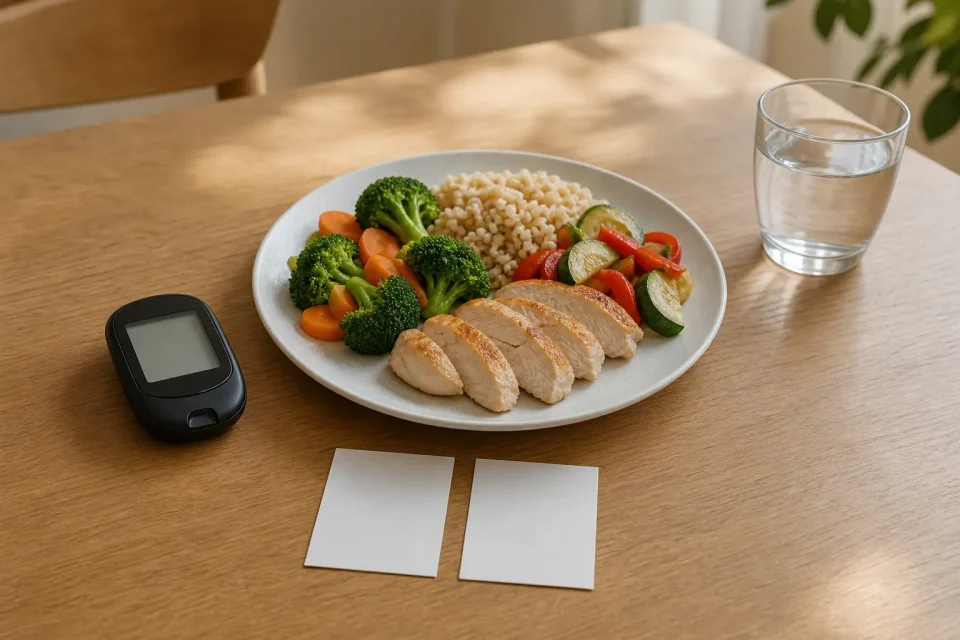
After breakfast, blood sugar rises temporarily because the body breaks down carbohydrates from food into glucose and absorbs it into the blood. How high the value goes depends on the meal and on how the body regulates blood sugar; the timing of the measurement also plays a role. There is no single threshold that applies to every person and every breakfast.
As a guide: for many non-pregnant adults with diabetes, the American Diabetes Association (ADA) recommends a value below 180 mg/dl (10.0 mmol/l), measured one to two hours after the start of the meal. For people without known diabetes, a value below 140 mg/dl (7.8 mmol/l) two hours after eating is considered a general guide. These values refer to different situations and cannot be compared directly.
Reference values after breakfast
For timing purposes, the first bite counts as the start. A measurement taken one hour after the start of breakfast therefore cannot be compared directly with one taken two hours after eating.
| Situation | Timing and reference value | Interpretation |
|---|---|---|
| Adults without known diabetes | Two hours after eating: below 140 mg/dl (7.8 mmol/l) | General reference value, not a diagnostic value in its own right |
| Many non-pregnant adults with diabetes | One to two hours after the start of the meal: below 180 mg/dl (10.0 mmol/l) | ADA treatment target, adjusted individually |
| Pregnancy with diabetes | One hour after eating: no more than 140 mg/dl (7.8 mmol/l); two hours after eating: no more than 120 mg/dl (6.7 mmol/l) | Target values for pregnancy; your personal treatment plan specifies the timing of measurements and the target |
For many adults with diabetes, the ADA also gives 80 to 130 mg/dl (4.4 to 7.2 mmol/l) as a reference range before a meal. Age, other health conditions, kidney function and the risk of hypoglycemia may make it necessary to adjust these targets.
A value taken after an ordinary breakfast is not a standardized test. In the oral glucose tolerance test (OGTT), the person being tested drinks a set amount of glucose after a period of fasting. Doctors then assess the lab results against the diagnostic thresholds for this test. A single reading after breakfast is not a diagnosis of diabetes.
How to take comparable measurements
Always measure at the same predetermined time, for example one or two hours after the first bite. Note the time you started eating. Values taken at different times are only comparable to a limited extent.
Wash your hands with soap and water before measuring and dry them thoroughly. Residue from jam, fruit or sweet drinks on your fingers can make the result appear too high. If you can’t wash your hands, wipe away the first drop of blood and measure with the second.
Expired or damp test strips, cold hands and pressing hard on the fingertip can distort the result. If a value is unexpected, repeat the measurement under clean conditions. Do not change insulin doses or medication based on a single value; follow your treatment plan instead.
A continuous glucose monitor (CGM) measures glucose in the interstitial fluid. A blood glucose meter, by contrast, measures glucose in a drop of blood. The readings can therefore differ from each other and cannot simply be equated with a lab value.
Why blood sugar can be high in the morning
The composition of breakfast affects how much blood sugar rises. Foods high in carbohydrates, such as sugary cereals, white bread, jam or fruit juice, often raise blood sugar faster than meals with fewer quickly available carbohydrates and more fiber. Protein and fat in the meal also affect the rise, and the degree of processing plays a role too. However, this does not point to any one breakfast that guarantees the same blood sugar response for everyone.
Sometimes the rise starts even before eating. In the so-called dawn phenomenon, hormones in the early morning hours prompt the liver to release more glucose. At the same time, insulin action may be temporarily weaker. An elevated fasting value can therefore explain part of the value after breakfast.
Medication taken late or not at all, an insulin dose that doesn’t match the meal, an infection, stress, lack of sleep, cortisone treatment or less physical activity than usual can also affect the value. If your value is already elevated before breakfast, it helps to look at the fasting value together with the values after eating.
What a single value tells you
A single high value after breakfast proves neither diabetes nor persistently poor blood sugar control. The result depends on factors such as the meal, the timing of the measurement and the accuracy of the measurement. Likewise, a single normal value does not rule out diabetes or prediabetes.
Doctors make a diagnosis based on standardized laboratory tests, for example fasting blood glucose, the HbA1c value or an OGTT. In the OGTT, values of 140 to 199 mg/dl (7.8 to 11.0 mmol/l) two hours after a standardized glucose solution indicate impaired glucose tolerance. From 200 mg/dl (11.1 mmol/l), the value is in the diabetes range. These thresholds apply to the OGTT and not to an ordinary breakfast; a diagnosis is made according to current medical guidelines and confirmed where necessary.
If you repeatedly notice abnormal values, keep a log. Record your fasting value and your breakfast time. Also note when you measured and what the reading was. Add the meal, physical activity and any medication taken. This helps your doctor interpret the values more accurately.
When to seek medical advice
Have repeatedly elevated values checked, especially if your fasting blood sugar is also high or your readings are regularly above your personal target. Also talk to a doctor if you notice intense thirst or frequent urination. The same applies to unintended weight loss, pronounced fatigue or blurred vision.
If you have existing diabetes, frequent episodes of low or high blood sugar, are pregnant or have recently started cortisone treatment, you should discuss your readings with your treating practice. A very high value together with nausea, vomiting, abdominal pain, deep or rapid breathing, drowsiness or pronounced weakness requires immediate medical help.