In diabetes, a glucose reading shows how much glucose is present in the blood or tissue. Symptoms show how the body is reacting to a change. Readings and symptoms don’t always match: symptoms can occur even though the reading is not low. Conversely, a low reading may come without clear warning signs.

That is why the reading, the measurement method, symptoms and the personal plan belong together. The frequently cited threshold of 70 mg/dl (3.9 mmol/l) is an important warning value in diabetes management, but it is not a universal limit at which everyone develops symptoms or at which hypoglycemia can be diagnosed.
What thresholds tell you
The American Diabetes Association (ADA) classifies low glucose levels in people with diabetes into levels: Level 1 begins below 70 mg/dl (3.9 mmol/l), and Level 2 below 54 mg/dl (3.0 mmol/l). This classification is used for assessing and managing diabetes. It does not set a uniform symptom threshold for everyone.
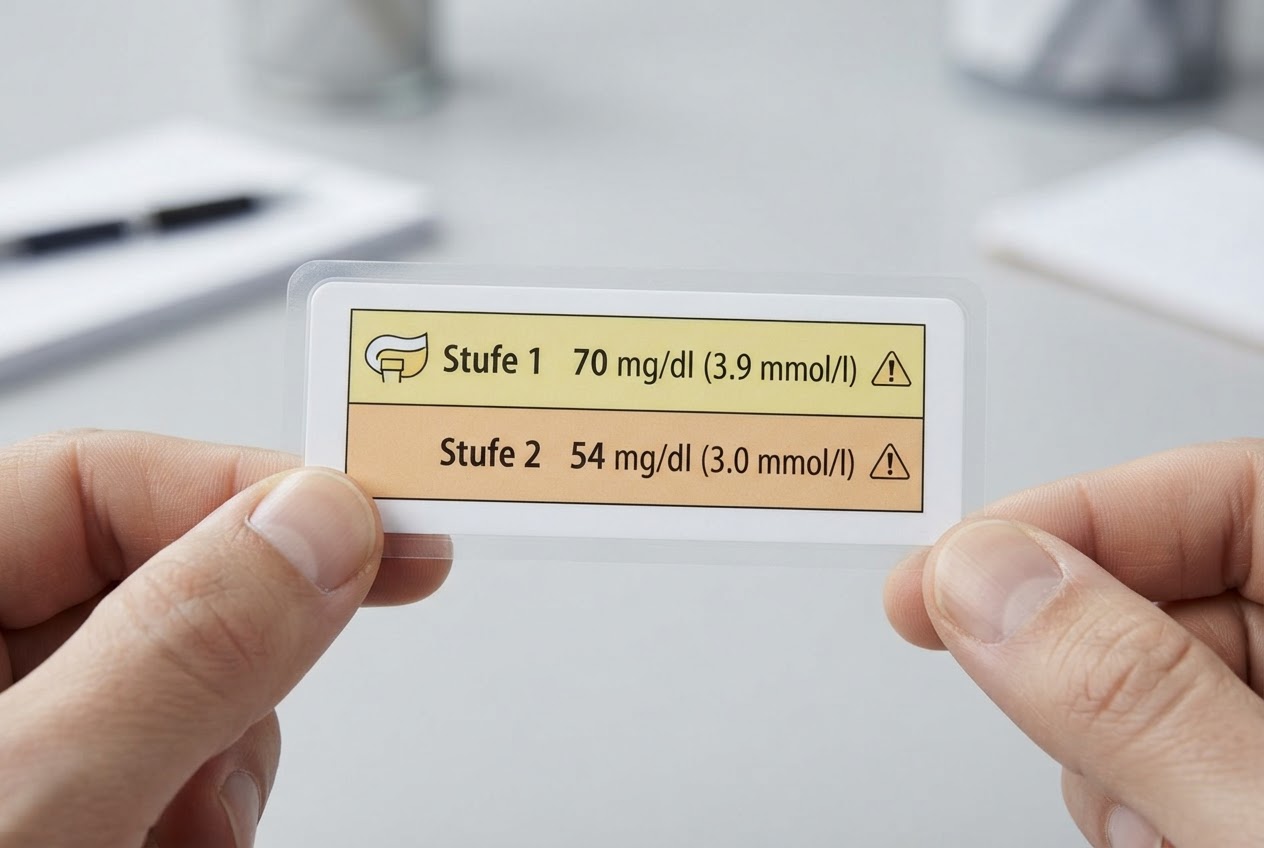
The ADA also defines an event as Level 3 when a person needs help because of altered mental or physical function. The reading is irrelevant here. For Level 3, the classification depends on the need for assistance, not on the reading; severity therefore cannot be determined from a number alone. Other sources of information sometimes use their own numerical values for severe hypoglycemia. Such classifications cannot simply be treated as equivalent.
Even among people with diabetes, symptoms do not always appear at the same value. How well blood glucose was controlled beforehand and whether there have been earlier episodes of hypoglycemia both play a role. Repeated episodes of hypoglycemia can make it harder for affected people to notice low values. A value below 70 mg/dl therefore remains relevant even when no symptoms occur.
What symptoms show
Shaking, sweating, intense hunger and palpitations are possible early signs. With more pronounced hypoglycemia, confusion, disorientation, speech or vision disturbances and impaired consciousness can occur. These symptoms are not clear-cut: they can also have other causes and, on their own, do not prove hypoglycemia.
Conversely, the absence of symptoms does not rule out a low value. This is especially important if a person has a harder time perceiving low values. People with diabetes should assess symptoms and readings, including their trend, in the context of the agreed plan; neither how you feel nor a single measurement is enough on its own.
Why the measurement method matters
A fingerstick blood glucose meter tests a blood sample. A continuous glucose monitoring (CGM) sensor measures glucose in the fluid between the cells under the skin. When glucose rises or falls, the sensor shows the change in the blood with a delay. The German S3 guideline on type 1 diabetes cites a natural time lag of about 6 to 10 minutes.
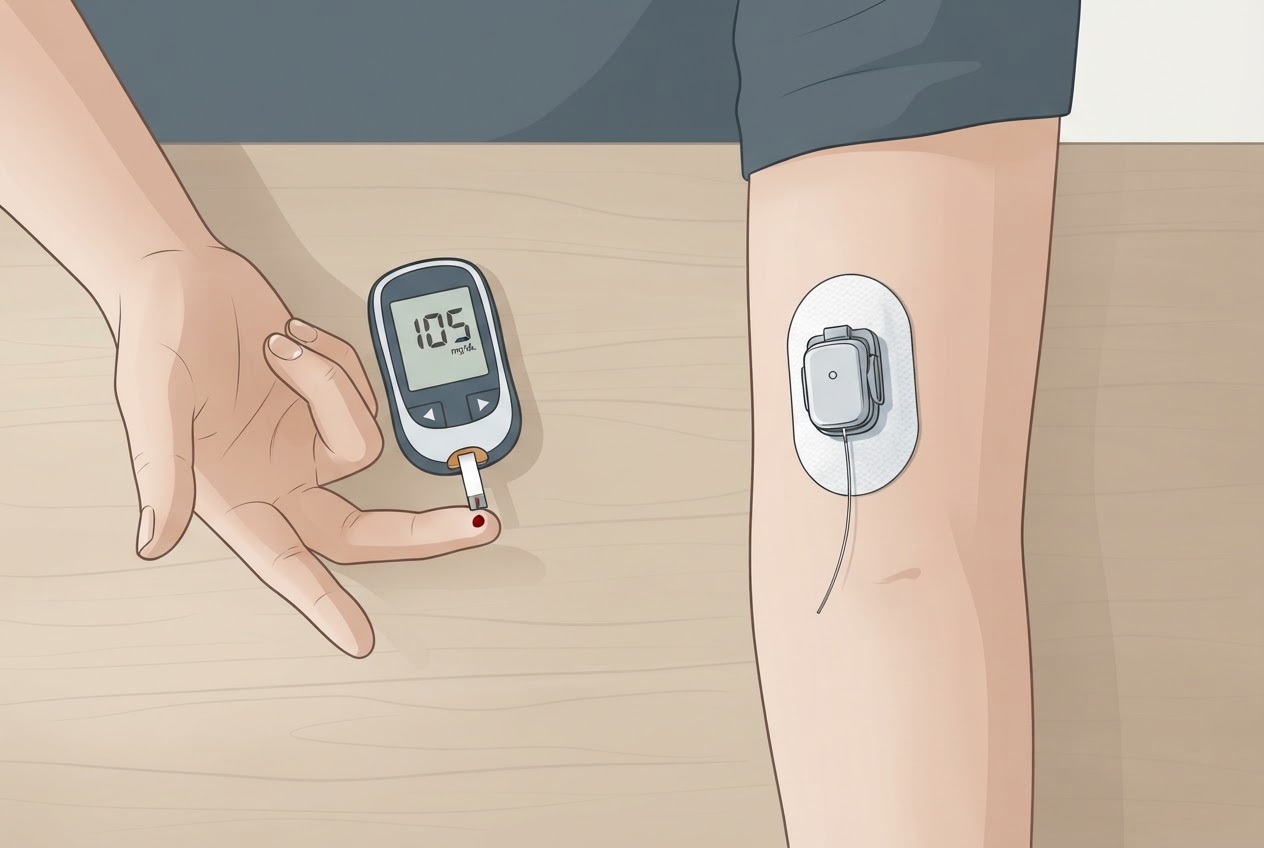
For example, a person may feel symptoms while the sensor shows a normal value. With rapid changes, the time lag can play a role. Even when sensor data is missing or a value doesn’t match how you feel, the display should be assessed together with the symptoms. Which measurement is then intended depends on the device and on the personal plan. No single method is superior in every situation.
What applies to symptoms without diabetes
In adults without diabetes, a suspected hypoglycemic disorder is investigated differently from a low value in diabetes management. Doctors can base their assessment on the so-called Whipple triad: suitable symptoms occur, a reliable laboratory measurement shows a low plasma glucose value, and the symptoms improve when glucose is raised.
A single home reading is not enough for this diagnosis. The diagnosis must also be made by a doctor. Anyone who repeatedly has symptoms or suspects low values should have this medically evaluated rather than trying to work out a cause from a single measurement.
What the personal plan specifies
The personal plan sets out how readings, measurement method, symptoms and individual risk should be assessed together. You should agree with your treating doctor which values and alarms matter, how to assess conflicting readings and symptoms, and when support is needed. After a severe episode or repeatedly low values, a review of the treatment plan is also part of this.

CGM targets, such as the percentage of time below certain values, help evaluate glucose values over a period of time. They are not blanket limits for diagnosing an acute event. The German S3 guideline on type 1 diabetes cites such targets for certain groups and stresses that they are adjusted individually.
In cases of impaired consciousness, a seizure, or when a person can no longer help themselves, immediate medical help is needed. In Germany, emergency services must be called even if no reading is available.