Anyone who wants to know their own risk of type 2 diabetes can fill out the diabetesDE self-test. Based on personal information, the test estimates how likely a person is to develop type 2 diabetes in the next ten years. The test was developed by the German Institute of Human Nutrition Potsdam-Rehbruecke (DIfE).
The result is a statistical estimate, not a diagnosis: a high score does not mean that diabetes is already present, nor that it will definitely develop. A low score does not rule out the disease either. If the result is elevated, diabetesDE recommends discussing a blood sugar check at a doctor’s practice.
What information the test collects
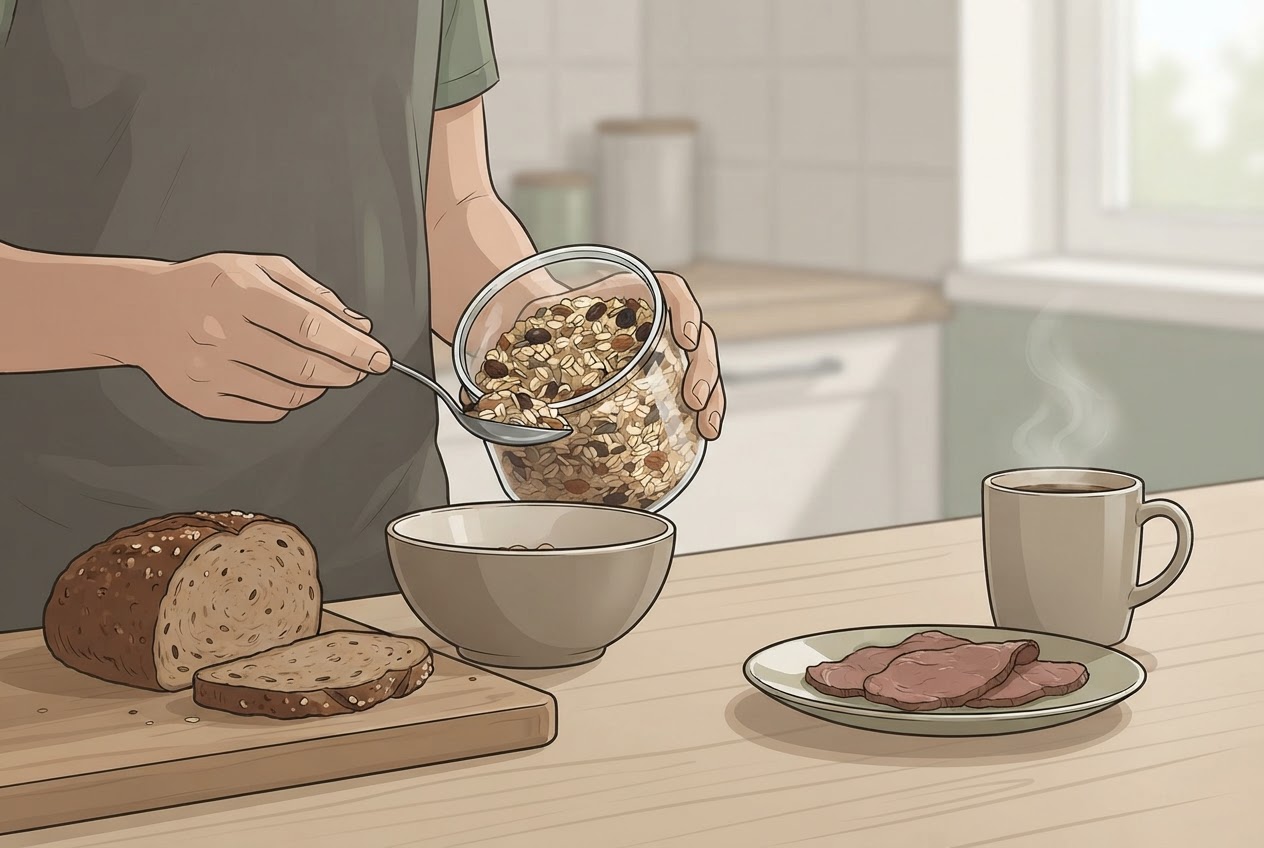
The questionnaire takes eleven pieces of information into account. These include age, coffee consumption, waist circumference and height. It also records the consumption of whole-grain bread and muesli, as well as beef, pork or lamb. Other questions cover physical activity, high blood pressure, smoking status and type 2 diabetes in biological parents or siblings.
The test adds up the points for the answers to give a total score; some answers count for more than others. A waist circumference of at least 120 centimeters, for example, counts for 40 points in the questionnaire, one parent with diabetes counts for 6 and two parents with diabetes for 11. The points feed into the calculation and are not percentages.
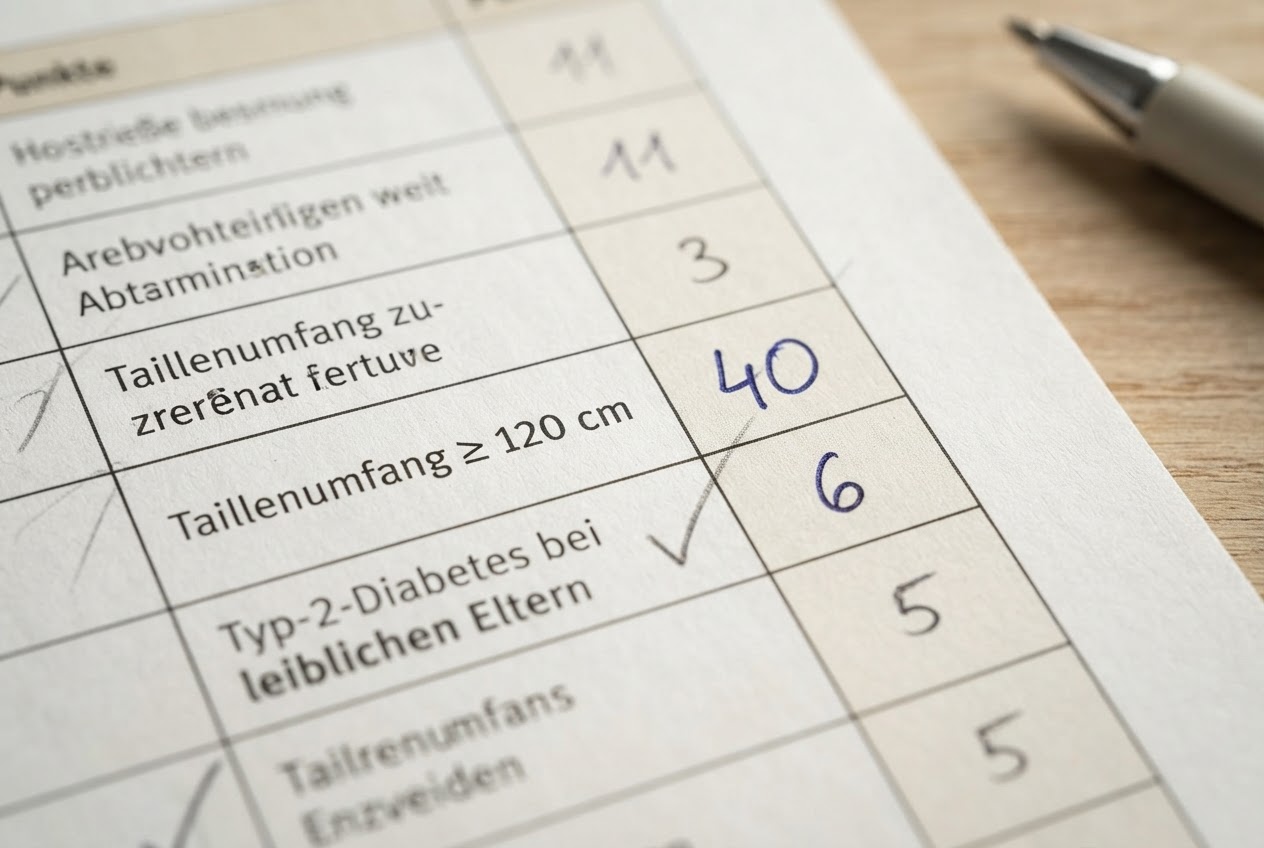
The questionnaire also specifies where to measure waist circumference: halfway between the lowest rib and the top of the hip bone. A measurement that is as accurate as possible is helpful because the test takes waist circumference and height into account separately.
What the result tells you
The test assigns the score an estimated probability of developing type 2 diabetes in the next ten years. In the diabetesDE evaluation sheet, for example, 54 points correspond to a group in which an estimated 10 out of 100 people will develop type 2 diabetes within that period.
The figure describes a group of people who gave similar answers. It does not predict with certainty whether an individual person will develop the disease. Some people with a high result stay healthy, while people with a low result can still become ill.
The questionnaire also does not measure current blood sugar. Without this value, it can neither determine whether diabetes is already present nor rule the disease out. Anyone who has already been diagnosed with diabetes should not use the test to assess their own condition.
How the test was developed
The DIfE developed the risk calculation using the Potsdam EPIC study, a long-term study on nutrition and health. For the ten-year version, the researchers reweighted the data from EPIC-Potsdam. They then validated the model in two further German population studies: EPIC-Heidelberg and GNHIES98. The scientific publication on the ten-year version appeared in 2022.

Among other things, the study examined how well the test can distinguish between people who go on to have a higher or a lower risk. The researchers used the C-index for this. The C-index measures this ability to discriminate.
Calibration shows whether the predicted disease frequencies match those actually observed. In EPIC-Potsdam, the predictions of the ten-year version matched the observed disease frequencies well. In EPIC-Heidelberg, the risk predicted by the non-clinical version was too high overall, especially in the highest risk group. In GNHIES98, the predicted disease frequencies matched the observed ones well after the model was adjusted. This means the accuracy of the specific risk figures also depends on which population the model is applied to.
The study also describes a clinical variant that additionally takes into account the long-term blood sugar value HbA1c. This requires a laboratory value. It therefore differs from the self-completion questionnaire.
What an elevated result means
If the risk is elevated, the diabetesDE questionnaire recommends discussing a medical blood sugar check. The result is a reason to have your blood sugar checked by a doctor, but it does not replace that check. The doctor can assess current blood values and your personal situation.

The test takes information on physical activity and diet into account. Smoking and waist circumference are also among the factors. However, they do not prove that any single answer causes the disease. Age and family history cannot be changed; other answers relate to behavior or health characteristics. Any changes should suit your individual health situation. According to the diabetesDE brochure, people over 65 should seek medical advice before trying to reduce their weight or waist circumference.