When blood sugar, fasting glucose and HbA1c come up in a lab report or a conversation with your doctor, they refer to three different measurements. They answer different questions: How high is the glucose in your blood right now? How high is it after a set period without eating? And what did your glucose levels look like over the past few weeks?
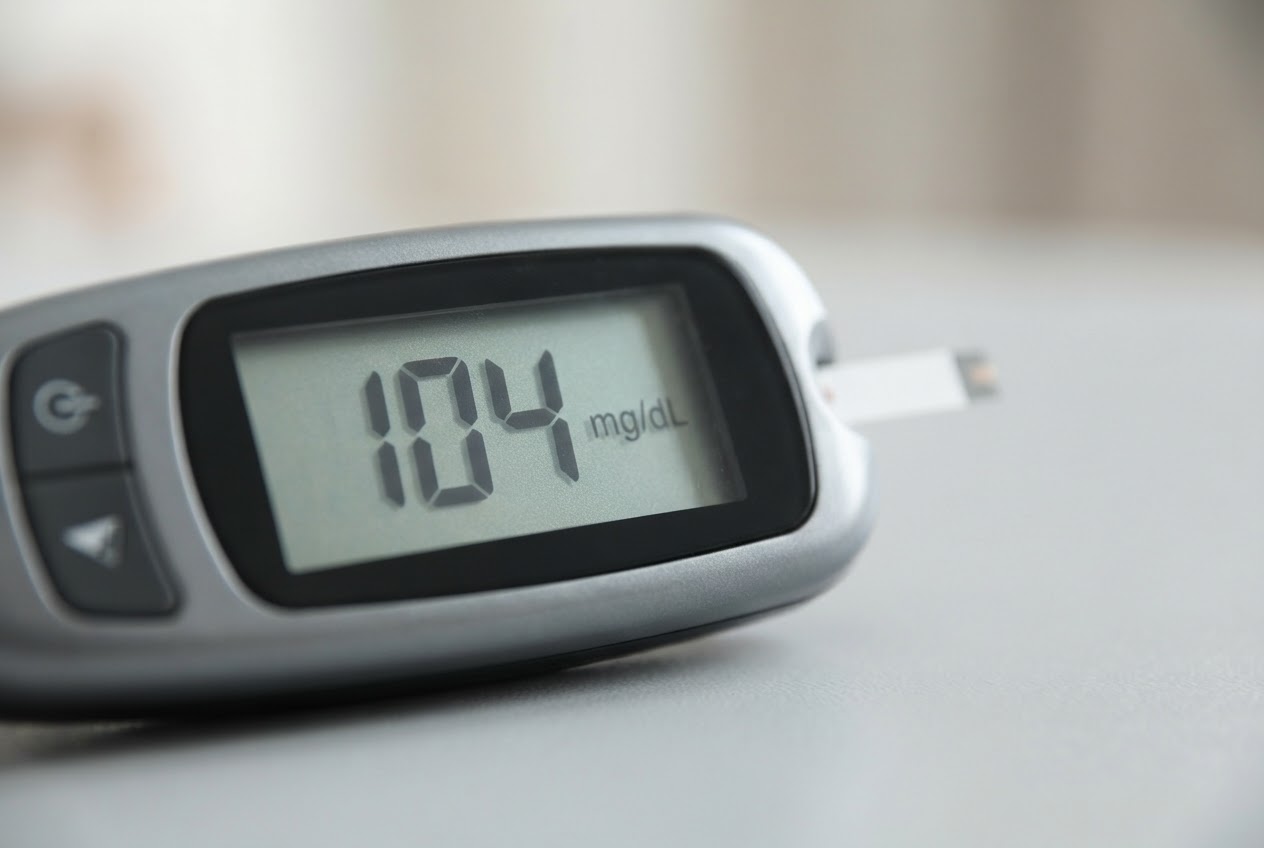
Glucose is the sugar whose concentration is measured in the blood. A fasting blood glucose value is one such measurement taken under defined conditions. HbA1c, by contrast, measures how much glucose is bound to hemoglobin, the red blood pigment, and gives an indication of average blood glucose over several weeks. The values are not interchangeable and can well differ from one another.
What the glucose value shows
Glucose is a sugar that occurs naturally in the blood. A blood glucose value indicates how high the glucose concentration in the blood is at a specific point in time. It is usually reported in mg/dl or mmol/l. The question a glucose value answers is: How high is the glucose in your blood right now?
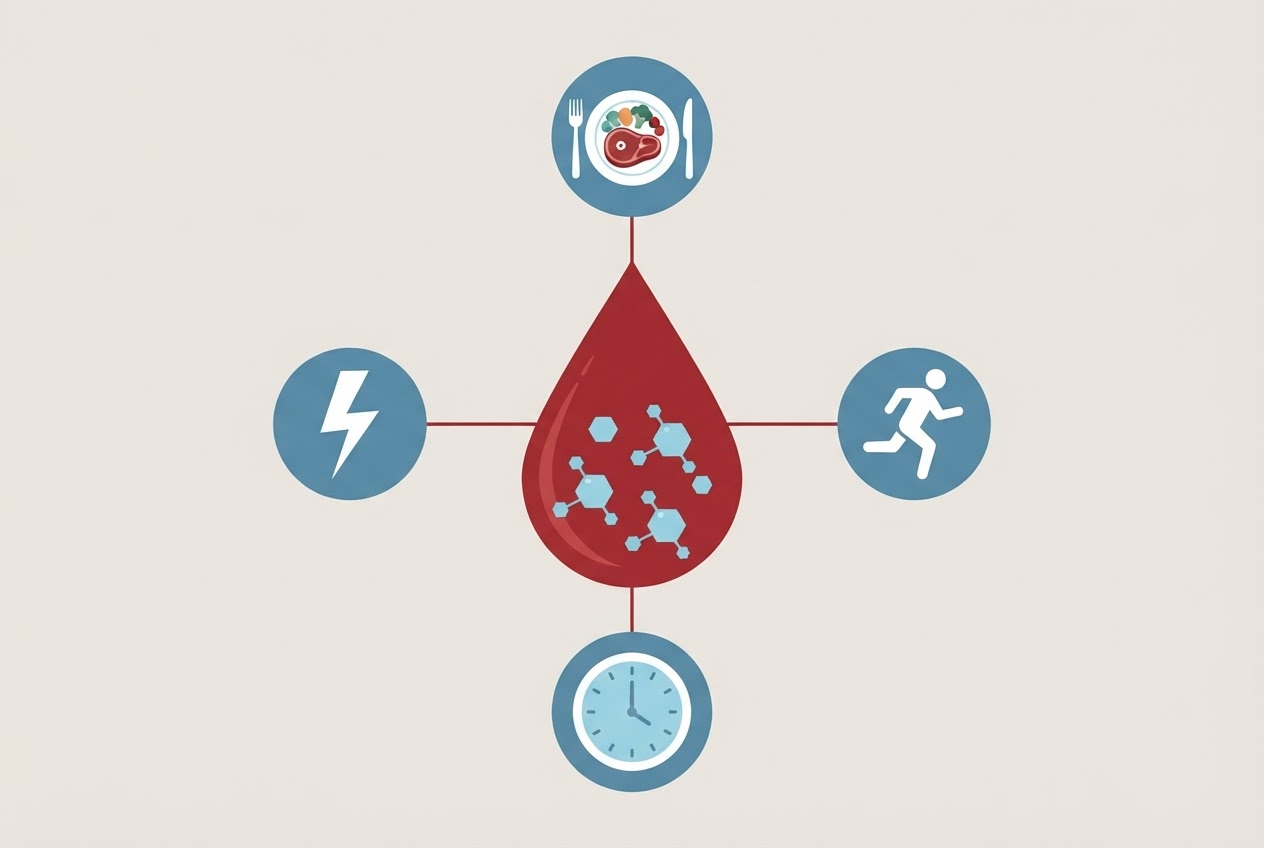
A single measurement depends on many circumstances. Food, physical activity, daily rhythm and stress all affect the value. That is why a single glucose value only says something about the moment at which it was measured. The term glucose value refers to the measured sugar, not to a particular type of test. A glucose measurement can be taken while fasting or at another time.
What fasting blood glucose tells you
Fasting blood glucose is a standardized snapshot. The German National Disease Management Guideline (Nationale VersorgungsLeitlinie) describes the test as a laboratory measurement taken in the morning after a period without food of at least eight and at most twelve hours. This time frame follows a recommendation from the ADA and WHO.
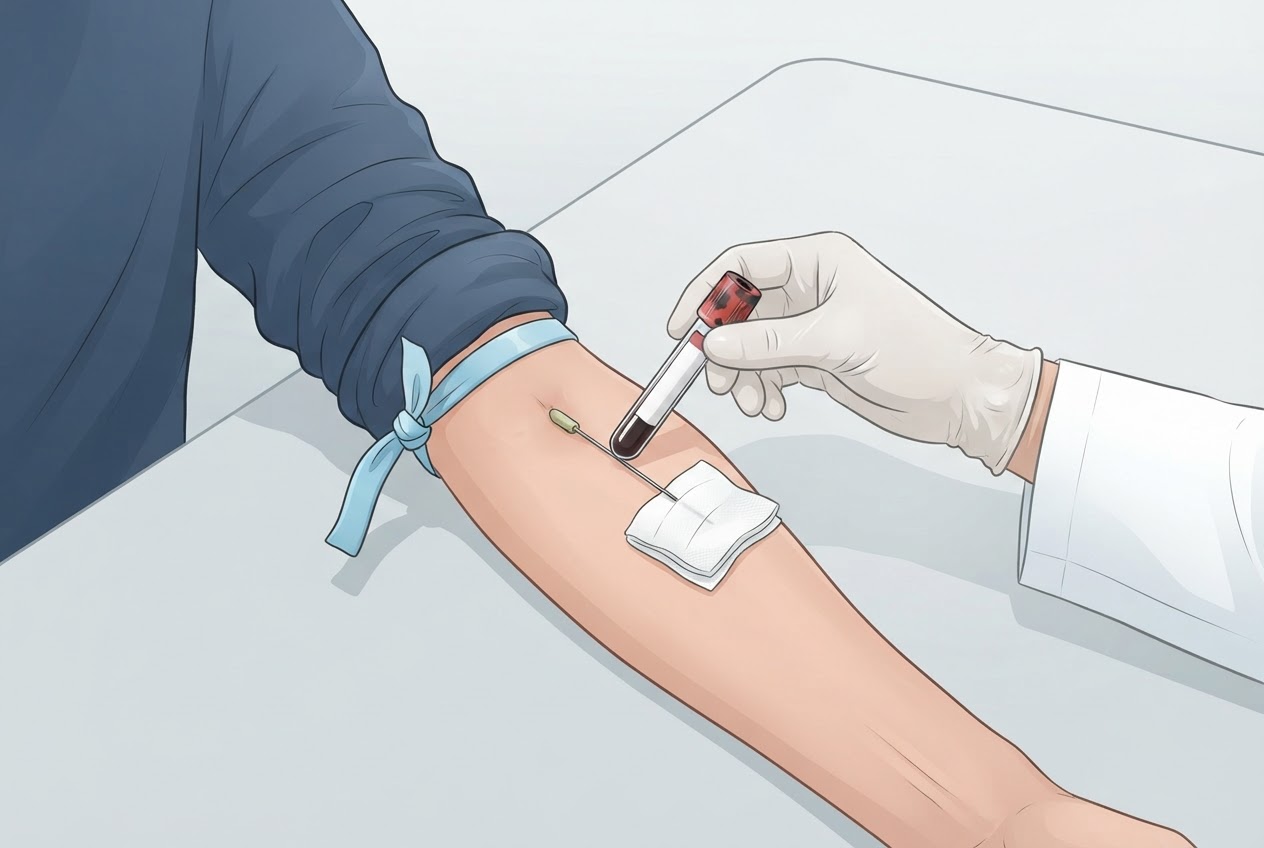
The value reflects glucose at a single point in time, not the trend over the past weeks. It can vary from day to day and is also influenced by the time of day and how the sample is handled. It shows how high the glucose in your blood is after a defined period without calorie intake.
What the HbA1c value shows
HbA1c measures the proportion of hemoglobin that has glucose bound to it. Glucose attaches to hemoglobin, the red blood pigment in red blood cells. The higher the glucose concentration has been over several weeks, the more hemoglobin is loaded with glucose.
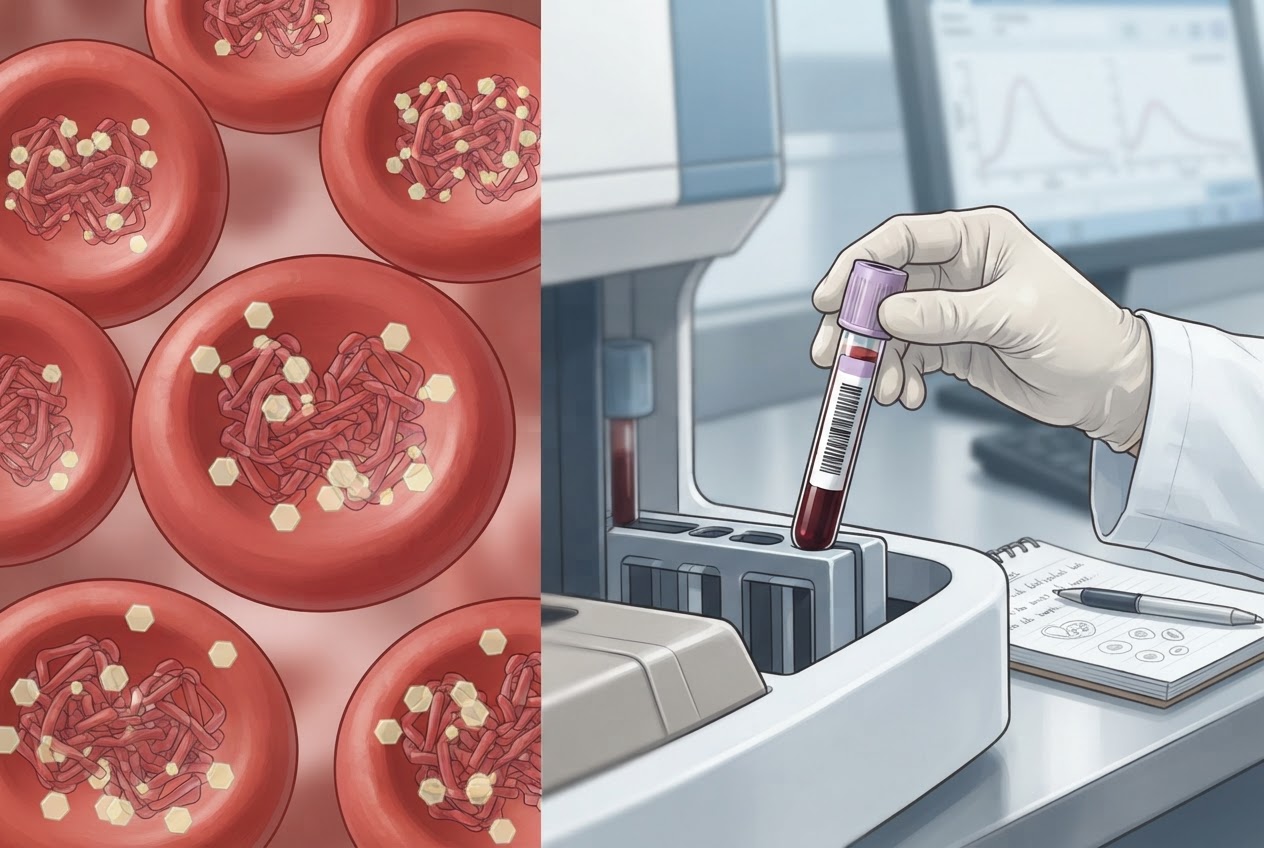
The value gives an indication of average glucose over the past eight to twelve weeks, often simplified as about three months. You do not need to be fasting for this measurement. HbA1c is reported as a percentage or in mmol/mol.
Short-term spikes are not immediately visible in HbA1c. Changes in the last month have a stronger effect than changes in earlier months. The value reflects an average over time and does not show individual days.
Why the values differ from one another
HbA1c and individual glucose measurements capture different aspects of glucose metabolism, so they can turn out differently. This alone does not point to a clear explanation. A glucose test may be abnormal while HbA1c is normal, or the other way around.
With HbA1c, factors affecting red blood cells and hemoglobin play a role. Changes in the lifespan of red blood cells, blood loss, transfusions, iron deficiency, kidney or liver disease, and variant forms of hemoglobin can affect how meaningful the result is. These factors do not apply equally to every person and every laboratory method.
Lab values and self-monitoring readings should not be equated either. For diagnosis, the guidelines recommend quality-assured laboratory methods that measure glucose in venous blood plasma. Self-monitoring devices are not suitable for this. They serve a different purpose: they show glucose at specific points in time and make visible how meals, exercise or stress change the value.