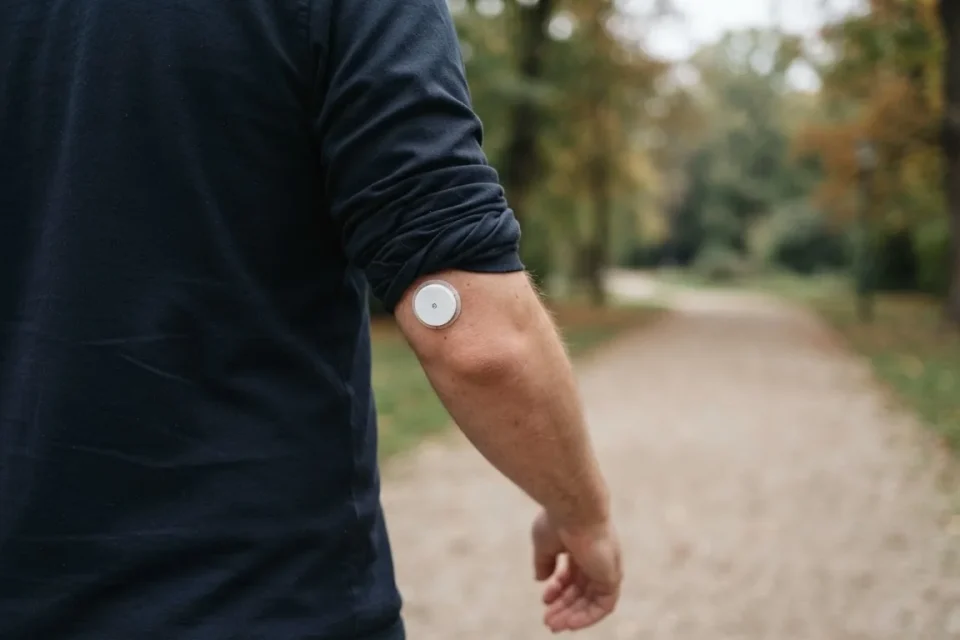
A long-term blood sugar value of 6.1 percent is the HbA1c value: the proportion of glycated hemoglobin in the blood. It shows the average blood glucose concentration over the past eight to twelve weeks.
According to the German National Disease Management Guideline, 6.1 percent falls within the range of increased diabetes risk, below the diagnostic threshold of 6.5 percent. A single value of 6.1 percent does not establish a diagnosis of diabetes.
What the HbA1c Value Measures
HbA1c is a laboratory value obtained from blood. In the blood, glucose binds to hemoglobin, the red pigment in red blood cells. The HbA1c value captures the proportion of this glycated, or sugar-loaded, hemoglobin. Because red blood cells live for about three months, the value reflects a longer-term average of blood sugar levels rather than individual daily readings. You do not need to be fasting for the test; fasting conditions apply to other blood glucose tests.
The value is given either as a percentage or in the unit mmol/mol. An HbA1c of 6.1 percent corresponds, rounded, to 43 mmol/mol. Both figures describe the same measurement, just in different units.
6.1 Percent in the Increased-Risk Range
The National Disease Management Guideline for Type 2 Diabetes classifies HbA1c values into three ranges:
- Below 5.7 percent: below the increased-risk range
- 5.7 to below 6.5 percent: increased risk of diabetes
- 6.5 percent and above: diagnostic threshold for diabetes, confirmation required
A value of 6.1 percent therefore falls within the increased-risk range. This means that the risk of developing diabetes in the coming years is elevated. It does not mean that diabetes is already present. For a diagnosis of type 2 diabetes, the guideline generally requires confirmed laboratory values, usually at least two abnormal results. A single value of 6.1 percent is not sufficient for this.
Distinguishing It from Fasting Blood Glucose
The number 6.1 can appear in different contexts. Besides an HbA1c value of 6.1 percent, there is a fasting blood glucose of 6.1 mmol/l. These are two different measurements.
A fasting plasma glucose value of 6.1 mmol/l corresponds to roughly 110 mg/dl. The guideline classifies fasting glucose values from 100 to below 126 mg/dl, or 5.6 to below 7.0 mmol/l, as increased risk. Some of the participating professional societies follow the WHO threshold, under which the risk range only begins at 110 mg/dl, or 6.1 mmol/l. The diabetes threshold for fasting plasma glucose is 126 mg/dl, or 7.0 mmol/l.
If you receive a lab report with the number 6.1, first check whether it is the HbA1c value in percent or the fasting glucose in mmol/l. The classification and meaning differ considerably.
Why a Single Value Is Not Enough
An HbA1c value of 6.1 percent should not be interpreted in isolation. The guideline points out that the value is only meaningful if interfering factors have been ruled out. Several circumstances can affect the value:
- Certain types of anemia and altered red blood cell turnover
- Blood loss or blood transfusions
- Pregnancy
- Kidney or liver dysfunction
- Hemoglobin variants
- Some medications
Depending on the influence, the value may come out too high or too low; laboratory values close to diagnostic thresholds may differ on a follow-up check. The guideline also mentions age-related differences in HbA1c reference ranges; these are population-based data and not a personal normal value.
A value in the increased-risk range describes a category that leaves the individual course open. The guideline itself describes the range as increased risk, not as already diagnosed diabetes.
Next Steps for a Value of 6.1
An HbA1c of 6.1 percent is a sign that you should have your situation assessed by a doctor. A doctor can evaluate the value in the context of other laboratory values, your personal medical history and your living circumstances. In the case of conflicting results or values in the increased-risk range, the guideline’s diagnostic algorithm provides, depending on the situation, for a further laboratory value and, if necessary, an oral glucose tolerance test.
The result is no reason to panic, but it is not a value to ignore either. It can be an occasion to talk about lifestyle factors such as diet, exercise and weight. Specific treatment recommendations or particular target values cannot be derived from a single laboratory value.