During low blood sugar (hypoglycemia), glucose tablets raise blood sugar quickly. The person must be awake, responsive and able to swallow safely. The blood sugar reading alone does not decide this.
If the person is unconscious, having a seizure, severely drowsy or unable to swallow safely, nothing should be put in their mouth, including glucose tablets, juice, honey or glucose gel. Call 112, give nothing by mouth and follow the personal glucagon emergency plan.
When Glucose Tablets Are Suitable
For many people with diabetes, a glucose level below 70 mg/dl (3.9 mmol/l) counts as low blood sugar. For acute treatment, the American Diabetes Association recommends glucose if the person is awake.
Before taking glucose, you must be able to answer yes to three questions:
- Is the person sufficiently awake and responsive?
- Do they understand instructions and can they reliably cooperate?
- Can they chew and swallow safely?
Only then is glucose by mouth suitable. The person should take the glucose tablets themselves or swallow them under safe guidance. The same criteria apply to children. If a child can no longer swallow or is unconscious, they must not be given solid or liquid food, as diabetesDE explains in its emergency guidance.
When Nothing Should Be Put in the Mouth
Glucose by mouth is dangerous if the person cannot swallow safely. Tablets, liquid or gel can enter the airways and cause choking. If the contents reach the lungs, this is called aspiration.
Glucose tablets must therefore not be given in cases of:
- unconsciousness;
- seizure;
- marked clouding of consciousness;
- when the person does not cooperate;
- unsafe or impossible swallowing;
- rapid deterioration after the first treatment.
Glucose gel is also not safe in this situation. Do not smear it into the mouth or between the cheek and gum as a precaution if the person cannot swallow safely.
If the person is unconscious and there is no other acute danger, they should be placed in a suitable recovery position. Monitor them until the emergency services arrive. In Germany, the emergency number is 112. If a prescribed emergency glucagon product is available and relatives or caregivers have been trained in its use, they should administer it according to the personal emergency plan and the package leaflet.
How Much Glucose Is Usual
For a person who is awake and can swallow safely, 15 to 20 grams of fast-acting carbohydrates are usually recommended. The ADA guideline specifies 15 grams for most people. The German S3 guideline on type 1 diabetes recommends 20 grams of carbohydrates for mild hypoglycemia, preferably glucose.
The amount needed depends on the personal treatment plan, the diabetes medication, age and the situation. For automated insulin delivery systems, smaller amounts may be prescribed. The individual emergency plan therefore takes precedence over a general dosage.
The gram amount stated on the packaging is what counts. One “piece” of glucose tablet contains different amounts of glucose depending on the product. Calculate the amount needed in grams and choose the product accordingly.
Measure blood sugar again after about 15 minutes. If it is still too low, repeat the treatment according to the personal plan. If there is no improvement, the condition worsens or the person can no longer swallow safely, arrange medical help immediately.
Why Glucose Tablets Are Suitable
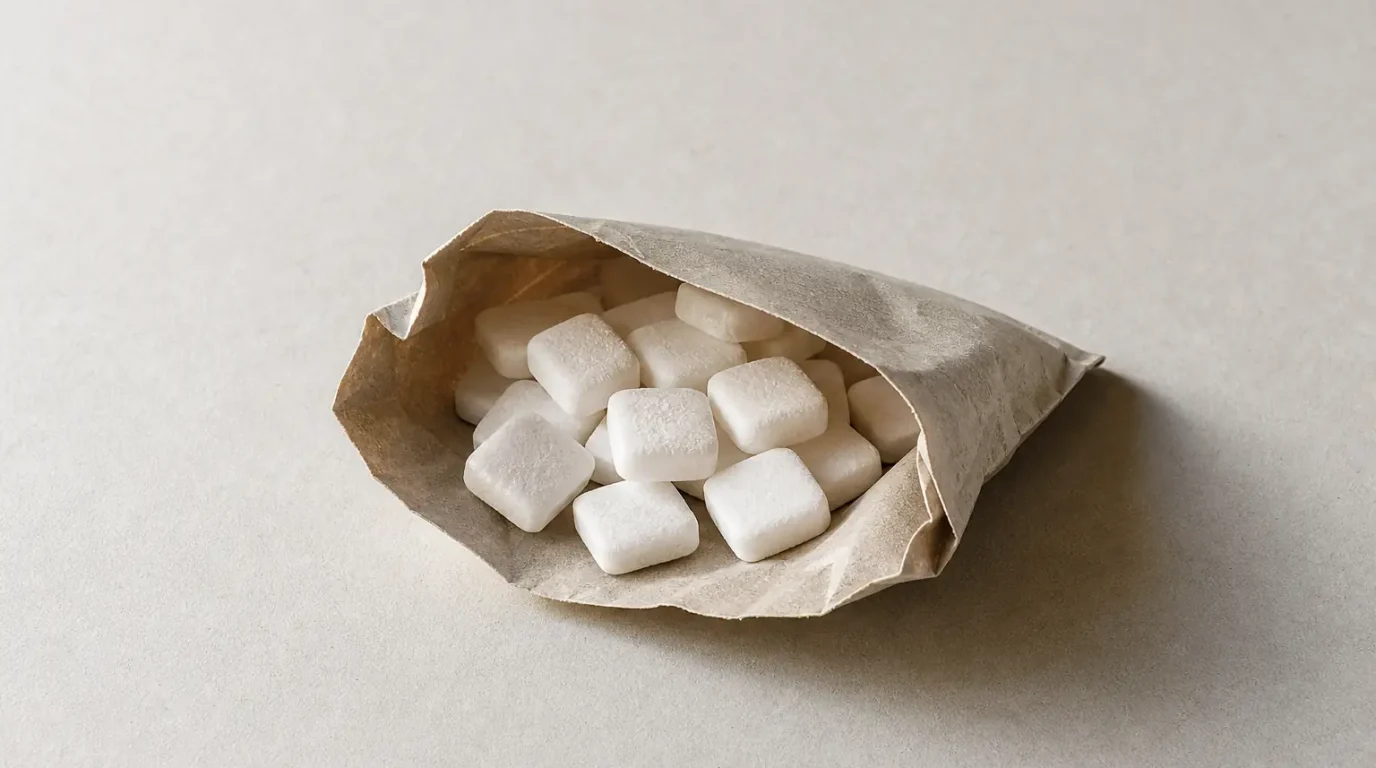
Glucose tablets consist of glucose. The body can absorb this sugar directly. For acute treatment, a measured amount of glucose is easier to judge than the amount in random sweets.
Chocolate and other high-fat foods are less suitable for the first treatment step because fat can slow stomach emptying and thus the absorption of carbohydrates. High-protein foods also do not replace fast-acting glucose. Sugary juice or regular soda are options if the person can swallow safely. The amount of carbohydrates they contain must be known or reliably estimable.
A meta-analysis of different sugar sources compared glucose tablets with foods and other forms of sugar. After 15 minutes, symptom relief occurred more often with glucose tablets than with the dietary sugars studied. This supports glucose as a predictable acute option, but does not prove that every individual product works identically.
What Follows After the First Dose
Glucose tablets resolve the acute low blood sugar. Blood sugar can nevertheless fall again later. The risk remains if insulin or an insulin-releasing medication is still active, the next meal is far off or exercise took place beforehand.
After successful treatment, a meal or snack may therefore be necessary. The German S3 guideline explicitly mentions this subsequent food intake to prevent another hypoglycemia. What and how much to eat afterwards depends on the personal treatment plan, the timing of the next meal and the medication effect still expected.
The affected person should not be left alone immediately after low blood sugar. Blood sugar and condition must continue to be monitored, especially if the cause is unclear or low blood sugar occurs repeatedly.
Special Case: Acarbose
People taking acarbose should use glucose or glucose tablets for low blood sugar. Acarbose slows the breakdown of table sugar into smaller sugars. As a result, sucrose works less well as a fast treatment.
The prescribing information for acarbose therefore recommends glucose instead of table sugar for acute hypoglycemia. This peculiarity applies to acarbose and cannot be generalized to all diabetes medications.
When Help from Others Is Needed
A person may still be responsive and yet unable to treat themselves. Trembling, confusion or severe weakness make the assessment harder. Consciousness alone is therefore not sufficient to give oral glucose safely.
The German S3 guideline lists a higher amount of glucose for severe hypoglycemia without loss of consciousness, where the person can no longer treat themselves. A DDG practice recommendation from 2024, however, advises against oral carbohydrates in severe hypoglycemia where self-treatment is not possible and in cases of unconsciousness.
For laypeople, the rule is this: help from others does not categorically rule out oral glucose. The person must be fully awake, cooperative and able to swallow safely. If there is any doubt about their ability to swallow, nothing should be put in their mouth. In that case, call 112 and follow the individual glucagon emergency plan.
When to call 112
Call the emergency number 112 in cases of:
- loss of consciousness;
- a seizure;
- inability to swallow safely;
- increasing or pronounced impairment of consciousness;
- if there is no improvement despite initial treatment;
- repeated hypoglycemia with an unclear cause;
- any situation in which the person affected cannot be reliably monitored and treated.
If the person is awake, has milder symptoms and can swallow safely, the personal hypoglycemia plan can be applied first. Any worsening ends this option immediately: give nothing more by mouth and call the emergency number.
Key points
- Check alertness and ability to swallow first: glucose tablets are only safe if the person is responsive, cooperative and able to swallow reliably.
- If the person is unconscious, having a seizure or cannot swallow safely, put nothing in their mouth: call 112 and follow the personal glucagon emergency plan.
- Dose by grams: when oral intake is safe, 15 to 20 grams of fast-acting carbohydrates are usually recommended, though the individual treatment plan takes priority.
- Check again after about 15 minutes: if blood sugar is still low, treat again according to the plan; if there is no improvement, medical help is required.
- Plan for the time afterwards: a meal or snack may be needed if insulin or other medications are still taking effect.