When choosing fruit with diabetes, it matters not only which fruit you pick but also whether you eat it whole or drink it as juice. Whole fruit contains carbohydrates and fiber. Juice also contains carbohydrates and fructose, but usually much less fiber. It is also quicker to drink. For canned fruit and fruit products, it is important to check whether sugar or syrup has been added.
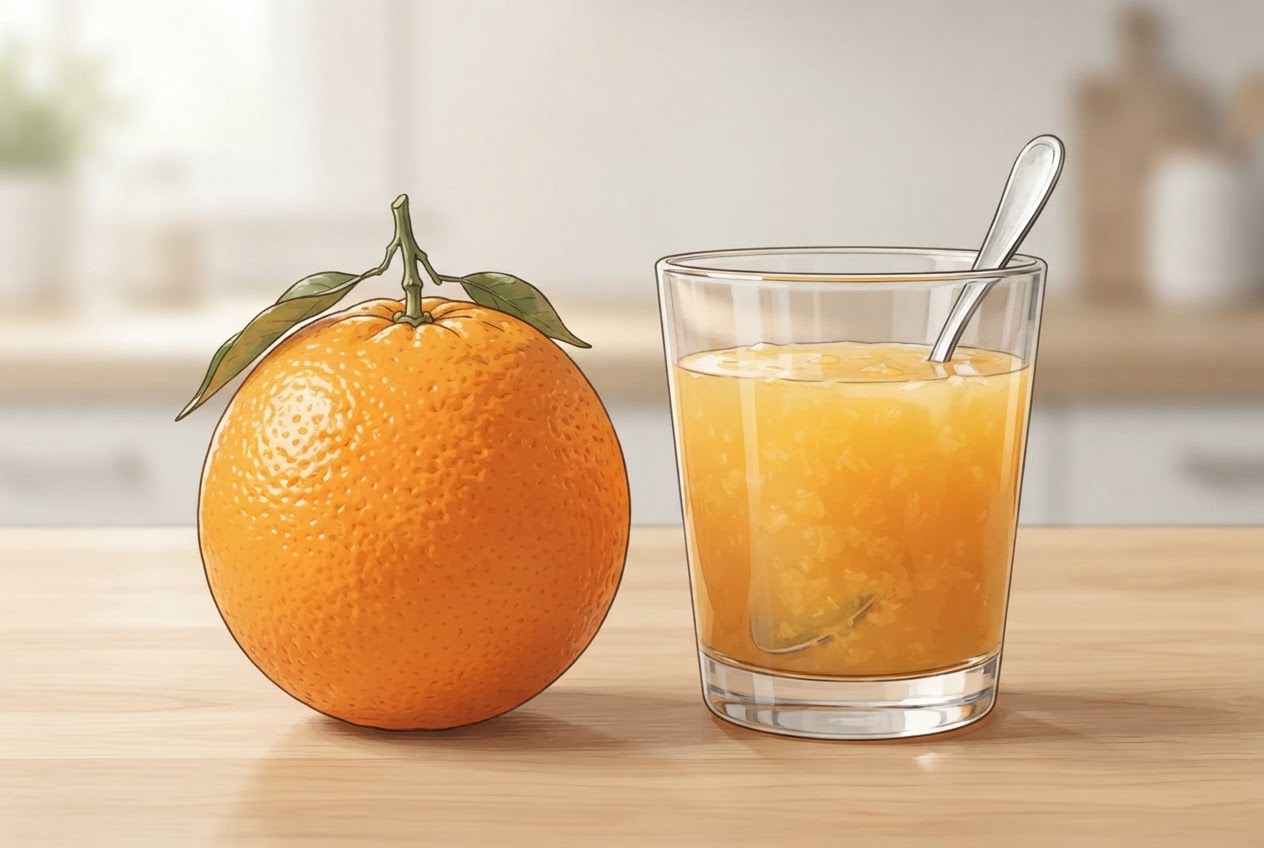
People with diabetes do not have to avoid fruit altogether. Whole fruit is a sensible default choice. With juice and other products, portion size and labeling matter. Carbohydrates play a role here, but on their own they do not predict how a person’s blood sugar will respond.
Whole fruit contains fiber
When you eat a whole piece of fruit, you take in fiber and the fruit’s firm structure along with the carbohydrates. Less of this remains in juice. The carbohydrates still count, for example if someone calculates meals according to an agreed carbohydrate plan.
A small study randomly assigned 63 adults with newly diagnosed type 2 diabetes to two groups. Over twelve weeks, the groups received different recommendations on fruit intake. HbA1c values, which reflect average blood sugar over the previous weeks, did not differ statistically significantly between the groups. Because of its short duration and small number of participants, the study does not justify a universal portion rule, but it argues against a blanket ban on whole fruit.
Juice still contains carbohydrates
Even 100 percent fruit juice contains sugar from the fruit and carbohydrates. “No added sugar” therefore does not mean “sugar-free.” Juicing removes a large share of the fiber. You can also drink more fruit in a short time than many people would eat in one sitting.
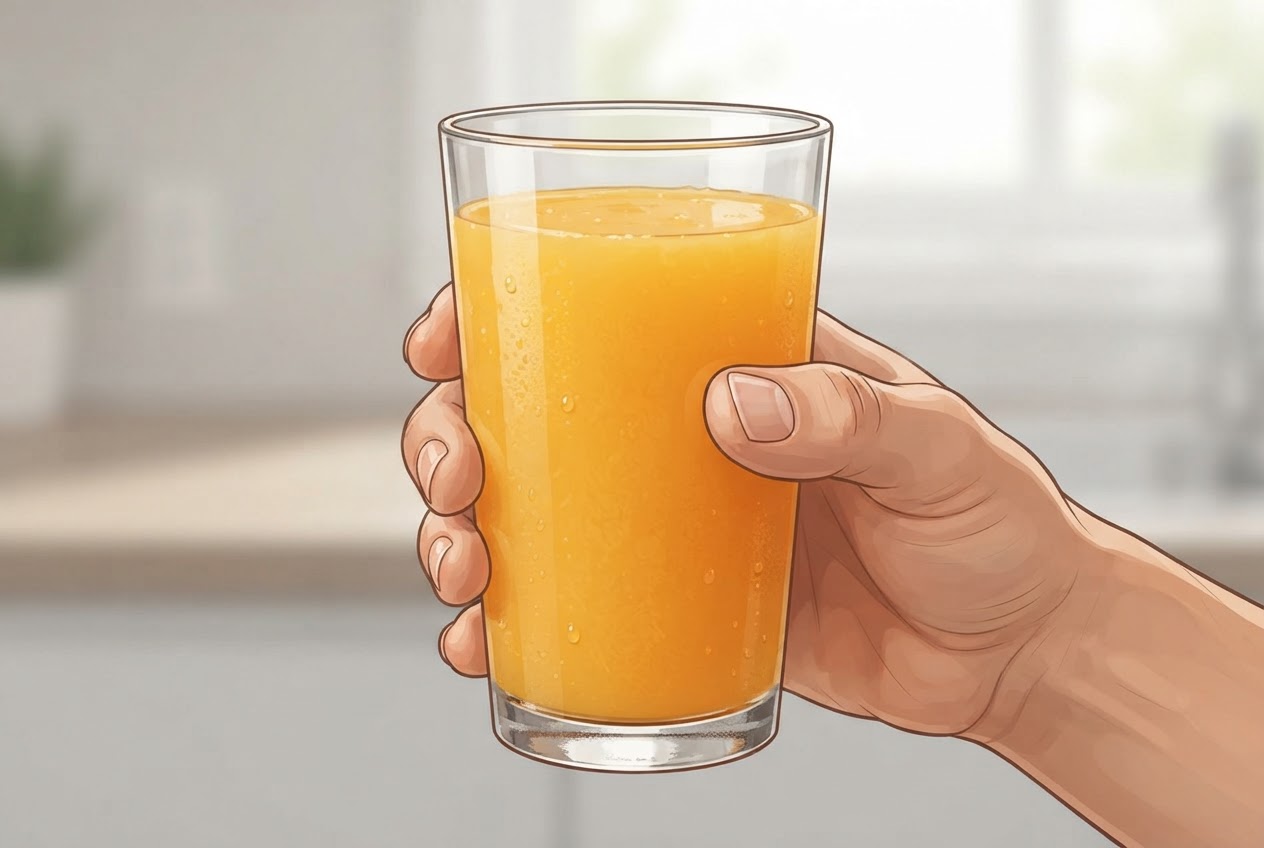
What matters is the amount you drink and the carbohydrates listed on the package. As an example for the US, the American Diabetes Association states that about one-third to one-half cup of juice can contain roughly 15 grams of carbohydrates. This is a calculation aid from a different labeling context, not a personal recommendation on quantity. The exact blood sugar response cannot be predicted from the type of product alone.
Check canned fruit and fruit products
Canned fruit may be packed in water, its own juice, or sugar syrup; the packing liquid and any additives change the nutritional values, while the fruit itself still contains carbohydrates. The ingredient list and nutrition table show what is in a particular can.
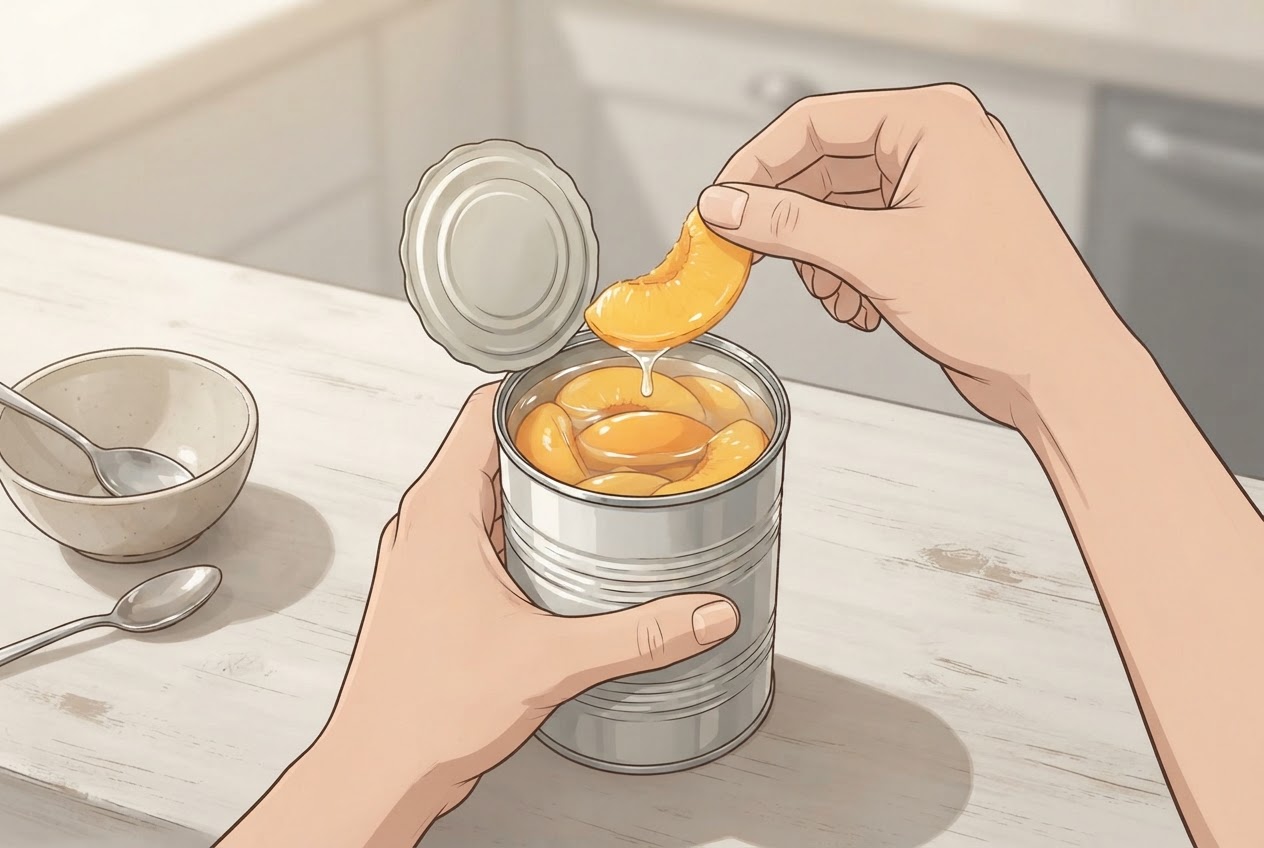
Fruit nectar and fruit drinks may contain added sugar or syrup. The same applies to sweetened compote, jam, and fruit yogurt. A “with fruit” label on the front does not reveal how much sugar has been added. Smoothies also vary: blended whole fruit can contain fiber. Ready-made products may contain other ingredients or added sugar.
How to read labels correctly
On prepackaged foods in the EU, nutritional values are usually given per 100 grams or 100 milliliters. For your own portion, what counts besides this figure is how much you actually eat or drink. For beverages, you should relate the carbohydrates per 100 milliliters to the amount you drink.
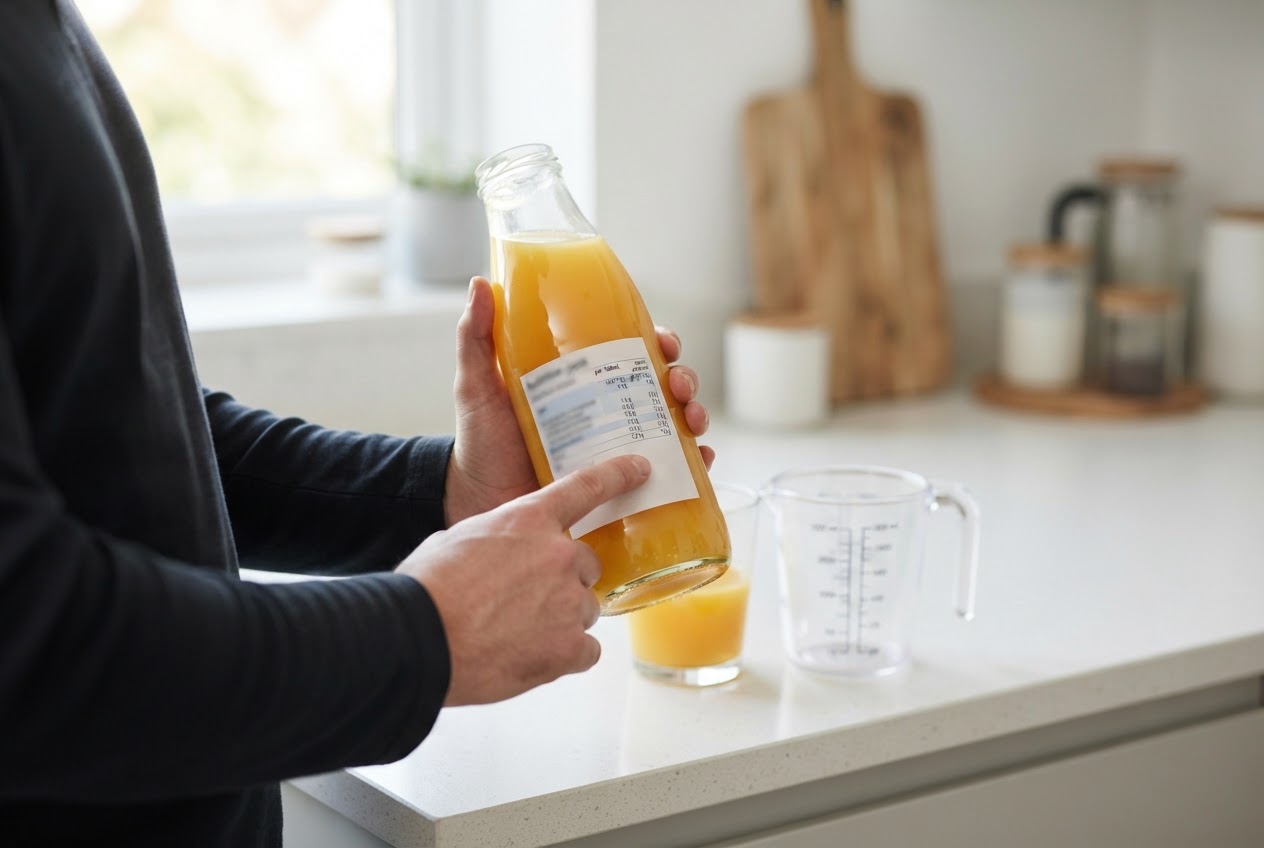
The “of which sugars” figure shows the total amount of sugar. On its own, however, it does not say which sugar occurs naturally in the food and which was added. The ingredient list helps here: sugar or syrup in the list indicates an addition. The EU claim “no added sugars” means that neither sugar nor other sweetening ingredients were added. Naturally occurring sugar may still be present. For such products, a notice must state that the food naturally contains sugars.
When shopping, first check the portion size and carbohydrates, then the sugar figure and the ingredient list. This makes it possible, for example, to tell canned fruit in its own juice from a variety in syrup. Advertising claims on the front of the package are not enough for this.
Studies answer different questions
Studies on fruit and blood sugar levels look at different forms and amounts of fruit as well as different groups of people. A review of 19 studies in which participants were randomly assigned to groups found a lower fasting blood sugar on average. For HbA1c, there was no statistically significant difference. The studies did not compare whole fruit directly with juice. Their results therefore do not predict how a particular product or an individual person will fare.
Studies on the risk of developing type 2 diabetes later answer a different question than studies on the effect of a drink in people who already have diabetes. Long-term studies on fruit juice reach differing results. They show associations in groups, but not how blood sugar develops after a glass of juice.