If you have questions about diabetes, you can find medical basics, ways to connect with others and help finding a specialized practice online. These resources serve different purposes. A ranking would suggest an independent comparison, and there isn’t one here. That’s why we’ve organized the resources by how they can help you.
Online information can help you prepare for a conversation with your doctor. It does not replace a personal diagnosis or a treatment decision. For questions about medication or insulin doses, your diabetes care team is the right contact. In the case of severe acute symptoms or loss of consciousness, don’t wait for an online answer. Call emergency services immediately.

Seven resources for different questions
1. diabinfo for getting started
The national diabetes information portal diabinfo explains the different types of diabetes, treatment options, prevention and everyday life with diabetes. It is a good fit if, after a diagnosis, you first want to understand what certain terms mean, or if you want to prepare for an appointment at a practice.
The content is available in several languages. The number of translations varies by topic; selected materials are also available in Arabic. diabinfo offers general information, but no personal diagnosis or treatment recommendation.
2. diabinfo inquiry portal for general questions
If the published information doesn’t answer your general question, you can submit it through the diabinfo inquiry portal. According to the described process, experts answer the inquiries, and a second expert reviews the answer. To register, you need an email address and a password; you don’t have to give your name. The answer appears in the portal.

The service is intended for general questions and not for urgent symptoms or individual treatment decisions. No binding response deadline is given. So don’t count on receiving an answer in time for an upcoming medical decision.
3. Gesundheitsinformation.de for type 2
Gesundheitsinformation.de explains possible treatments for type 2 diabetes and helps you collect questions for your next doctor’s appointment. The right treatment depends, among other things, on other health conditions, your living situation and your personal goals. A specific decision should therefore be made together with medical professionals.
The page on type 2 diabetes was marked as last updated on October 18, 2023; the next update was planned for 2026. Pay attention to the stated update date when you look into treatment options. The page covers type 2. It does not comprehensively cover type 1, gestational diabetes or rare forms of diabetes.
4. diabetesDE for support
diabetesDE presents various support services. These include a telephone consultation and the option to ask questions by email. For families with children with diabetes, there is also an online consultation on diabetes and psychology. According to the provider, the telephone consultation is scheduled monthly on Tuesdays from 5:30 to 7 p.m. Since dates and availability can change, you should check the current details before calling.
The service is suited to orientation and support. Questions about your personal treatment, especially about medication, still belong with your treating practice or diabetes team.
5. DDG search for specialized care
The German Diabetes Association (DDG), a medical and scientific professional society, offers a search for certified practices and clinics. These include diabetes centers and facilities for treating diabetic foot problems. Another search function helps you find diabetologists and practices with a diabetes focus.
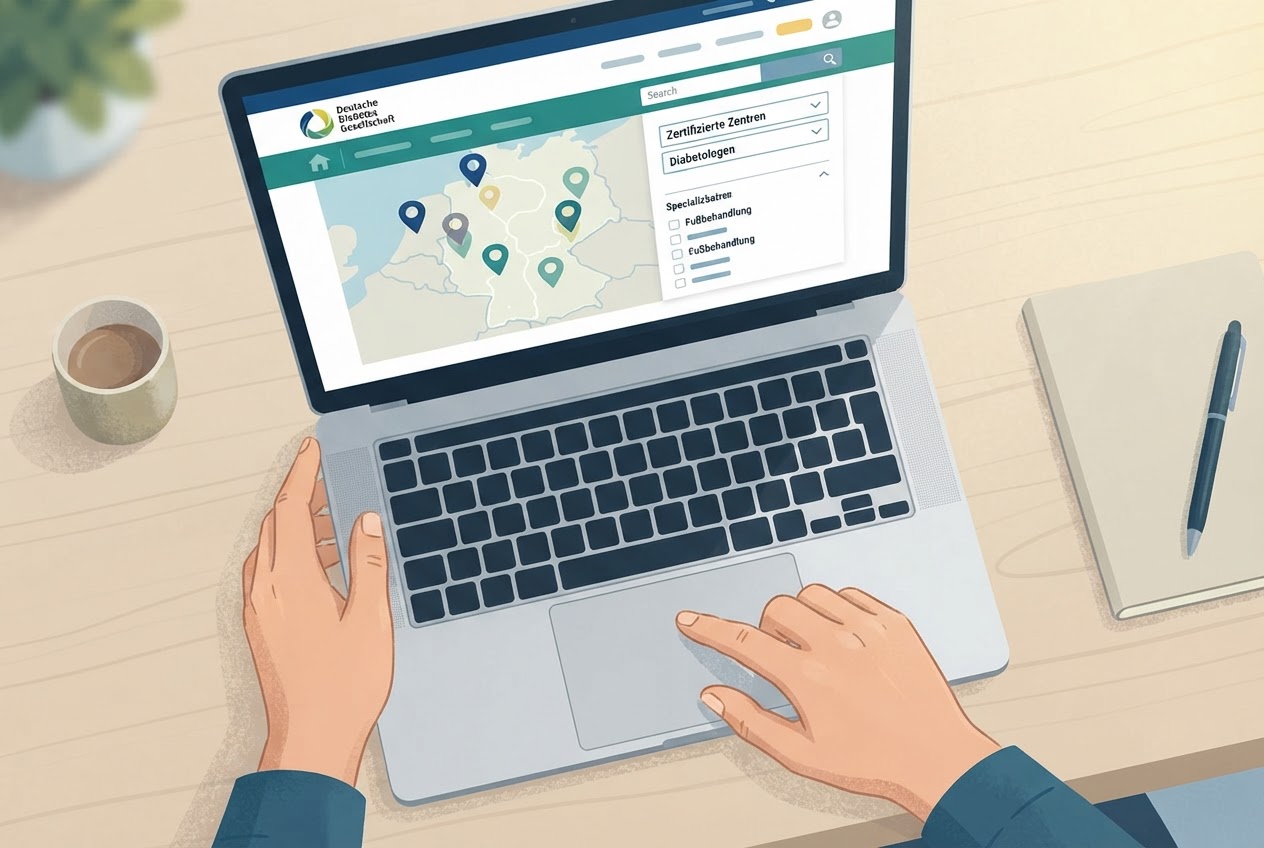
The DDG search helps you find specialized care near you. Certification alone doesn’t tell you whether a facility suits your situation or is accepting new patients. So ask directly about their treatment focus and current availability.
6. Self-help directories for exchanging experiences
diabetesDE and diabinfo list self-help services and patient organizations. There you’ll find regional and national groups as well as digital ways to connect. Some services are aimed specifically at certain age groups, families or people with a particular type of diabetes.
Before getting in touch, check who the group is for and whether it meets online or in person. Self-help offers an exchange of experiences and support in everyday life. For questions about diagnosis or treatment, it does not offer professionally reviewed advice.
7. diabetes-forum.de for everyday experiences
On diabetes-forum.de, people with diabetes exchange questions and experiences. The forum can be helpful if you want to know how others affected by diabetes experience an everyday situation or which questions they asked at their practice. The operator describes the service as anonymous and independent of manufacturers; these are the forum’s own statements.
Users write the posts, and they are not automatically reviewed by medical professionals. So don’t adopt recommendations on medication or insulin doses, and don’t change your treatment based on a forum post. Other people’s experiences can also differ from your own situation.
How to find the right resource
diabinfo is a good choice for reliable basics. If a general question remains unanswered, you can send it to the diabinfo inquiry portal. If you want to understand treatment options for type 2 diabetes, Gesundheitsinformation.de offers guidance. The DDG search helps you find specialized practices and clinics. For exchanging experiences, self-help groups or the forum are a good fit.
For personal symptoms and treatment decisions, contact your treating practice. Online resources are especially useful when you use them to ask targeted questions there: write down your question, mention relevant information about your situation and bring the answers to your appointment. Don’t change medication or insulin doses based on general information from the internet.