New diabetes studies look at more than how well a drug lowers blood sugar. They also ask whether it protects the heart and kidneys, whether remission is possible, and how technical devices can support insulin treatment. However, the results apply to different forms of diabetes and clearly defined groups of patients.
Remission means that certain blood sugar levels are reached over a set period of time without glucose-lowering medication. It is not a cure: the diabetes can return, and check-ups remain necessary. The latest studies show progress, but they do not provide a blanket recommendation for any particular drug or device.
Semaglutide and the Heart
The SOUL trial, published in 2025, tested oral semaglutide in people aged 50 and older with type 2 diabetes and existing cardiovascular disease, chronic kidney disease, or both. In addition to their usual care, participants received up to 14 milligrams of semaglutide daily or a placebo.

The researchers counted deaths from cardiovascular causes, non-fatal heart attacks, and non-fatal strokes as a combined outcome. At least one of these events occurred in 12.0 percent of the semaglutide group and 13.8 percent of the comparison group. The researchers calculated that the relative risk was 14 percent lower in the semaglutide group. The difference between the proportions in the two groups was 1.8 percentage points.
Both figures describe the same result in different ways: the relative figure compares the risk in the groups, while the absolute difference shows how far apart their proportions were. The finding applies to the high-risk group that was studied. It cannot be used to infer what benefit semaglutide has for people with a lower cardiovascular risk. SOUL also does not prove that the tablet reliably protects the kidneys. For the kidney endpoint defined in advance, there was no statistically clear difference between the groups.
Semaglutide in Kidney Disease
The FLOW trial looked at a different group and a different form of treatment: people with type 2 diabetes and chronic kidney disease received a weekly semaglutide injection of 1.0 milligram or a placebo. The average follow-up lasted 3.4 years.
At least one event of the combined endpoint occurred in 331 people in the semaglutide group and 410 people in the comparison group. The events included kidney failure, a severe loss of kidney function, and deaths from kidney or cardiovascular causes. Overall, according to the study, the relative risk of one of these events was 24 percent lower.
This figure does not mean that every individual kidney complication occurred 24 percent less often. The trial ended early after the researchers carried out an interim analysis that had been planned from the start. This should be kept in mind when interpreting the results. FLOW and SOUL examined different forms of administration, groups, and endpoints. Their results therefore do not allow a general statement about the protection of the heart or kidneys by semaglutide.
Remission in Type 2 Diabetes
A study published in the BMJ in 2025 examined 328 adults in China. All were overweight and had lived with type 2 diabetes for less than six years. Both groups were asked to reduce their calorie intake. In addition, one group received dapagliflozin and the other a placebo. The study lasted up to twelve months.

Remission, as defined in the study, was achieved by 44 percent of the dapagliflozin group and 28 percent of the comparison group. To qualify, participants had to reach certain HbA1c and fasting blood sugar levels and take no glucose-lowering medication for at least two months. The difference between the groups was 16 percentage points.
Because the comparison group also followed a calorie-reduced diet, remission cannot be attributed to dapagliflozin alone. It also remains unclear how many participants will still be in remission years later. The study concerns a specific group of people who were overweight and had had diabetes for a comparatively short time. Anyone taking medication should therefore not stop it on their own, but discuss any changes with their doctor.
Automated Insulin Delivery
With automated insulin delivery, a device continuously measures glucose levels and uses them to calculate how much insulin to deliver. One study randomly assigned 319 adults with insulin-treated type 2 diabetes to either this kind of treatment or their previous insulin therapy. Both groups monitored their glucose continuously. The treatment phase lasted 13 weeks.
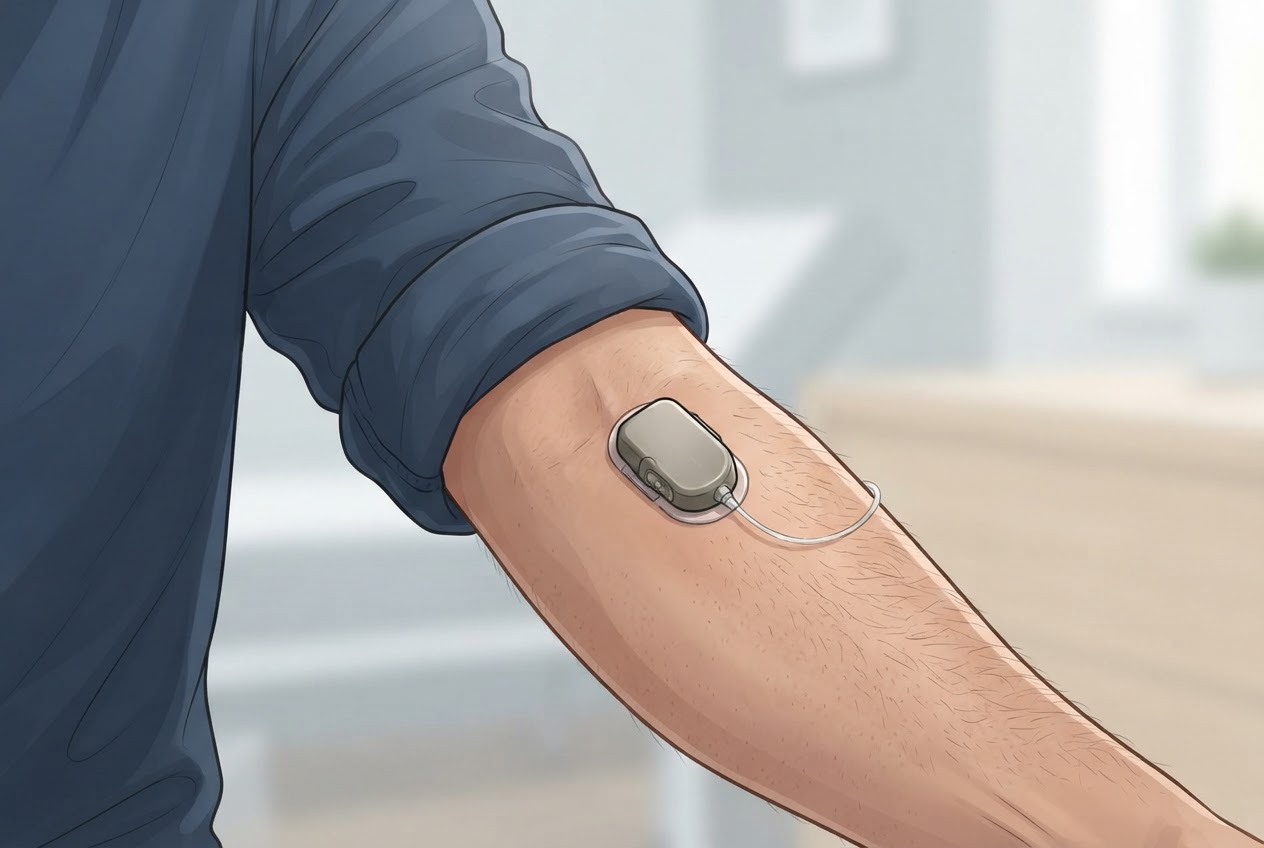
The HbA1c value shows average blood sugar over the previous weeks. It fell by an average of 0.9 percentage points in the automated insulin delivery group and by 0.3 percentage points in the comparison group. At the end of the study, glucose levels in the group using the automated system also stayed longer within the target range of 70 to 180 milligrams per deciliter of blood.
The results point to better blood sugar control during the short study period. They do not prove that the device prevents heart attacks, strokes, or kidney failure in the long term. Nor does it follow that every device is suitable for everyone with insulin-treated type 2 diabetes. The choice depends on the individual treatment situation and on medical care.
Teplizumab in Type 1 Diabetes
In type 1 diabetes, researchers are also investigating whether the onset of the symptomatic stage of the disease can be delayed. In its 2025 guideline, the American Diabetes Association describes teplizumab as a possible option for selected people aged eight and older with stage 2 type 1 diabetes. At this stage, there are already signs of the autoimmune process, but not yet the typical symptoms of stage 3.

The study was small and examined relatives of people with type 1 diabetes. Of the 44 people who received teplizumab, 43 percent developed the symptomatic stage during the study. In the placebo group of 32 people, it was 72 percent. The median time to diagnosis was 48.4 months with teplizumab and 24.4 months with placebo.
The result points to a delay, not to permanent prevention or a cure. The most common side effects in the study included temporarily low lymphocyte counts and skin rash. Whether the treatment is an option must be assessed individually at a specialized medical center.
What the Studies Mean for People with Diabetes
Each set of study results applies to specific people, treatments, and outcome measures. A better HbA1c value after 13 weeks answers a different question than a lower risk of a combined cardiovascular and kidney endpoint over several years. Likewise, a comparison with a placebo or with usual care is not a direct comparison between different active substances.
In a conversation at the doctor’s office, a specific question helps: is it mainly about blood sugar, cardiovascular risk, existing kidney disease, or the burden of insulin treatment? This makes it possible to clarify whether the treatment studied suits your own diagnosis, which benefits have been demonstrated, and which questions remain open. A single study is not a reason to change an ongoing treatment.