With diabetes, treatment should fit your type of diabetes, your health and your daily life. Type 1 diabetes requires insulin because the body produces too little or none at all. In type 2 diabetes, insulin often works less well; later, insulin production may also decline. That is why no single treatment is equally suitable for everyone.
Avoidable problems arise when people wait for obvious symptoms, pursue a rigid blood sugar target or accept recurring episodes of low blood sugar. This overview describes important mistakes, without ranking them by frequency. What matters most are appropriate treatment goals, a safe plan for special situations and regular check-ups.
Don’t Wait for Symptoms
Intense thirst, frequent urination, fatigue, blurred vision and unintended weight loss can be signs of diabetes. However, type 2 diabetes sometimes causes no noticeable symptoms for a long time. Have possible signs checked by a doctor instead of waiting for things to get worse.

A blood glucose meter for home use generally does not replace a laboratory test. For a diagnosis, the doctor assesses your symptoms and test results together with confirmed laboratory values. Ask questions if your values are borderline or if test results do not fit together.
Determining the type of diabetes is also important. Age, weight and lifestyle alone do not reliably show which type is present. Type 1 diabetes can occur at any age. A wrong classification can mean that the treatment does not match your actual insulin needs.
Set Treatment Goals Together
A single HbA1c target does not suit everyone. The HbA1c value indicates your average blood sugar over the past two to three months. When choosing a personal target, factors such as the risk of low blood sugar, other health conditions, age, treatment burden and your own wishes all matter.
For people with type 2 diabetes, the German National Disease Management Guideline (Nationale VersorgungsLeitlinie) gives an HbA1c range of 6.5 to 8.5 percent as a point of reference. This range is not a personal target value and not a recommendation to change your treatment yourself. Discuss with your doctor which value makes sense for your situation.

A stricter target can make sense for some people. For others, it increases the treatment burden or the risk of low blood sugar, without the additional benefit outweighing the strain. If you consistently miss an agreed target, talk with your doctor’s office about possible reasons. These include side effects, difficulties taking your medication or a treatment that is hard to fit into your daily life.
In type 2 diabetes, the choice of medication also depends on other health conditions. Cardiovascular and kidney diseases influence which active ingredients are suitable. Do not change or stop medication and insulin on your own. If a treatment causes problems, your doctor’s office can work with you to see whether an adjustment is possible.
Take Low Blood Sugar Seriously
By the usual definition, low blood sugar is a blood glucose level below 70 mg/dl (3.9 mmol/l). It can show up as trembling, sweating, palpitations, difficulty concentrating or confusion. Repeated episodes of low blood sugar are a reason to review your treatment plan.

Note when low blood sugar occurs, how often it happens and whether other people had to help. This helps your treating practice identify possible triggers and assess whether a change in therapy, additional training or a monitoring device would be useful.
If you are awake during an episode of low blood sugar and able to act yourself, follow your personal training and treatment plan. If a person is unconscious, nothing must be given to eat or drink. Call the emergency services immediately.
Don’t Change Medication on Your Own on Sick Days
Fever, infections, vomiting, diarrhea or problems with an insulin pump can change your blood sugar and your medication needs. Do not stop insulin or other diabetes medication on your own, and do not adjust the dose without an agreed plan. This applies especially to type 1 diabetes, because a pronounced lack of insulin can become dangerous.
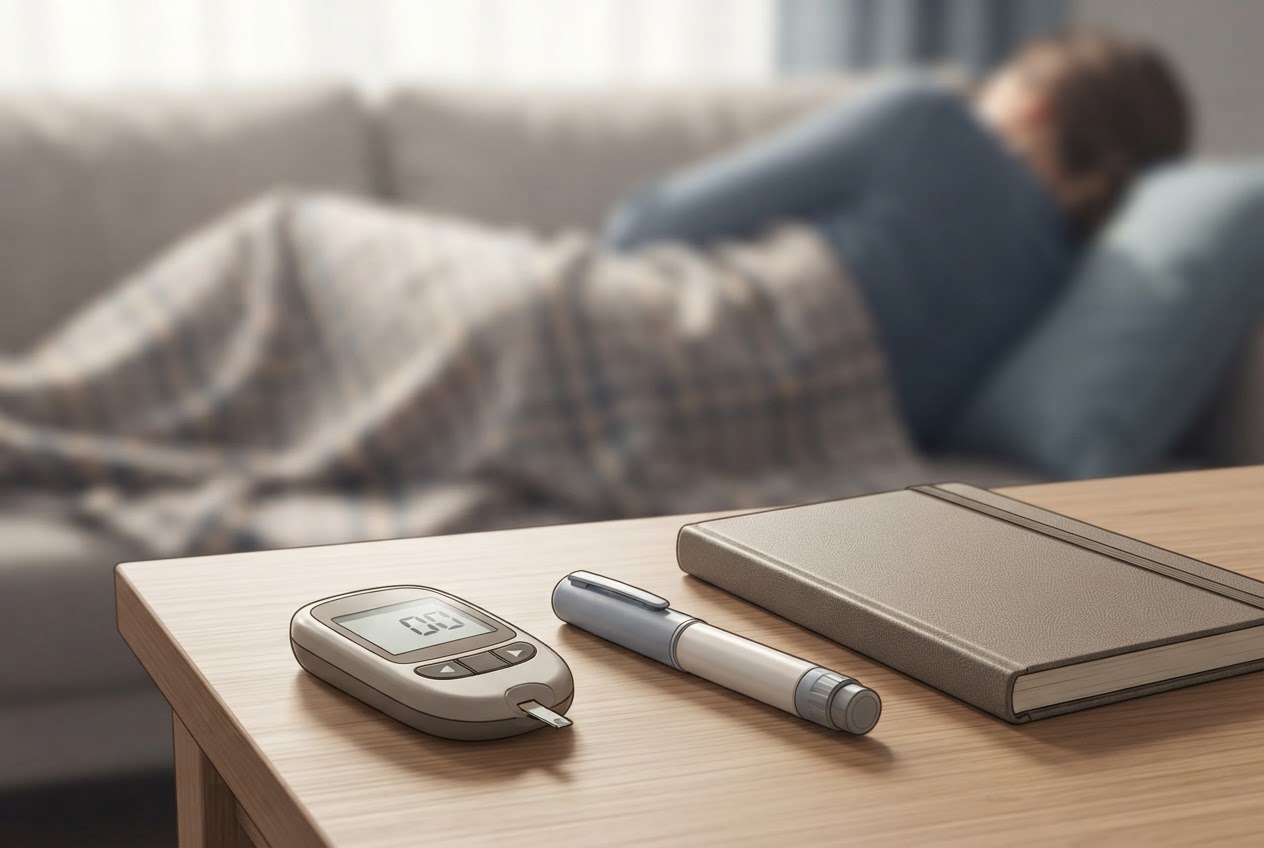
Agree on a personal sick-day plan with your doctor’s office in advance. It should specify how often you measure your blood sugar and, if necessary, ketones, whom to contact if your values are abnormal and what to do if your pump fails. Ketones are substances that can form when there is a severe lack of insulin.
In people with type 2 diabetes who take insulin and an SGLT2 inhibitor, an infection can rarely lead to ketoacidosis even though blood sugar does not appear to be greatly elevated. So clarify in advance with your doctor’s office what applies to your medication when you are ill. Feeling severely unwell, drowsiness or loss of consciousness requires immediate medical help.
Attend Preventive Check-Ups
Diabetes can damage the eyes, kidneys, nerves, heart and blood vessels before any symptoms appear. So don’t wait for symptoms before attending your scheduled check-ups. Which examinations are needed, and how often, depends on your findings and your personal risk.
In type 2 diabetes, kidney function should be checked at the time of diagnosis. As a general guide, eye examinations are often recommended every two years when the risk is low and every year when there are additional risk factors. Your treating practice sets the appropriate interval. Also check your feet daily for changes and raise anything unusual promptly.
In diabetes treatment, also pay attention to blood pressure and blood lipids, as well as other personal health goals. Collect your test results and open questions for your next appointment. This helps clarify which check-ups are due and whether a finding requires adjusting your treatment.
These questions can help in your conversation with your doctor’s office:
- How was my type of diabetes determined?
- Which HbA1c target fits my health and my risk of low blood sugar?
- What should I do if I am ill, have no appetite or have problems with my insulin pump?
- Which preventive check-ups are due, and at what intervals?