Which studies are right for you depends on whether you have type 1 or type 2 diabetes, what your goal is, and whether you have heart or kidney disease. Current studies are looking at glucose sensors without insulin, protecting the heart and kidneys, possible remission in early type 2 diabetes, and automated insulin pumps in type 1 diabetes.
Each study looked at a specific group and answers a different question. They can help you prepare for a conversation with your diabetes practice. A single study is not a personal treatment recommendation and is no reason to change your medication on your own.
Glucose sensors without insulin
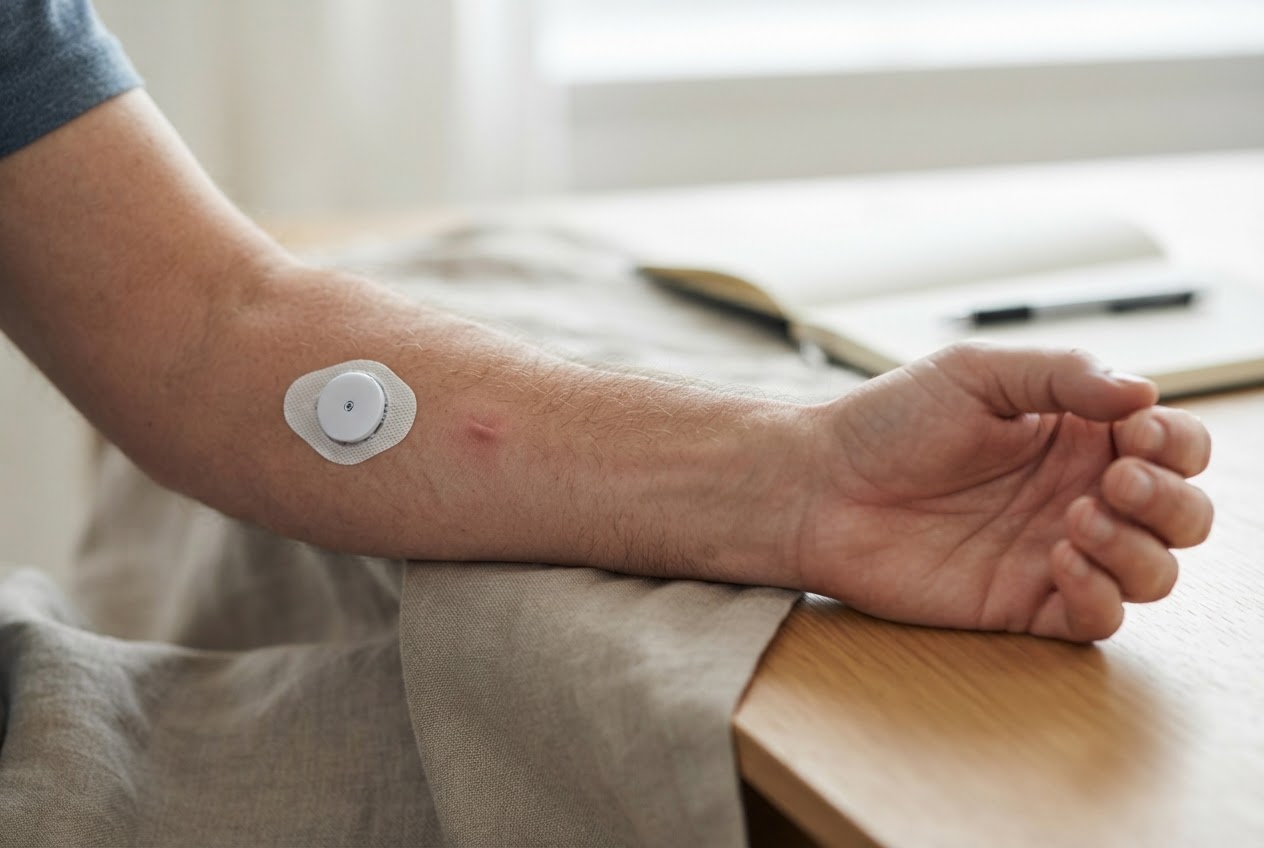
If you treat type 2 diabetes without insulin and want to better understand how food and your daily routine affect your glucose levels, you can ask your practice about glucose sensors. A continuous glucose monitor, or CGM, uses a sensor to measure the glucose level in your tissue and shows how your levels change over the course of the day.

A randomized study of 72 adults examined CGM over 90 days. The participants took neither insulin nor sulfonylureas. These medications can cause low blood sugar. One group used the sensor alone, while the other also used an app to log food. In both groups, HbA1c, a longer-term average of glucose, fell by at least 1.0 percentage point. The additional app showed no discernible benefit.
The study compared two ways of using the sensor. It did not compare care with a sensor against usual care without one. For that reason, it cannot tell us on its own how much of the change was due to the sensor or whether it lasts in the long term. It also does not show that a sensor is equally useful for everyone not on insulin therapy. Ask your practice whether using a sensor for a limited time fits your treatment goal and how to interpret the values displayed.
Heart and kidney studies in type 2 diabetes
If you have type 2 diabetes and already have cardiovascular or kidney disease, studies on these conditions are especially relevant. They examine whether a treatment lowers the risk of certain health events. However, the results cannot automatically be applied to people without these conditions.
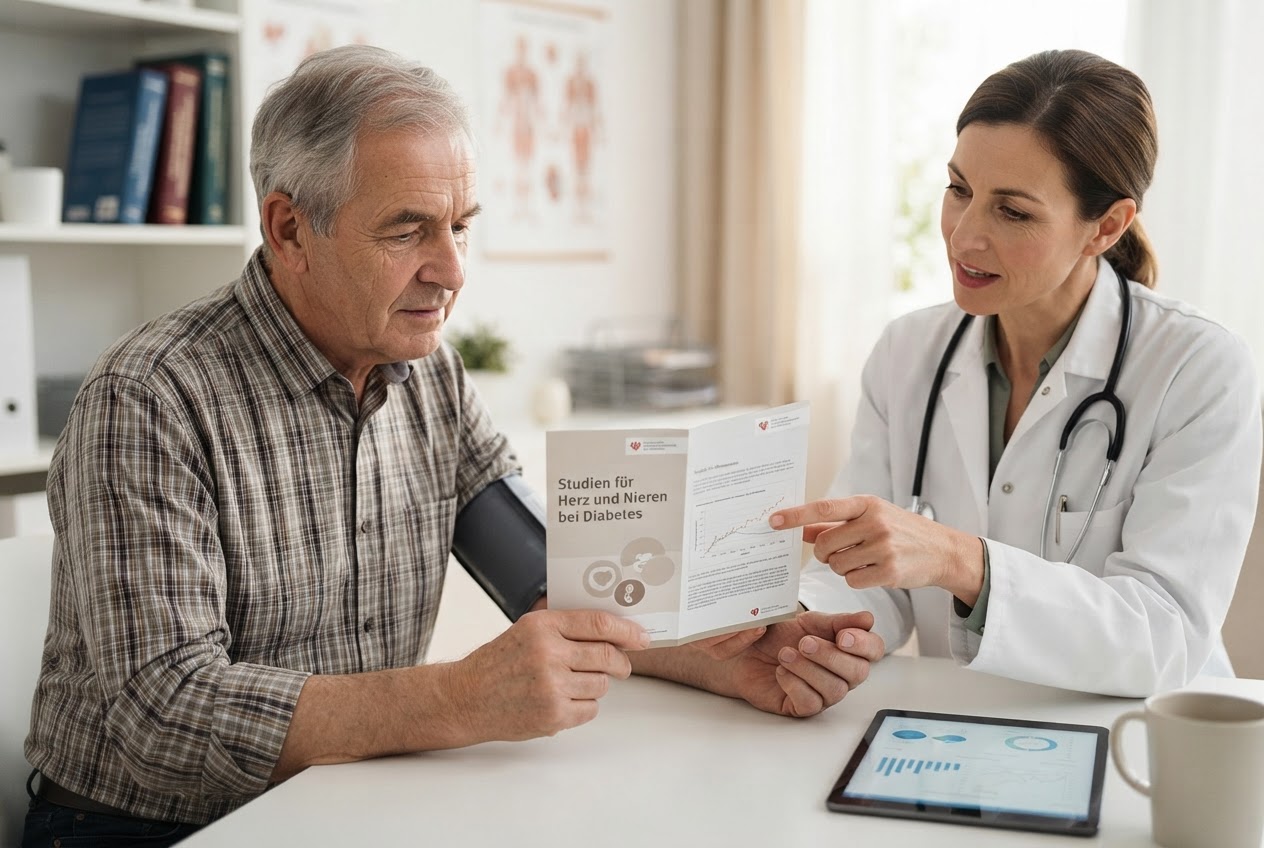
In the SOUL study, people with type 2 diabetes and known cardiovascular disease, chronic kidney disease, or both received either oral semaglutide or a placebo. During follow-up, at least one of the following events occurred: death from cardiovascular disease, non-fatal heart attack, or non-fatal stroke. This affected 12.0 percent in the semaglutide group and 13.8 percent in the placebo group. That is a difference of 1.8 percentage points in this study group. A confirmatory kidney endpoint did not differ significantly between the groups. The study was funded by Novo Nordisk.
The FLOW study looked at a different group: 3,533 people with type 2 diabetes and chronic kidney disease. In addition to standard care, they received either injectable semaglutide weekly or a placebo. Over a mean follow-up of 3.4 years, the risk of these combined events was 24 percent lower. This endpoint included kidney failure, a substantial loss of kidney function, and death from kidney or cardiovascular causes, among others. The result applies to the group studied and to several possible events taken together, not to kidney failure alone.
If you already have heart or kidney disease, these studies can be a reason to ask your practice specifically about your personal heart and kidney risk and the treatment goals that suit it. The German Diabetes Association (DDG) takes new evidence into account in its practice recommendations. For decisions in the German care setting, the relevant current recommendation therefore matters, together with your medical history.
Remission in early type 2 diabetes
Remission means that blood glucose levels stay below certain thresholds for a set period without glucose-lowering medication. This is not the same as a permanent cure. A study in the BMJ examined whether a calorie-reduced diet combined with dapagliflozin can promote remission in people with early type 2 diabetes.
The study included 328 adults who were overweight and had had diabetes for less than six years. After twelve months, 44 percent of participants taking dapagliflozin and following a calorie-reduced diet reached the defined remission values. With a placebo and the same dietary support, it was 28 percent. Remission was defined as an HbA1c below 6.5 percent and a fasting blood glucose below 126 mg/dl for at least two months without glucose-lowering medication. The mean weight loss was 5.0 versus 3.2 kilograms.
The study looked at a clearly defined group: it took place in China, all participants were overweight, and people with chronic kidney disease did not take part. In addition, the study’s definition required two months without medication; an international expert consensus proposed three months. The results can be a reason to talk with your practice about structured dietary and weight support in early type 2 diabetes. They are no reason to start or stop a medication on your own.
Automated insulin delivery in type 1 diabetes
If you have type 1 diabetes and inject insulin several times a day, research on automated insulin delivery systems can give you a concrete question to bring to your diabetes practice. Such systems adjust insulin delivery using readings from a glucose sensor. The RADIANT study examined a tubeless system in 188 children and adults with elevated HbA1c despite daily injections.

After 13 weeks, the mean HbA1c was 7.2 percent with the automated system and 8.0 percent with the previous injection treatment. The adjusted difference between the groups was 0.8 percentage points. During the study, no severe low blood sugar events or diabetic ketoacidosis occurred in either group.
The study ran for 13 weeks and tested only one particular type of system. It therefore does not answer which device suits an individual person or how stable the effect remains over a longer period. If daily injections and high HbA1c levels shape your everyday life, you can ask about the requirements, the training effort, and the possible advantages and disadvantages of automated insulin delivery.
How to put diabetes studies into perspective
When reading, pay attention to three points: Who took part in the study, what was actually compared, and how long did the follow-up last? An improvement within one group, for example, does not automatically prove that a treatment works better than usual care. For combined endpoints, you should also check which events were grouped together.
The type of publication also matters. A full study report offers more information than a conference abstract. An abstract on sensors and AI-assisted meal logging reported a statistically significant HbA1c difference compared with a control group after six months when the sensors were used repeatedly rather than just once. Because the results appear only in a conference abstract, they are a preliminary indication. A fully published study report provides a better basis.
Three questions can help you assess a study for a conversation at your practice:
- Do the participants have the same type of diabetes and similar co-existing conditions as you?
- Was the treatment compared with a suitable alternative or with usual care?
- Was it about a short-term measurement or longer-term events?
Take along the question that fits your everyday life, for example whether a sensor could make your glucose patterns more visible or whether your kidney values are taken into account when choosing a therapy. Do not change medications or insulin doses on your own based on a study result. The decision also depends on your current treatment, your co-existing conditions, and possible side effects.
When you need help immediately
Study results are no substitute for emergency medical care. Call emergency services if someone loses consciousness, has a seizure, or has severe low blood sugar and cannot swallow safely. If there are possible signs of diabetic ketoacidosis, such as vomiting, abdominal pain, and deep, rapid breathing, medical help is needed immediately. Call emergency services for severe symptoms as well.