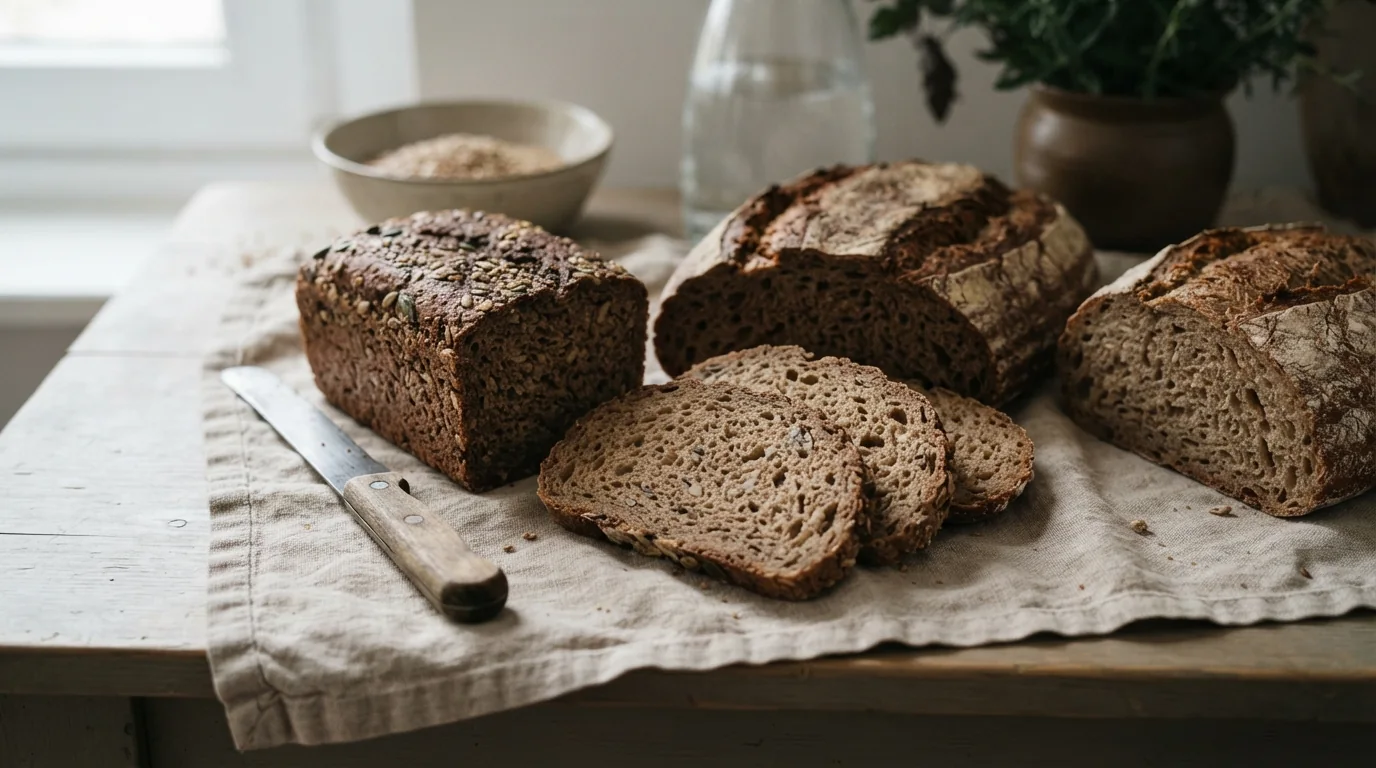
For type 2 diabetes, minimally processed whole grain bread with coarse or whole grains is usually a good choice. It contains fiber and may cause blood sugar to rise less after a meal than finely milled white bread. The amount you eat and the bread’s carbohydrate content matter. Which type suits you best varies from person to person.
Why whole grain bread is a good choice
Whole grain bread is made from the entire grain kernel, including the bran and germ. It therefore contains more fiber than bread made from light, finely milled flour. Fiber is an important part of a balanced diet and can help blood sugar rise less after eating.
The German Nutrition Society recommends choosing whole grain products. The German Diabetes Association also recommends whole grain products for type 2 diabetes, preferably minimally processed varieties with whole grains. Whole grain bread still contains carbohydrates, which affect blood sugar.
An analysis of 42 studies on whole grains and fiber in diabetes found a moderate benefit on average: in the groups that received a dietary intervention, body weight was around 0.5 kilograms lower. The long-term blood sugar marker HbA1c was about 0.2 percentage points lower. The studies examined different dietary approaches, not just bread. The results are therefore not a prediction of how much a particular bread will affect you.
How processing affects the blood sugar response
The whole grain content matters, and whole or coarsely cracked grains mean less fine processing. The German Diabetes Association recommends such whole grain products because they may affect the blood sugar response after eating more favorably than highly processed, finely milled products.
Small studies with people with type 2 diabetes support the importance of processing and grain size. They examined short-term blood sugar responses to meals or various whole grain products. No reliable ranking of individual breads can be derived from this. The studies also do not show that a particular type of bread improves HbA1c levels or the risk of complications in the long term.
How to recognize whole grain bread
In Germany, the term “Vollkornbrot” (whole grain bread) is legally protected. At least 90 percent of the grain used must consist of whole grain flour or whole grain meal. The label therefore tells you more than a dark color or the phrase “with grains.”
Dark bread may be colored with malt or caramel color. Grains on the crust also do not show that the inside of the bread is made of whole grain. Check the name and, for packaged bread, the ingredient list. A “multigrain bread” or “seeded bread” is not automatically a whole grain bread.
Rye and sourdough are no guarantee
Whole grain rye bread can be a suitable choice if you like it and tolerate it well. However, rye alone does not automatically make a bread friendlier to blood sugar than wheat. Sourdough is also not a reliable sign of a better blood sugar response. Pay attention above all to the whole grain content, the processing and the amount you eat.
Pay attention to carbohydrates and portion size
Whole grain bread also contains carbohydrates, which raise blood sugar. A large or thick slice can provide more carbohydrates than a small, thin slice. For packaged bread, you can find the carbohydrate content per 100 grams in the nutrition table. Weigh your portion if needed so that you can apply the value to the amount you actually eat.
The “of which sugars” value does not show the total amount of carbohydrates that affect blood sugar. Bread contains mainly starch, which also raises blood sugar. The glycemic index indicates how much a carbohydrate-containing food raises blood sugar compared with glucose. It can serve as additional information, but on its own it does not predict how your body will react to a portion of bread.
If you inject insulin, coordinate the amount of carbohydrates with your personal treatment plan. Do not change your insulin dose based on a general recommendation about a type of bread.
How to choose bread for everyday life
Look for the label “Vollkornbrot” (whole grain bread) and, if you tolerate it, prefer less finely processed breads with whole or coarsely cracked grains. For packaged products, compare the carbohydrate and fiber content. Increase the whole grain portion gradually if you have been eating little fiber so far. This gives your digestive system time to get used to it.
Bread can also fit into a meal plan with type 2 diabetes. The right amount depends on your treatment and your blood sugar levels. Your eating habits also play a role. Vegetables, legumes or a source of protein can round out the meal; however, they do not cancel out the carbohydrates in the bread.