A good diabetes portal answers the questions its readers face next: Do I need to act right away, understand a measurement, discuss a treatment or adjust my daily life? It bases medical statements on guidelines and reliable information. In doing so, it explains benefits and risks in plain language and makes uncertainties clear.

For every topic, it should be clear who it applies to. Type 1 diabetes, type 2 diabetes and gestational diabetes raise different questions. An independent health portal helps readers get oriented and prepare for conversations with their care team, but it does not make diagnoses or recommend individual doses or changes to treatment.
Start with urgent questions
Blood sugar levels that are too low or too high belong at the start of topic planning because they require immediate decisions. Readers need to recognize warning signs and know when self-help is not enough. An article should therefore explain when prompt medical help is needed and what information matters when calling emergency services.
Loss of consciousness, seizures or severely impaired consciousness require immediate medical help. Do not give an unconscious person anything to eat or drink. A portal should place such advice prominently rather than hiding it among general explanations. For symptoms that do not appear immediately life-threatening but are new or persistent, the text should advise seeing a doctor promptly.

Explain test results clearly
Abnormal blood sugar levels or a diabetes diagnosis raise practical questions: What does a single measurement tell me? Which tests confirm the diagnosis? What does the HbA1c value, which reflects average blood sugar over the past weeks, mean?
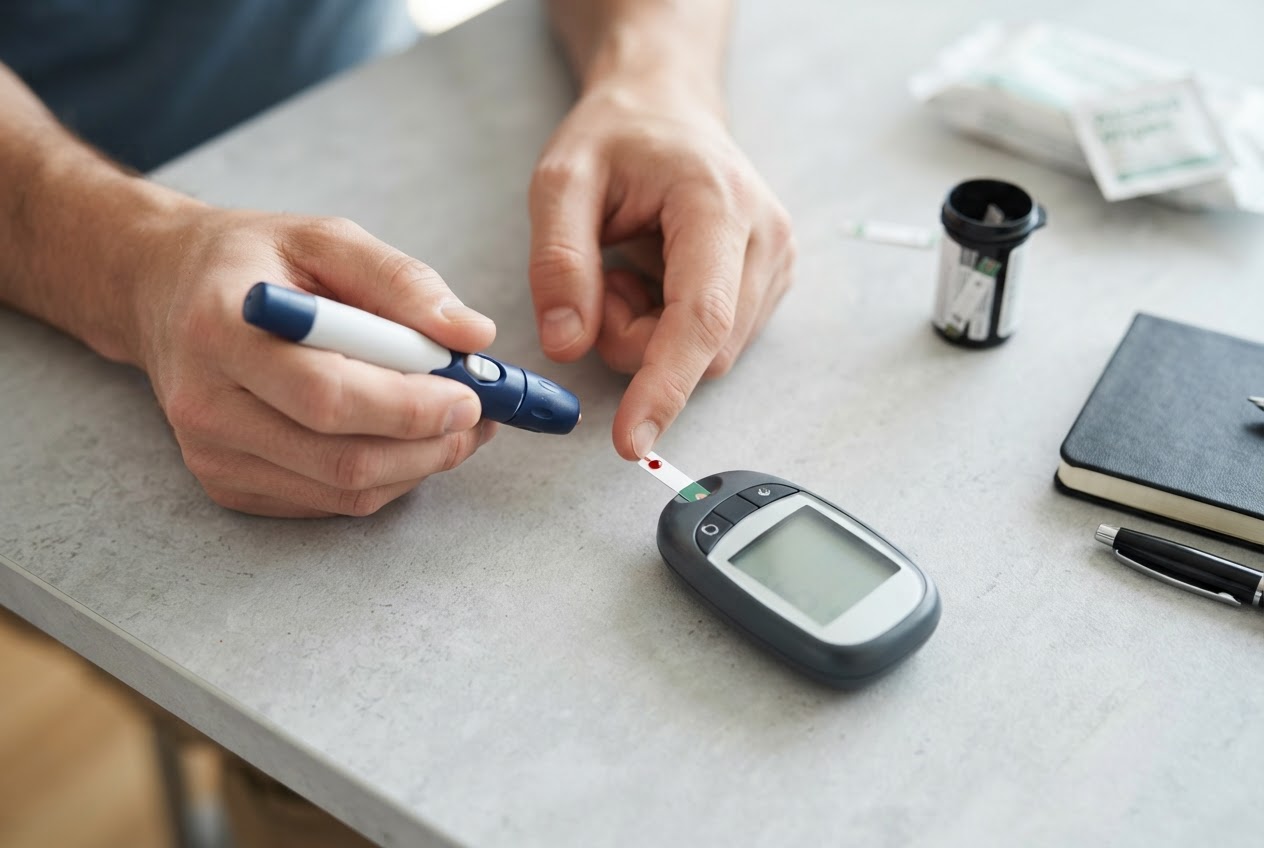
An article should explain which measurements professionals take into account and why test results can differ depending on the situation. The German National Disease Management Guideline on type 2 diabetes also notes that experts disagree on some questions about diagnosis. Explain where uncertainty exists. At the same time, make clear what guidance the guideline offers. By the end, readers should know which questions they can ask at the doctor’s office, rather than drawing their own diagnosis from a single value.
Weighing treatment decisions
Articles on HbA1c targets and medications should explain the options, the benefits and possible drawbacks. The German National Disease Management Guideline stresses that treatment goals should fit the person’s life situation and priorities. A portal should therefore not present any target value as equally right for everyone.
A statement about a side effect should specify which active ingredient it refers to, which group it occurs in and what time period it covers. Figures on how often a side effect occurs do not predict whether it will affect an individual person. The text should explain the conditions under which these figures apply.
A helpful article provides concrete questions for discussion: What benefit is an option supposed to bring? What side effects are known? Which personal circumstances influence the choice? The decision about a treatment belongs in the conversation between the patient and their care team. The portal should not give instructions on starting, stopping or changing a treatment.
Explain everyday life without blame
Nutrition, exercise, weight and education programs are important topics, but recommendations must fit each person’s circumstances. The guideline treats non-drug measures as a separate part of care. This does not support a blanket claim that lifestyle changes are enough for everyone or that medications play the same role for everyone.
Concrete content helps more than moral appeals. An article on exercise, for example, can explain which questions people with diabetes should clarify with their doctor before making a change. A text on nutrition can describe different approaches and their limits without presenting individual foods as cures. If putting advice into practice is difficult, the article should point to suitable support instead of framing it as personal failure.
Psychological and social burdens also deserve their own topics. Feeling overwhelmed, anxiety, guilt and problems at work or in daily life are reasons to seek counseling. A portal should show where those affected can find support, and acknowledge that money, time, family and access to care influence decisions.
Explain complications and checkups
Articles on cardiovascular disease, kidneys, eyes, nerves and feet should answer two questions: Which checkups can be relevant with diabetes, and which symptoms should a doctor look into? The content should neither stoke fear nor give the impression that complications are inevitable.
Plan preventive-care information and symptom texts separately. An article on regular checkups explains why certain areas are monitored. An article on specific symptoms says when a medical evaluation makes sense and when urgent help is needed. This way, readers find the right next step instead of drawing their own diagnosis from a general list of risks.
Clearly distinguish the types of diabetes
Although type 2 diabetes accounts for more than 90 percent of diabetes cases according to the Robert Koch Institute, a portal must not quietly equate “diabetes” with type 2. Insulin, glucose monitoring and daily life raise their own questions in type 1. Gestational diabetes, in turn, needs information on pregnancy and follow-up care.
Every article should state early on who its statements apply to. A general text can explain shared basics, but it must point to appropriate subpages on type 1, type 2 or gestational diabetes. Separate entry points also make sense for children and adolescents and for older people, provided the content genuinely takes their particular care situation into account. Older information should not appear as a current treatment recommendation without its validity having been checked.
Plan for accessibility
Health information must be understandable even without medical training. This is especially relevant given the social differences in known diabetes: in the 2024 RKI survey, 16.2 percent of adults with low education and 6.0 percent of adults with high education reported a physician-diagnosed diabetes. These figures do not show different topic preferences. They do, however, argue for building in plain language and good accessibility from the start.
The first time a technical term appears, editorial teams should explain it and spell out abbreviations. They should break up long blocks of text. Numbers need a frame of reference: Who was studied? Over what period? Under what conditions? A study examining the effectiveness of a treatment raises different questions than qualitative studies, which describe the experiences of those affected. These differences help readers judge what a statement actually demonstrates.
Organize topics by the next step
An editorial team can check every planned article against these questions: Who does the information apply to? What specific decision or action is at hand? Which options and drawbacks are documented? What remains uncertain? When is a medical evaluation needed? With these questions, you can plan articles so that readers recognize a suitable next action.
Label the priorities as the editorial team’s assessment. Data on how common a condition is does not automatically show which content readers are most urgently looking for. A genuine ranking also requires feedback from the target group, such as questions from counseling and search, or conversations with those affected. Without such data, it makes sense to order topics by urgency, importance for treatment decisions and relevance to daily life, but not to claim measured interest.
Keep currency visible
Guidelines and individual recommendations change. The German National Disease Management Guideline on type 2 diabetes is divided into individual topics that may appear in separate documents. Before publication, the editorial team should check whether a newer version or supplement exists and whether the information used is still current.
Every article should state the date of its last expert review and, if set, the next review date. Where assessments differ, the text explains what the difference is. Where the evidence is unclear, it names the open question instead of feigning a definitive answer. This helps readers better understand medical statements that can change.