In severe hypoglycemia (low blood sugar), blood glucose drops so far that the brain no longer gets enough energy. This can lead to confusion, loss of consciousness and seizures. A seizure in this situation is an emergency and needs immediate help.
If you see a person having a seizure and suspect low blood sugar, call the emergency number 112 immediately, protect the person from injury and do not put anything in their mouth. Sugar, drinks or medication are dangerous when consciousness is impaired, because they can enter the airways. The seizure itself does not prove that blood sugar is low. It is a warning sign. The emergency services must determine the cause.
Why Low Blood Sugar Can Trigger Seizures
The brain depends on glucose as its source of energy. When blood sugar falls sharply, nerve function is thrown off balance. Hypoglycemia is generally defined as a blood glucose level below 70 mg/dl, or 3.9 mmol/l. How early symptoms begin varies from person to person. Some people notice warning signs at higher levels, others only at much lower ones.
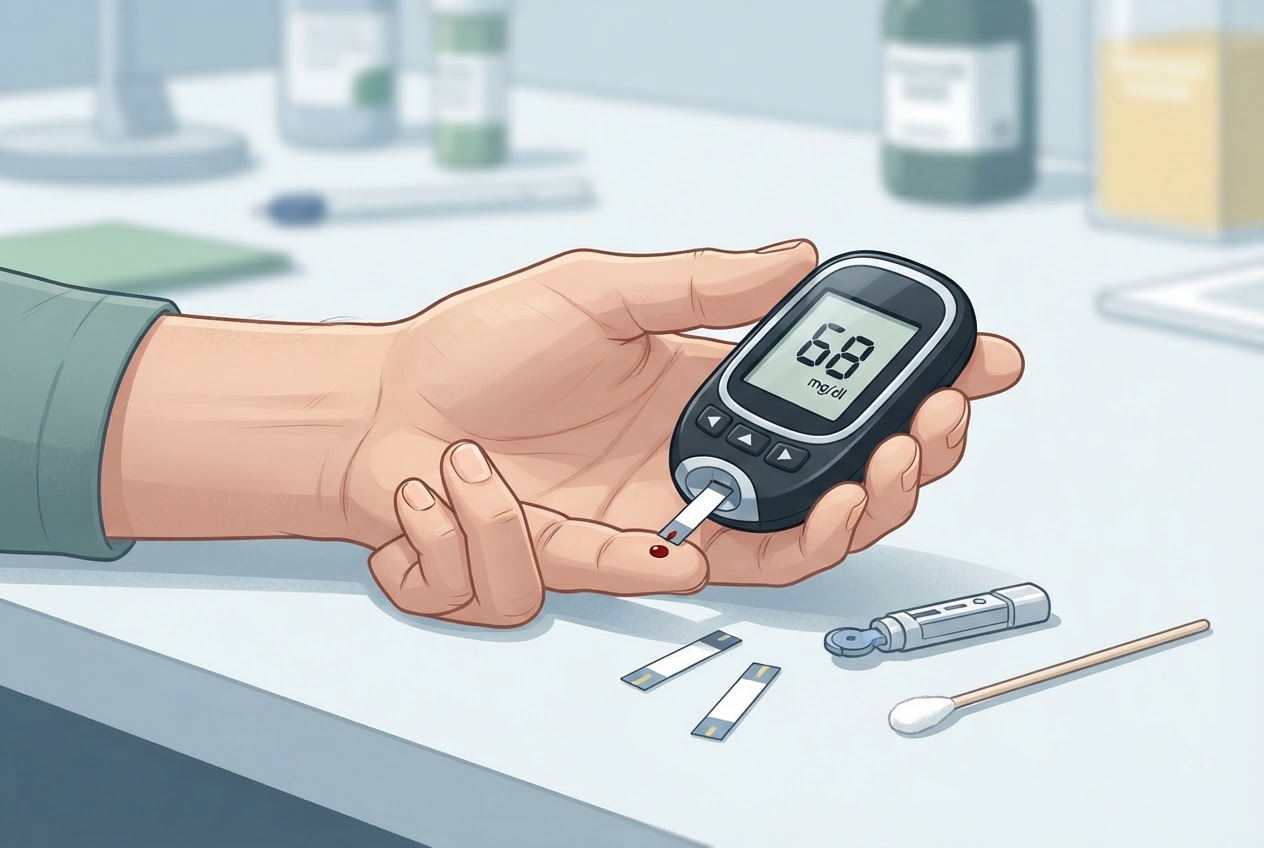
Possible symptoms of severe low blood sugar include trembling, sweating, confusion, seizures and loss of consciousness. Left untreated, severe hypoglycemia can become life-threatening. The first aid guidelines of the European Resuscitation Council and the American Heart Association name prolonged seizures (status epilepticus), permanent brain damage and death as possible consequences of untreated severe low blood sugar.
A Seizure Is Not a Diagnosis
A seizure can occur with severe low blood sugar, but it does not prove it. Other causes, such as head injuries, infections, poisoning or metabolic disorders, can also trigger seizures. Laypeople cannot reliably tell from the movements what caused the seizure.
For first aid, this distinction does not matter. What counts is not the cause but acting safely: call the emergency number, protect the person, observe them and tell the emergency services what you know. If you know the person has diabetes, or you find a diabetes emergency card, pass this information on to the emergency dispatcher.
Call the Emergency Number 112 Immediately
A seizure is always a reason to alert the emergency services, whatever the suspected cause. If you see someone having a seizure, call 112 immediately and tell the dispatcher that the person is having convulsions and whether low blood sugar is suspected or diabetes is known. Do not wait to see whether the seizure stops on its own or whether sugar helps.
Raising the alarm is the first step. First aiders do not provide medical treatment. They keep the situation safe until the emergency services arrive.
Do Not Put Anything in the Mouth
Nothing should be put in the mouth of a person who is having convulsions, has clouded consciousness or cannot swallow safely. This applies to food, drinks, glucose tablets and medication. Forcing sugar or liquid into someone with clouded consciousness risks the substance entering the airways. This can cause choking or pneumonia from aspiration.
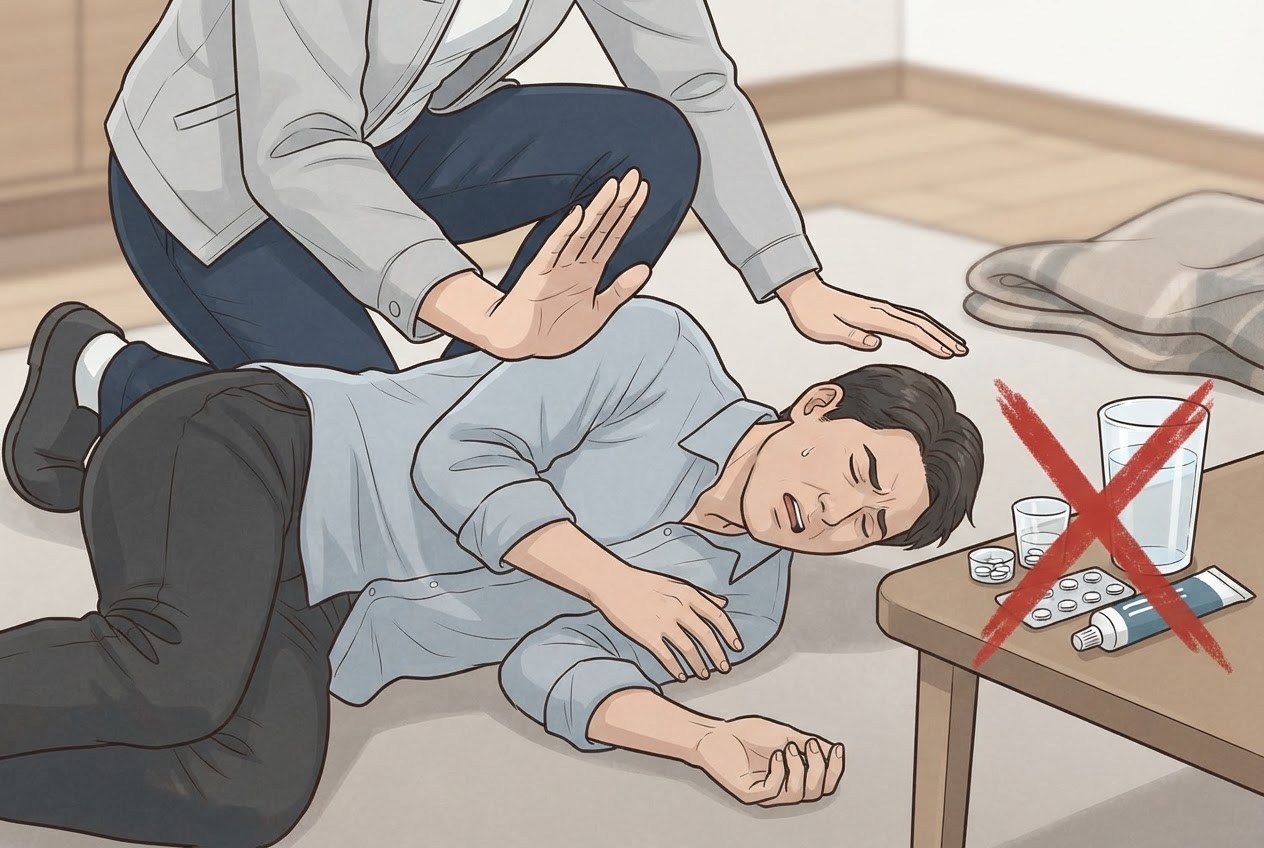
Pushing objects between the teeth to prevent biting is also wrong. They injure the person and can block the airways. The rule is clear: during the seizure and afterwards, until the person is awake again and can swallow safely, the mouth stays empty.
Protection from Injury and Observation
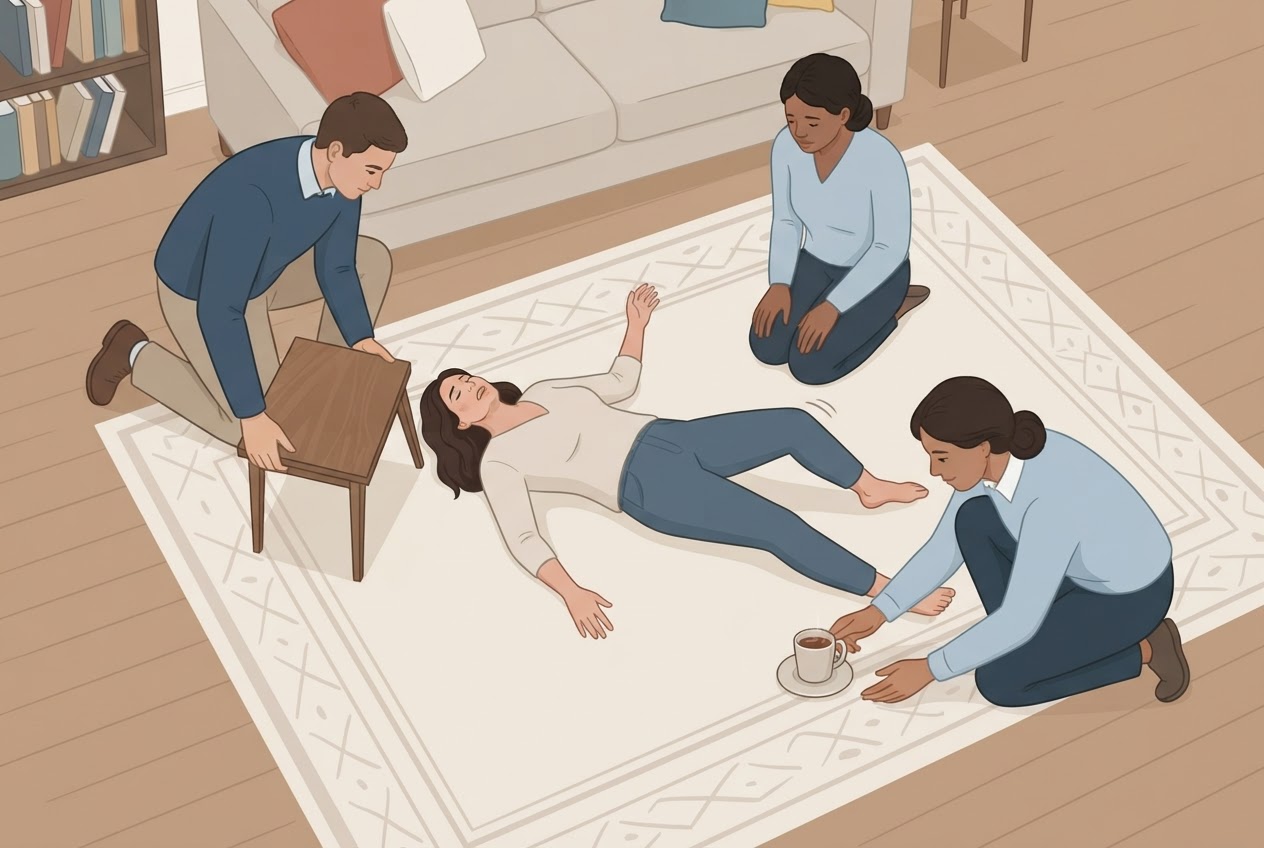
During the seizure, helpers remove dangerous objects from the vicinity, such as sharp-edged furniture or hot drinks. They should not hold down the convulsing arms and legs, as this can cause injuries. Instead, they stay with the person and monitor consciousness and breathing.
After the convulsions, helpers check whether the person is conscious and breathing normally. If the person is still unconscious but breathing normally, the recovery position places them in a safe position. It keeps the airways open and makes it easier for vomit to drain. If the person is not breathing normally, the helper informs the dispatcher immediately and follows their instructions.

Glucagon Only with Training
Glucagon is a hormone that raises blood sugar. In severe low blood sugar, it can be given as an injection or nasal spray. First aiders may use it only if it is available, they have been trained and they know the product’s instructions for use. Glucagon does not replace the emergency call.
If the cause is unclear, meaning it is not certain whether blood sugar is too low or too high, glucagon should not be used. The dispatcher or emergency services decide on further treatment. Anyone who is untrained or unsure should keep their hands off the syringe and concentrate on protection, observation and passing on information.
When Oral Carbohydrates Are Allowed
Oral carbohydrates, meaning glucose tablets or sugary drinks, are intended only for a person who is awake and can swallow safely. In this case, the guidelines recommend 15 to 20 grams of fast-acting carbohydrates. Other sources give 10 to 30 grams. If symptoms persist after about 15 minutes, it is reassessed whether more carbohydrates are needed.
This information explicitly does not apply to a person having a seizure or with impaired consciousness. Anyone who is convulsing or cannot swallow safely receives nothing by mouth. The time frames are not an invitation to wait. In a seizure, the emergency services have already been alerted before oral carbohydrates even come into consideration.