If you get an abnormal blood sugar result or notice symptoms, you may wonder whether it is type 1 or type 2. Both forms raise blood sugar, but they differ above all in why the body lacks insulin or why it does not work well enough. Insulin is a hormone that moves sugar from the blood into the body’s cells.
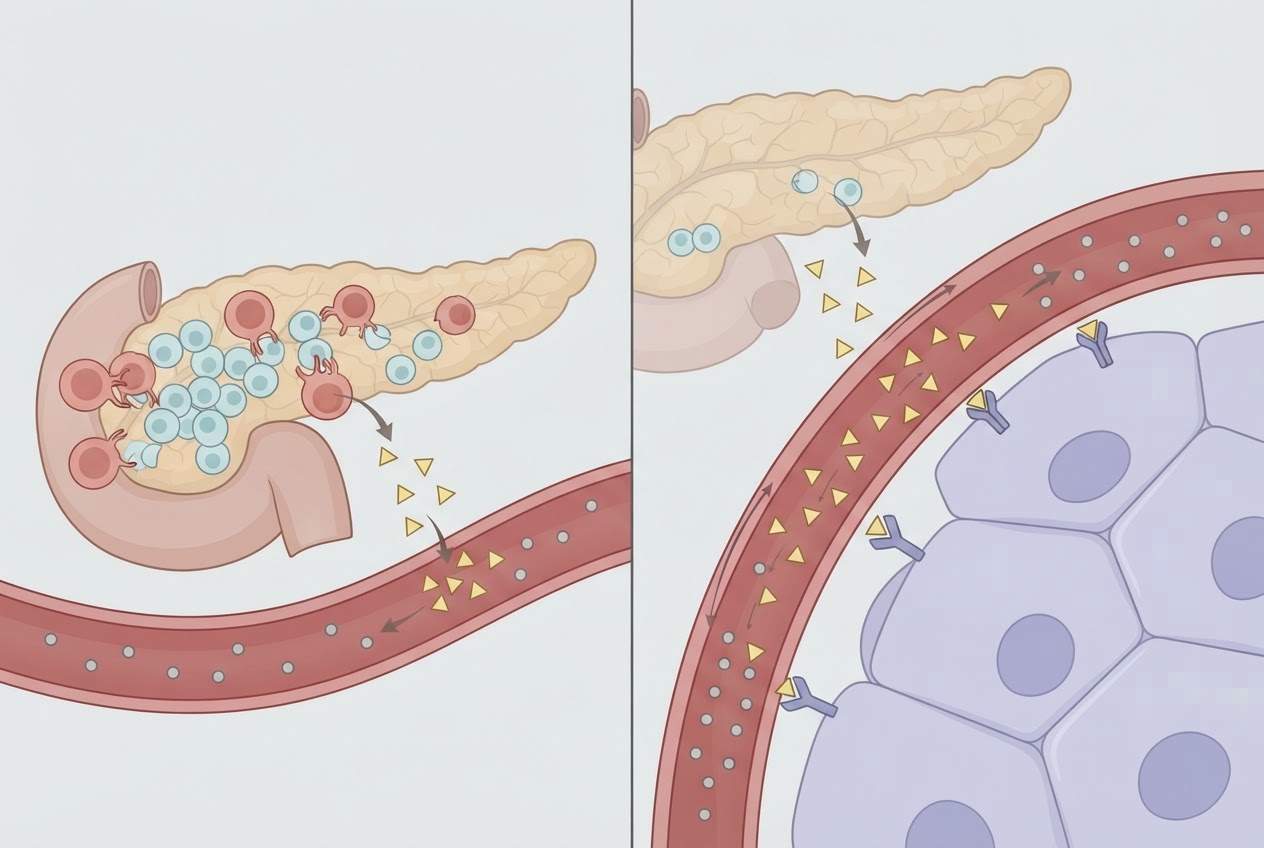
In type 1, the immune system destroys the insulin-producing cells of the pancreas. In type 2, the body’s cells respond less and less well to insulin; over time, insulin production may also decline. Age, weight and individual symptoms are not enough to reliably tell the types apart. That requires a medical examination.
What distinguishes the types?
In type 1, the body largely lacks insulin. The condition develops when the immune system attacks the beta cells, which are the insulin-producing cells of the pancreas. Lifelong insulin treatment is therefore essential. At the beginning, a small amount of insulin may still be produced.
In type 2, the insulin the body has initially works less well. Over time, the pancreas often no longer produces enough to meet the body’s needs. Treatment depends on the individual situation and may include lifestyle changes, medication and, for some people, insulin.
This short summary explains the basic difference. It is not a substitute for a diagnosis, as there are other forms of diabetes and the course of the condition is not the same for everyone.
Who can get type 1 or type 2?
Type 1 often begins in childhood or adolescence but can occur at any age. Type 2 mainly affects adults but also occurs in younger people. The term “old-age diabetes” is therefore misleading.
Body weight does not allow a reliable classification either. It can be a risk factor for type 2, but people of different body weights can develop type 2. Conversely, a particular weight does not rule out type 1. A slow-onset form of type 1, known as LADA, can initially look like type 2. If the classification is unclear, a medical examination will determine the type.
What symptoms occur?
Strong thirst, frequent urination, tiredness and lack of energy can occur with both types. Type 2 often causes no clear symptoms at first and can therefore go undetected for a long time. Type 1 may be noticed more quickly, but here too the symptoms are not always immediately obvious.
If symptoms get rapidly worse or are severe, prompt medical assessment is needed. Impaired consciousness is an emergency. In type 1, life-threatening ketoacidosis can occur, an acidification of the blood caused by insulin deficiency. Symptoms alone cannot reliably show whether diabetes is present or which type it is.
How is diabetes diagnosed?
Doctors diagnose diabetes using blood tests. Reference values for diagnosis include a fasting blood sugar of 126 mg/dl (7.0 mmol/l) or higher, or an HbA1c of at least 6.5 percent. In a glucose tolerance test, a two-hour value of 200 mg/dl (11.1 mmol/l) or higher applies. HbA1c indicates the average blood sugar over the past eight to twelve weeks.

Doctors usually confirm an abnormal result and assess it together with symptoms and other findings. On its own, it does not show whether it is type 1 or type 2. If the type is unclear, doctors can, among other things, test for autoantibodies, which are antibodies directed against the body’s own components. Finding them points to type 1. However, in about five percent of people with type 1, no autoantibodies can be detected. Individual test results are therefore not suitable for self-diagnosis.
Does everyone have to inject insulin?
In type 1, insulin treatment is required for life. People with type 1 usually inject insulin or use an insulin pump. They adapt their treatment to their daily lives.

In type 2, treatment depends on the individual’s condition. Some people need medication, others need insulin in addition or later on. Receiving insulin therefore does not automatically mean someone has type 1. The need for treatment alone does not determine the type of diabetes.
Can type 2 go into remission?
In type 2, blood sugar levels can return to normal to such an extent that experts often speak of remission when HbA1c stays below 6.5 percent for at least three months without any blood sugar-lowering medication.
Remission does not mean the condition has gone away permanently. How long it lasts is unclear, so regular check-ups remain important. According to current knowledge, type 1 is not curable and still requires insulin treatment.
Can diabetes be prevented?
Type 1 is not caused by personal lifestyle. The available evidence does not support any recommendation to prevent type 1 through a particular diet or more exercise.
In type 2, several factors can act together. These include a hereditary predisposition and age as well as lifestyle. Exercise and other lifestyle changes can lower the risk or influence the course of the disease. However, complete prevention cannot be guaranteed for everyone. A diagnosis is not a question of blame.
What complications can both types have?
Persistently high blood sugar can damage small and large blood vessels. Possible complications affect the eyes, kidneys and nerves, as well as the heart and the circulation in the legs and feet. These risks apply to both types of diabetes.

Good treatment and regular check-ups help prevent or reduce complications. If you have already been diagnosed, you should attend scheduled examinations and discuss any changes in your symptoms with your doctor.