Pizza can generally fit into a diet with diabetes. For your blood sugar, what matters most is how many carbohydrates you actually take in from the crust and the rest of the meal. Cheese and high-fat toppings can also contribute to blood sugar rising later or for longer. Which pizza and how much is right for you depends on your personal treatment plan.
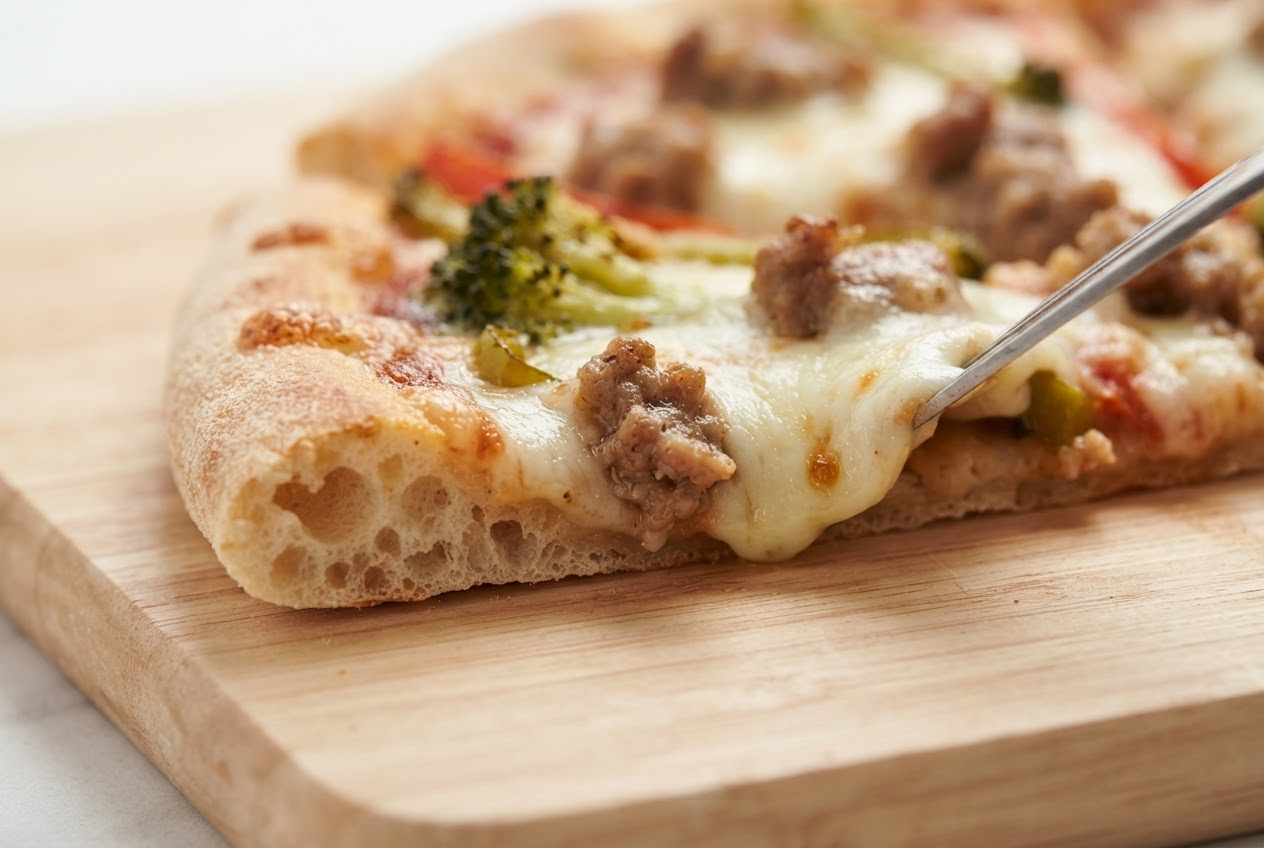
Crust: The amount of carbohydrates remains the key factor
The crust usually provides most of the carbohydrates. How much a serving contains depends on factors such as size, thickness, and recipe. For packaged pizza, the nutrition information helps. At a restaurant or with delivery pizza, estimating is harder because the amount of dough and the recipe are often not known exactly.
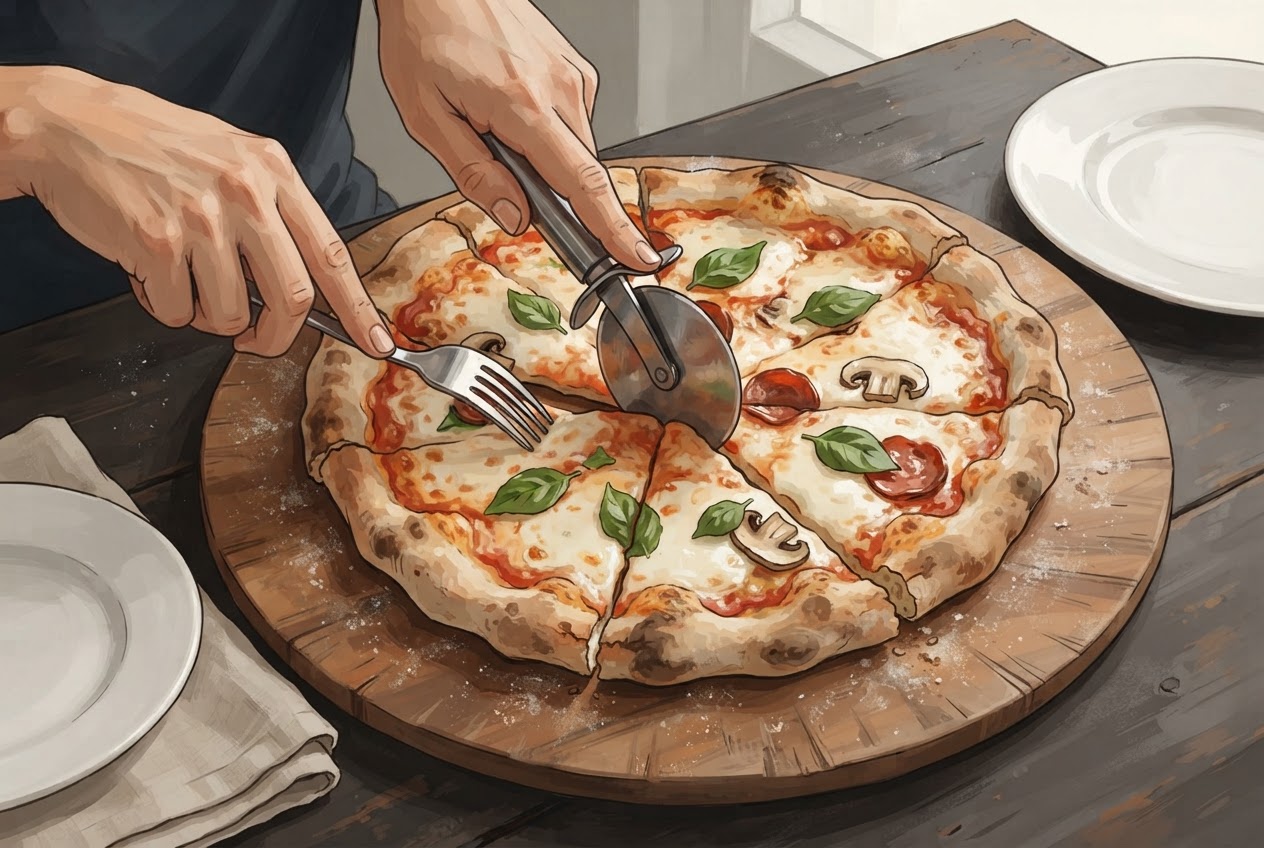
Whole grain dough can provide more fiber than dough made from white flour. Minimally processed whole grain products fit general nutrition recommendations for people with type 2 diabetes. Whole grain pizza still contains carbohydrates; a smaller blood sugar rise or a particular blood sugar pattern is not guaranteed as a result.
A thin crust is not a reliable indicator of carbohydrate content either. At the same size, it may contain less dough than a thick crust, but that depends on the pizza. Nutrition information or an estimate of the amount you actually eat is more informative.
Sourdough or a long rising time has not been shown to lower blood sugar for every pizza. A small study of 16 adults with type 1 diabetes compared different doughs. In the first few hours, the blood sugar rise was higher with a sourdough pizza that had matured for five hours than with the yeast dough pizza. The results applied to specific recipes and cannot be transferred to all pizzas.
Toppings: Add vegetables, and keep fat in mind
Vegetables such as bell peppers, mushrooms, onions, or spinach add fiber and volume to the meal. You can round out the toppings with a little cheese and a suitable source of protein. The crust still contains carbohydrates.
A lot of cheese, salami, or other high-fat toppings increase the fat content of the meal. Fat can delay the absorption of carbohydrates. The early blood sugar rise then may not be as large as you expect, while blood sugar can still rise later. So fat does not make the carbohydrates ineffective.
Small studies on pizza in people with type 1 diabetes show that a later rise can occur. In an older study of eight adults, blood sugar after pizza rose more between the fourth and ninth hour than after a comparison meal. This small study does not allow a general prediction and does not show how every person reacts to every pizza.
Portion: What matters is what you actually eat
There is no number of slices or portion size that suits everyone. Pizza slices differ in size and amount of dough; in addition, a restaurant portion can be larger than the portion stated on packaging.
If you count carbohydrates, base the figures on the amount you actually eat. If you use insulin with meals, follow your treatment plan. Not everyone with diabetes needs to count carbohydrates. Which approach is right depends on your treatment and your personal situation.
The plate model offers general guidance for balanced meals: about half the plate with non-starchy vegetables, and a quarter each with protein-rich and carbohydrate-containing foods. The model does not specify a particular pizza portion. A side salad can increase the share of vegetables; the carbohydrates in the pizza remain.
Drinks and sides are part of the meal
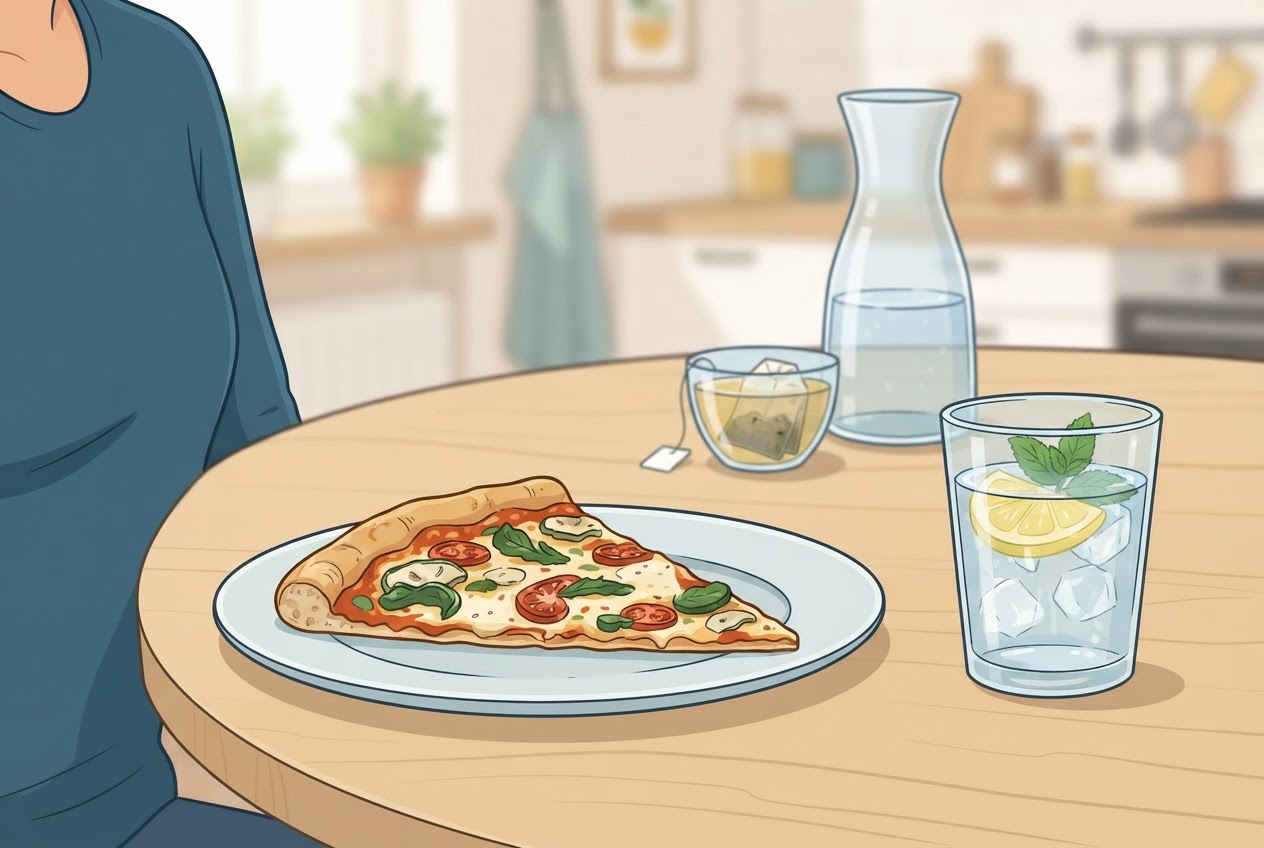
Water or unsweetened tea does not add any carbohydrates. A sugary drink, on the other hand, increases the carbohydrate content of the meal. Also consider sides and dessert: bread, fries, or a sweet dessert add to the carbohydrates in the pizza. Sugary drinks can be used deliberately to treat low blood sugar; that is a different situation from choosing a drink with an ordinary meal.
Observing your own response
If you measure your blood sugar or use a glucose monitoring system, you can observe, within your treatment plan, how your levels develop after a particular pizza. With a high-fat meal, a later rise can be relevant even if the early reading looks normal. Do not change an insulin dose based on a general pizza rule; discuss adjustments with your diabetes care professional or your treating doctor.
Three questions help with planning: How much pizza do you actually eat? What amount of carbohydrates is stated or estimated for it? Which drinks and sides come on top? This way you look at the crust, toppings, and the whole meal instead of relying solely on terms such as “whole grain” or “thin crust.”