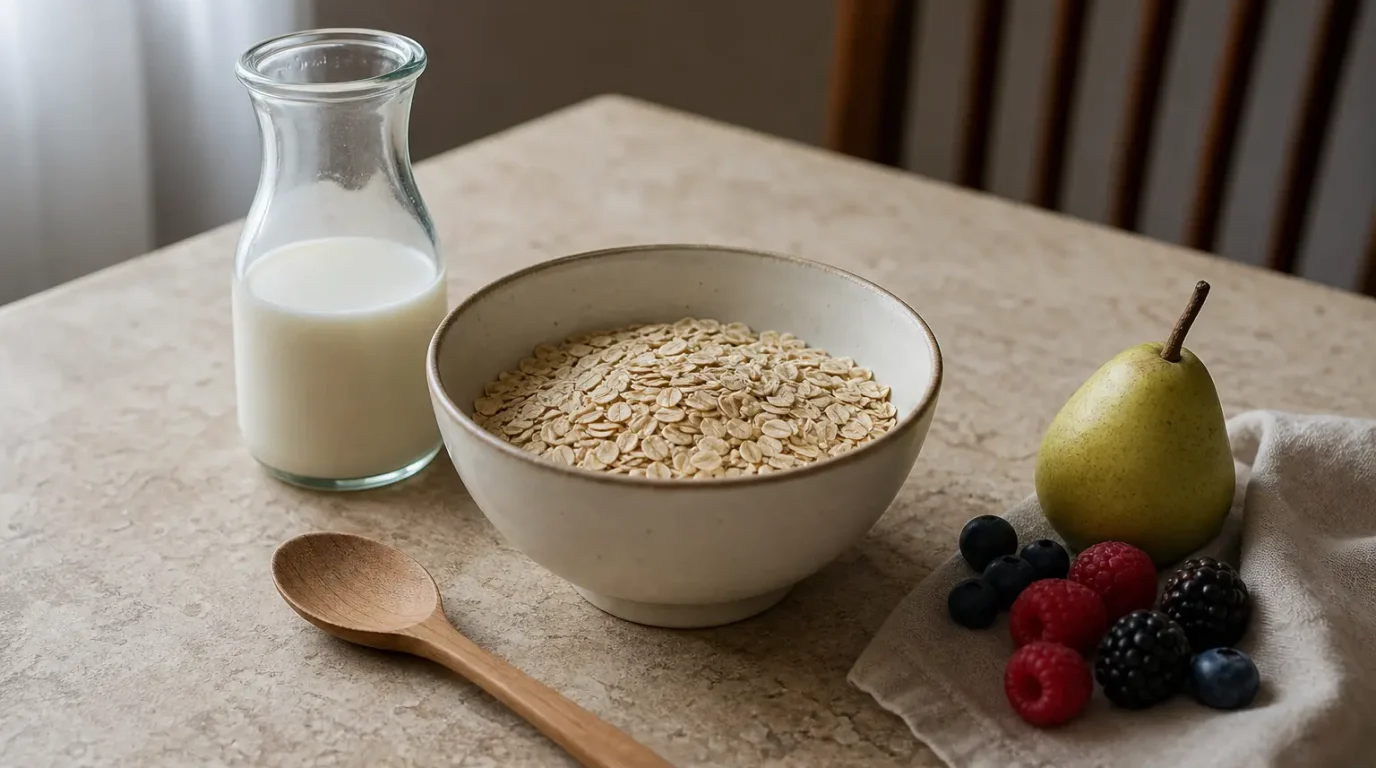
Oats are considered a good choice for people with type 2 diabetes, but advertising often promises more than the research supports. As a high-fiber whole grain, they can be part of a diabetes-friendly diet. However, they are not a cure and not a substitute for medication. Nor do they guarantee low blood sugar levels.
Beta-glucan is the active component. This soluble fiber slows the absorption of carbohydrates. On average, studies show only moderate improvements in blood sugar levels, and the evidence comes from short, small studies.
What the Guidelines Recommend
The German Diabetes Association (DDG) updated its practice recommendation on nutrition for type 2 diabetes in December 2025. It recommends getting carbohydrates preferably from whole grain products, legumes and nuts, and eating high-fiber foods regularly. As a general target, the DDG cites about 30 grams of fiber per day, but notes that the evidence for an exact target value is limited.
For soluble fiber such as beta-glucan from oats, the DDG takes a nuanced position: there is short- to medium-term evidence of benefits for blood sugar and insulin resistance. However, a long-term benefit of fiber supplementation has not been sufficiently demonstrated. The American Diabetes Association (ADA) recommends a high-fiber diet, with at least half of all grain products being whole grain. The German National Disease Management Guideline for Type 2 Diabetes likewise relies on a high-fiber dietary pattern rather than on a single “diabetes food.”
Why Oats Affect Blood Sugar
Besides starch and protein, oats contain soluble fiber, above all beta-glucan. This fiber binds water and forms a more viscous structure in the digestive tract. As a result, gastric emptying and the absorption of available carbohydrates slow down. A meal with oats can therefore raise blood sugar more slowly than a comparable meal made from highly refined carbohydrates.
The effect depends on several factors. These include the actual beta-glucan content, how processed the oats are, and the consistency of the meal. The total amount of carbohydrates and the accompanying foods also play a role. Oats are not a uniform category of active ingredient. Rolled oats, oat bran, oat flour, instant products and sweetened ready-made mixes differ considerably in fiber structure, portion size and degree of processing.
Oats are a carbohydrate-containing food. A favorable blood sugar response does not mean that the carbohydrates they contain disappear. People on insulin therapy need to factor the portion into their individual carbohydrate and insulin planning. The DDG explicitly points out that people treated with insulin should consider whole grain products primarily in terms of their carbohydrate content. They should also pay attention to the glycemic index, that is, how strongly a food raises blood sugar.
What Studies Show
A systematic review and meta-analysis of randomized controlled trials examined oats or oat beta-glucan in adults with type 2 diabetes. It included eight study comparisons with a total of 407 participants. The studies lasted a median of 4.5 weeks. The average beta-glucan dose was about 3.25 grams per day. Most participants were already taking blood-sugar-lowering medication or insulin.
On average, oats or beta-glucan improved several measurements. HbA1c, which reflects long-term blood sugar over about three months, fell by 0.47 percentage points. Fasting blood sugar fell by 0.75 mmol/l, roughly 13.5 mg/dl. The 2-hour glucose level after a meal fell by 0.42 mmol/l, about 7.6 mg/dl. The HOMA-IR value, a measure of insulin resistance, also improved. Fasting insulin showed no statistically significant effect.
The certainty of evidence was high for fasting blood sugar. For HbA1c and 2-hour glucose it was low because of inconsistent results. An effect of 0.47 percentage points of HbA1c is not clinically insignificant. But an average from small studies does not predict how strongly any individual person will respond.
A second review examined the acute effect on blood sugar after a single meal. It covered 103 comparisons involving 538 people from 35 reports. Compared with control meals, beta-glucan reduced the glucose area under the curve by about 23 percent on average. It reduced the glucose peak by about 28 percent. These results show a possible effect on the rise in blood sugar after a meal. However, they are not equivalent to a long-term improvement in diabetes.
What the Research Does Not Show
The available evidence does not show that oats cure type 2 diabetes, bring about a lasting normalization of blood sugar levels on their own, or replace medication. A reliable blood sugar effect in all people has not been demonstrated either. Likewise, there is no evidence of protection against diabetes-related complications such as heart attack, stroke or kidney damage. The DDG describes the benefit of beta-glucan mainly for short to medium periods. Studies with an intervention period of more than three months are rare.
The key meta-analysis had a median study duration of only 4.5 weeks. Large, long-term randomized trials on ordinary rolled oats are lacking. In addition, the studies examined different interventions: rolled oats, oat bran, oat products or isolated beta-glucan, so the results are not fully interchangeable. For HbA1c, the meta-analysis found no clear dose-response relationship.
The Special Case of Oat Days
The DDG describes so-called oat days as a possible short-term intervention for overweight people with type 2 diabetes and pronounced insulin resistance. This is not an ordinary breakfast with oats, but a low-calorie, high-fiber diet based almost exclusively on oats for a few days.
The DDG refers to a pilot study with two days of oat porridge. In that study, the average insulin dose was reduced by 47 percent. This finding should be interpreted with particular caution. It was a small pilot study. The intervention involved a strong calorie reduction. The effect therefore cannot be attributed clearly to oats or beta-glucan alone. The participants had a specific starting situation with pronounced insulin resistance. Insulin doses must not be changed without medical supervision.
The DDG presents oat days as a short-term, special strategy. At the same time, it points out that other high-fiber, low-calorie diets are also an option. This argues against the interpretation that oats have a unique healing effect.
Putting Oats into Everyday Context
For everyday life, the guidance is: prefer unsweetened or coarse rolled oats, adjust the portion size to your individual carbohydrate needs, and combine them with protein, such as plain yogurt, quark, nuts or seeds. Berries or other whole fruit are better choices than juice, syrup or large amounts of dried fruit. Sugar, honey and heavily sweetened ready-made mixes should be used sparingly. A large bowl of oats with banana, dried fruit, honey and a calorie-rich nut spread provides considerably more carbohydrates and energy than a smaller portion with plain yogurt and berries.
Anyone taking insulin or medication that can cause low blood sugar should discuss larger changes in carbohydrate intake with their care team. The best way to observe your individual blood sugar response is to try out new portion sizes or preparation methods and record your readings.
Personal anecdotes and before-and-after measurements without a control group are not enough to support strong claims. The same applies to advertising claims about oat days and short-term blood sugar changes without long-term data. Results with isolated beta-glucan supplements also cannot simply be transferred to ordinary rolled oats.