With type 2 diabetes, you don’t need to permanently avoid any particular list of foods. Carbohydrates raise blood sugar, but the effect depends on factors such as the food, the amount and your personal response. The right way of eating for you also depends on your treatment, any other health conditions, your preferences and your daily life. Professional recommendations therefore advise an eating pattern that suits you.
An eating pattern describes which foods and drinks you choose over a longer period. The German National Disease Management Guideline on type 2 diabetes and the recommendations of the German Diabetes Association (DDG) do not specify a single way of eating that is best for everyone. Key factors include the quality of the food and a plan you can stick with over the long term.
Why a list of banned foods doesn’t suit everyone
People with type 2 diabetes have different treatment goals and life circumstances. Other health conditions, eating habits and cultural preferences also play a role. That is why your diet should suit you as an individual and fit your overall treatment.
The recommendations nevertheless share some common guidelines: more vegetables and high-fibre foods, and fewer highly processed foods, sugar-sweetened drinks and refined grain products. This helps you assess individual foods and meals without simply labelling them as allowed or forbidden.
What helps when choosing food in everyday life
Start by looking at your overall eating pattern. Vegetables, legumes, whole grains and whole fruit provide fibre. Nuts, plant-based protein sources and foods containing unsaturated fats can also be part of it. This doesn’t mean a rigid scheme for every meal. Choose a combination that suits your habits and health goals.
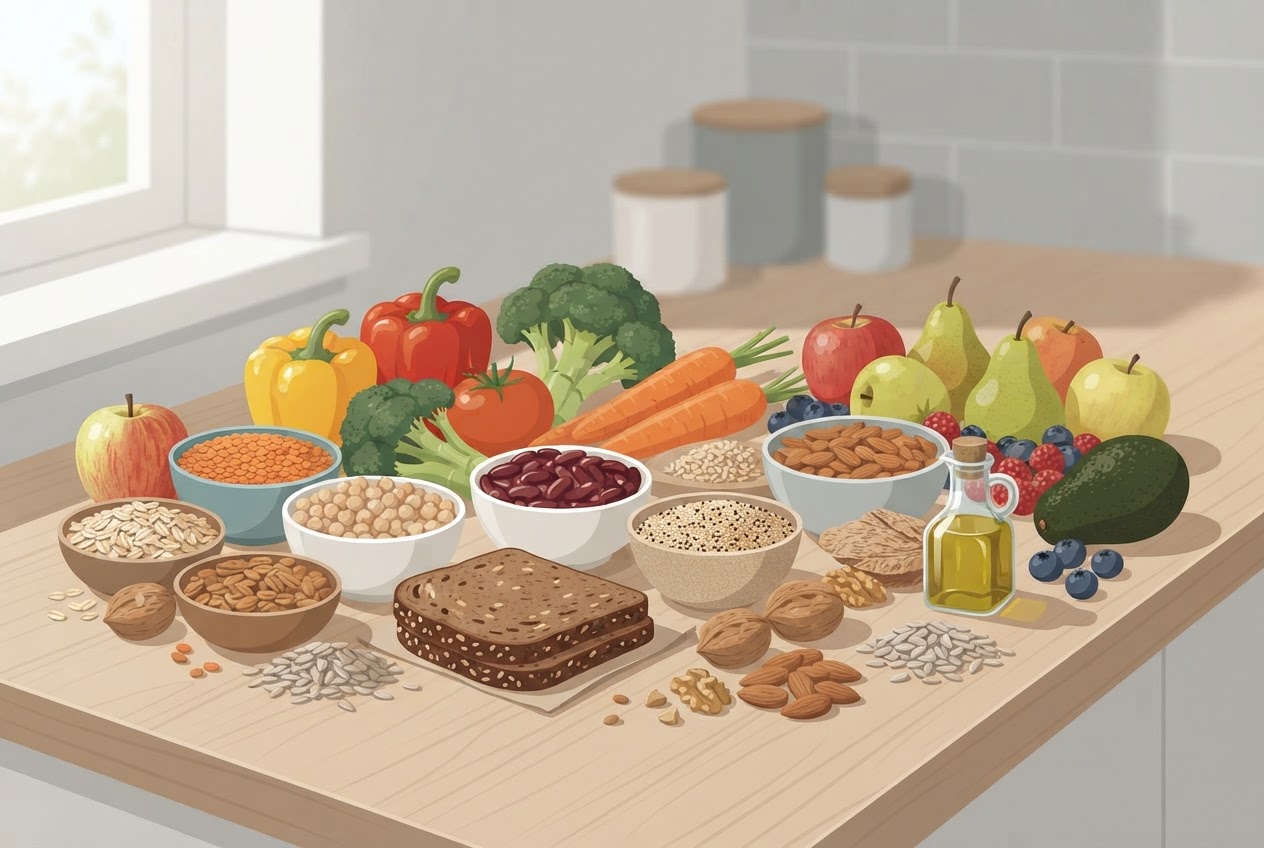
The degree of processing can also help guide your choices. A dish made with beans, vegetables and whole grains contains other nutrients and fibre in addition to carbohydrates. When shopping, compare the ingredients and composition rather than relying only on individual buzzwords on the packaging.

Understanding carbohydrates and blood sugar
Carbohydrates make blood sugar rise. How much it rises also depends on which food you eat and how it has been processed. Wholegrain bread, lentils and whole fruit contain carbohydrates, but also fibre and other nutrients. How much your blood sugar rises differs from person to person. This does not justify a general ban on carbohydrates.
A reduced-carbohydrate diet can be an option for some adults; the results depend on how it is carried out and how long it is maintained. The National Disease Management Guideline recommends informing people with type 2 diabetes about which foods raise blood sugar. However, it does not set a single carbohydrate limit for everyone. Discuss any significant change to your diet with your healthcare professional.
Sweets, fruit and drinks
A sensible starting point is to limit sugar-sweetened drinks. Water and unsweetened tea or coffee are suitable alternatives for everyday life. You can also take added sugar and highly processed sweets into account when making your choices. The aim is a decision that works in everyday life, not a judgement of your willpower.

Whole fruit is not the same as juice. Fruit does contain carbohydrates, but it also provides fibre and other nutrients. Juice, smoothies and dried fruit differ in their composition and processing. If you want to know how a particular food affects your blood sugar, you can assess your response together with your healthcare professional.
Setting weight goals individually
Weight loss is not a treatment goal for every person with type 2 diabetes. If you are overweight, a moderate reduction can make sense when it is medically indicated. For suitable people, the DDG names a loss of 5 to 10 percent of current body weight as a goal, which can be associated with improvements in insulin resistance, elevated blood sugar and blood lipid levels.
A weight plan should suit your health and your life situation. In older age especially, it is important to maintain muscle mass and not to cut calories sharply across the board. Talk to your healthcare professional about whether weight loss makes sense for you and what kind of support would suit you.
Coordinating diet and medication
A significant change in your carbohydrate intake can affect how your diabetes medication works. This is particularly important with insulin and certain blood-sugar-lowering medicines, because low blood sugar can occur. Speak to your practice before making a major change to your diet. Do not change your medication dose on your own.

Nutrition planning is therefore not just about individual foods. It also takes into account the quality of the food and your blood sugar responses. Possible weight goals and your medication play a role as well. A nutrition specialist or your diabetes care team can work with you to clarify which changes fit your goals and are practical in everyday life.