With type 1 diabetes, the amount of carbohydrate remains the most important basis for your mealtime insulin dose. After a meal that is very high in fat or protein, your glucose level may initially rise less sharply and only climb several hours later. How much this happens depends on the meal and on your individual response.
Calculate carbohydrates as agreed with your diabetes team. With similar meals, watch for unusual glucose patterns later on. Do not change your insulin dose based on a blanket fat-and-protein formula. There is no universally valid extra dose.
Why fat and protein shift the glucose curve
Fat can slow gastric emptying, that is, the passage of food out of the stomach. As a result, your glucose level initially rises less sharply after eating. After some high-fat meals, it rises later instead. Larger amounts of protein can also affect glucose with a delay. With mixed meals such as pizza, or a meal with a creamy sauce and a large portion of protein, the glucose curve can’t always be predicted from the carbohydrates alone.
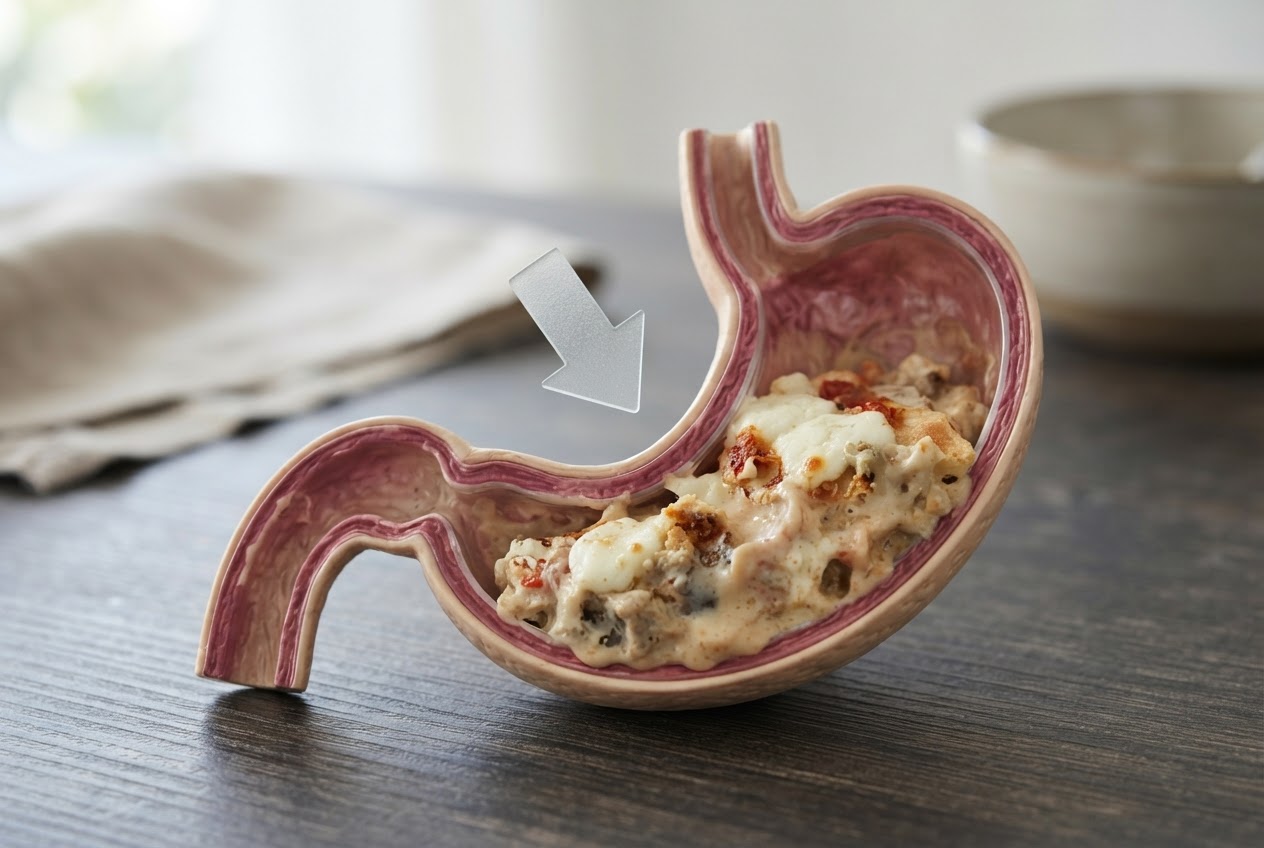
A normal glucose level one to two hours after eating does not rule out a later rise. According to the ISPAD guideline for children and adolescents, glucose can rise with a delay of up to three to six hours after a meal high in fat or protein. This timeframe serves as a guide from a guideline for children and adolescents. It does not predict how adults or any individual will respond to every meal. The ADA/EASD consensus for adults also stresses that the response varies from person to person.
Recognizing recurring patterns
If your glucose level repeatedly rises later after the same or a similar meal, look at the whole curve. A sensor that measures glucose continuously shows changes over several hours. You can also observe the pattern systematically with blood glucose checks. The ADA mentions a check about three hours after eating as a possible guide. With some meals, the later course matters too.
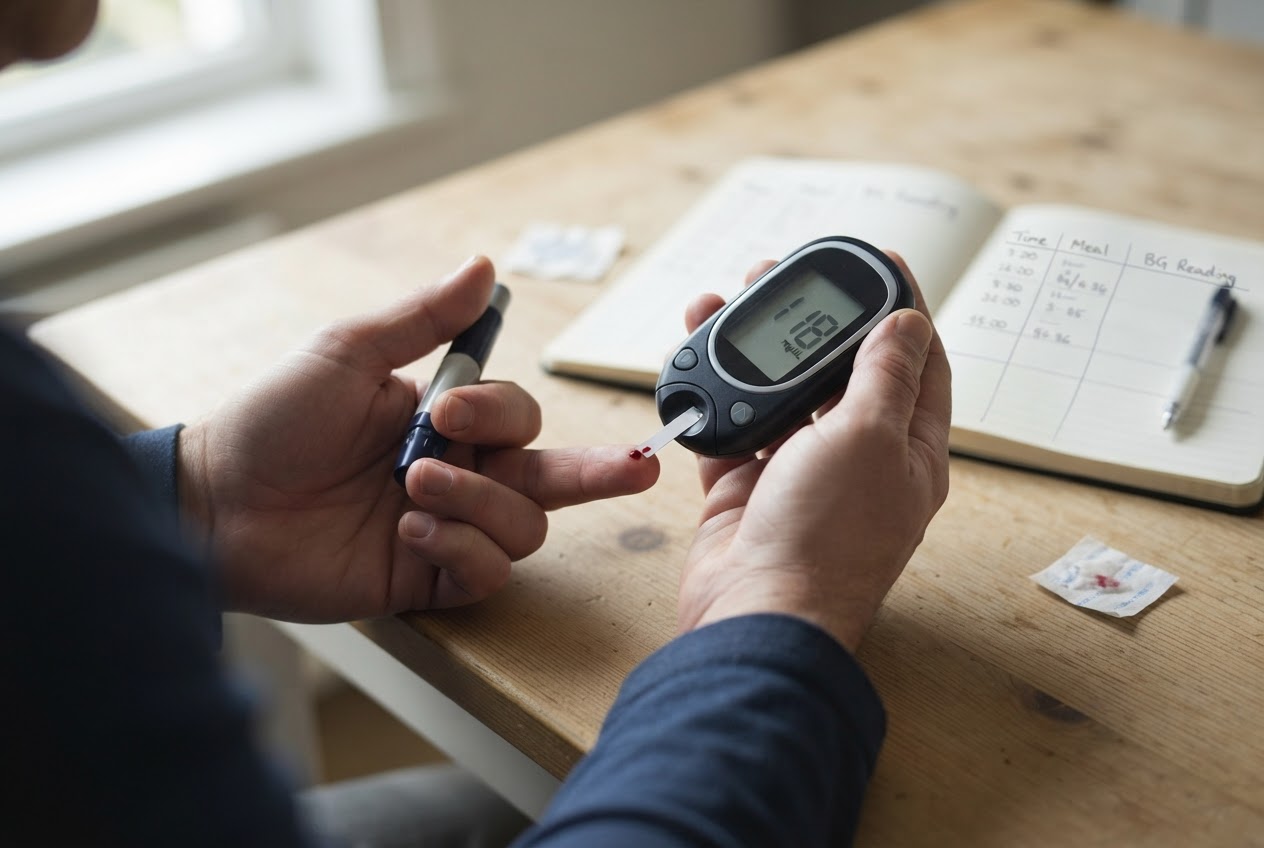
For your conversation with your diabetes team, write down what you ate and roughly how much. Also note when you took insulin and how your glucose level developed. Exercise, illness and other special circumstances make it harder to interpret the results. A single glucose curve is usually not enough to derive a new dosing rule.

Don’t increase insulin across the board
An additional insulin dose based on the amount of fat or protein can’t be reliably calculated from a general formula. Studies have examined very different approaches. A review that summarizes several studies found indications that certain additional or split insulin doses can help with selected meals high in fat or protein. However, the amounts and methods examined differed considerably. Applying them across the board carries a risk of hypoglycemia.
With an insulin pump, a split or extended bolus, in which insulin is spread over several points in time or delivered later, may be an option for certain meals. Whether this method suits your own therapy depends, among other things, on your pump mode and the glucose pattern you have observed. The study results cannot be applied in the same way to automated insulin delivery systems or to insulin doses given with pens. So discuss any changes with your diabetes team, and don’t apply any additional dosing rule without appropriate training.
The fat-protein unit, or FPU, is a calculation method in which the fat and protein in a meal are factored into an additional insulin calculation. The German S3 guideline from 2023 describes this method but rates the evidence for a general calculation as limited. A randomized trial with adults found benefits of an adjusted approach for selected high-protein, high-fat test meals. With meals containing usual amounts of fat and protein, however, more hypoglycemia occurred. FPU is therefore not a standard rule for every meal.
Pay attention to the quality of fat and protein
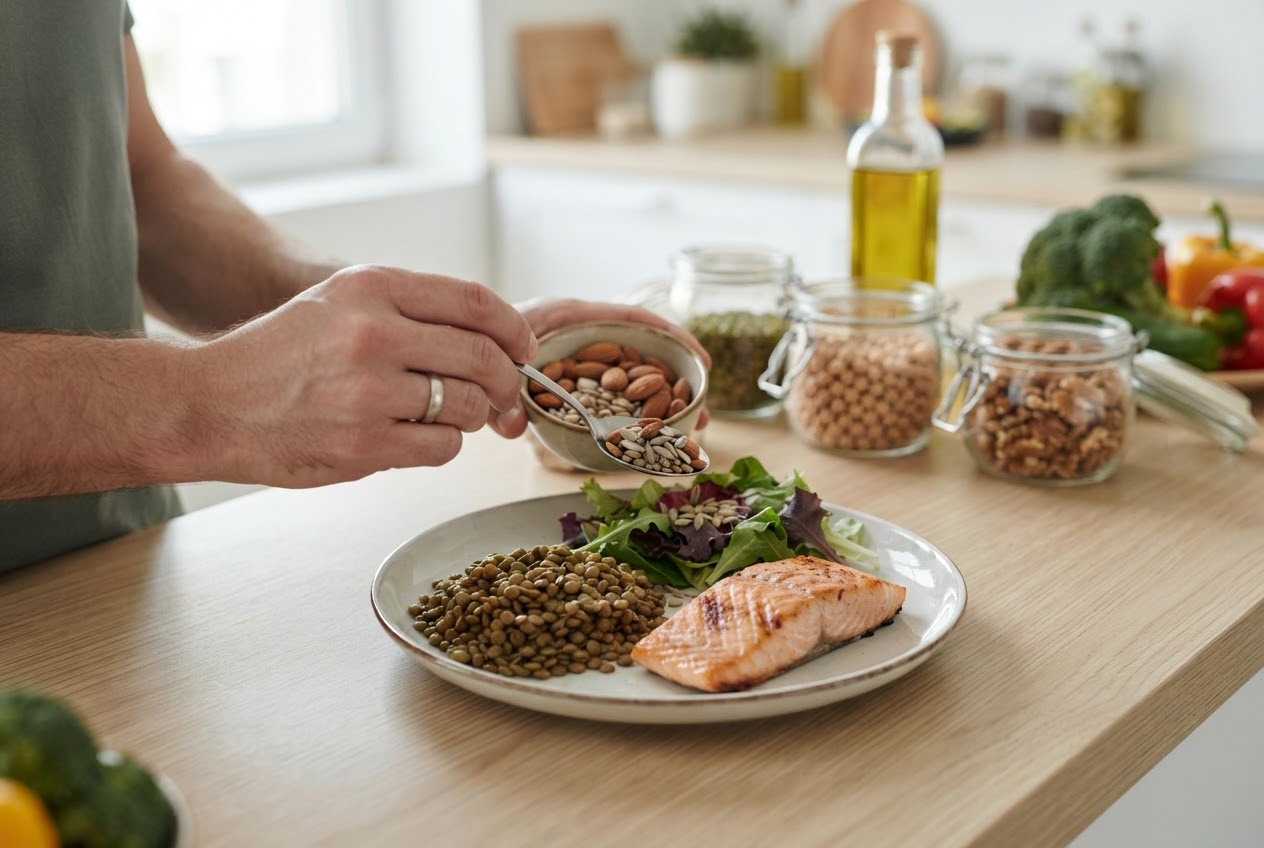
Good insulin planning does not replace a balanced diet. For people with type 1 diabetes, no particular daily protein amount has been shown to improve glucose control on its own. The ADA recommends an individually tailored diet with nutrient-rich foods. These include legumes, nuts and seeds, as well as lean protein sources. Foods high in saturated fat should be eaten only in limited amounts.
If you have kidney disease or another condition that affects your diet, a healthcare professional should work out your daily protein amount with you. Advice is also worthwhile if you follow a very low-carbohydrate diet. This way of eating changes how meals and insulin are planned and is not automatically suitable for everyone with type 1 diabetes.