People who are diagnosed with diabetes are often also assigned to type 1 or type 2. The type cannot always be determined right away. In type 1, the immune system attacks and destroys the insulin-producing cells in the pancreas. In type 2, the body’s cells respond less well to insulin, and over time the pancreas often produces less of it.

A wrong classification can delay treatment or make it unnecessarily difficult. According to the American Diabetes Association’s 2026 Standards of Care, the type is misclassified in up to 40 percent of adults with newly diagnosed type 1 diabetes. This figure refers to adults who actually have type 1, not to all people with diabetes. Age, weight and individual test results are not enough to determine the type with certainty. What matters is the course of the disease and appropriate laboratory findings.
Where Classification Goes Wrong
Type 1 diabetes can begin in childhood or adolescence as well as in adulthood. In adults it may develop more slowly and at first look like type 2. A higher body weight does not rule out type 1 either. That is why an emerging insulin deficiency is sometimes noticed only when glucose levels deteriorate rapidly despite initially suitable treatment.
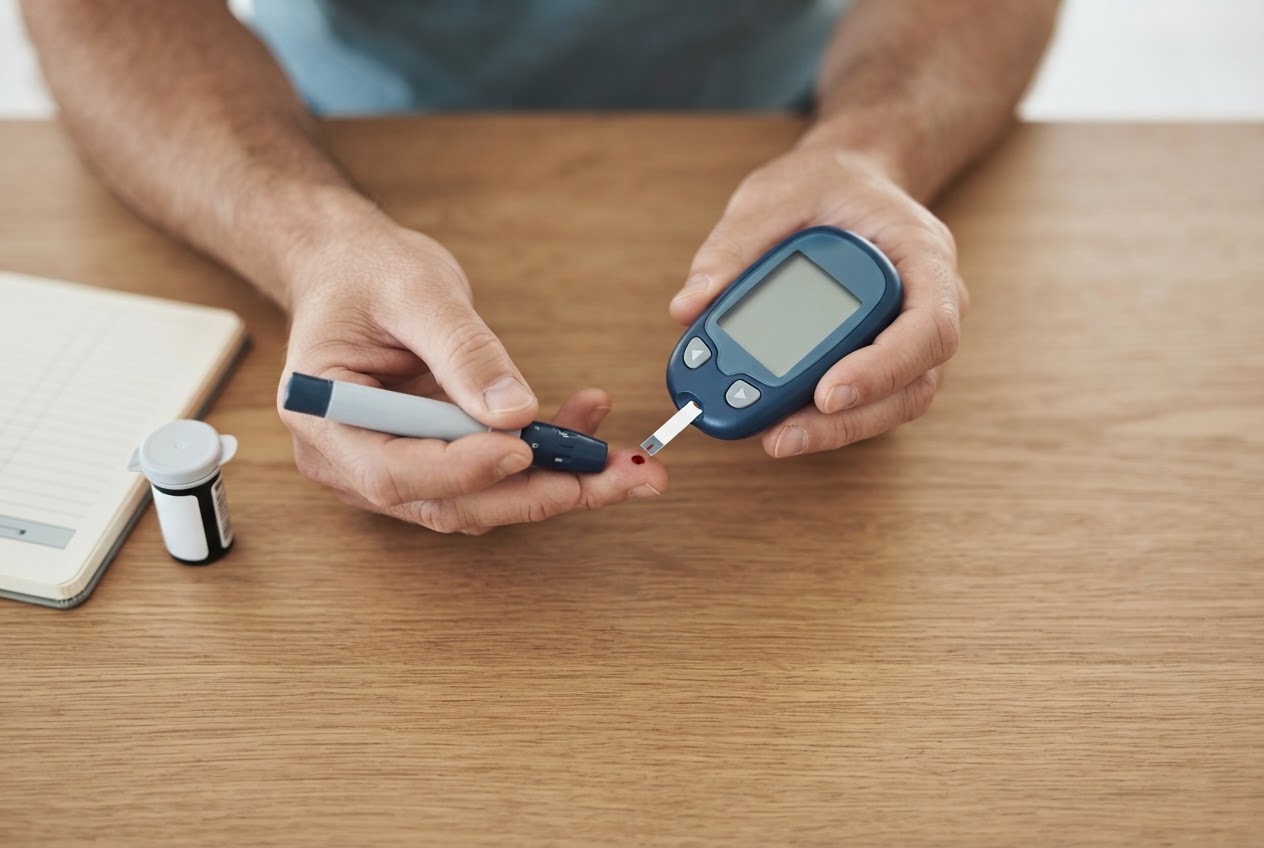
The reverse also happens: a person with type 2 or another form of diabetes is hastily classified as type 1. A rare cause such as MODY, a hereditary form of diabetes, can also be mistaken for type 1. A wrong classification affects which treatment is considered and how the condition is explained.
| Feature | Type 1 | Type 2 |
|---|---|---|
| Cause | The immune system attacks insulin-producing cells. This usually leads to a pronounced insulin deficiency. | The body’s cells respond less well to insulin; at the same time, insulin production often becomes insufficient over time. |
| Course | Onset can be rapid or, in adults, gradual. | The course often develops gradually but differs from person to person. |
| Treatment | Insulin is required when there is a pronounced insulin deficiency. | In addition to insulin, other treatments may be considered; the choice depends on the individual situation. |
The table describes typical differences and is not a means of self-diagnosis. Ketoacidosis, a dangerous metabolic emergency caused by insulin deficiency, does not by itself prove the type of diabetes either. However, it is an urgent reason for medical evaluation.
Common Misconceptions
“Adults have type 2.” Both main types can occur at any age. Age helps with assessment but does not rule out type 1.
“Overweight means type 2.” Body weight alone does not show why blood sugar is elevated. People with a higher weight can also have type 1.
“A single antibody test is decisive.” Antibodies against insulin-producing cells can support a type 1 diagnosis. However, a negative result does not reliably rule out type 1: in some people, no antibodies can be detected at diagnosis. A weakly positive result for a single antibody, such as GAD, is also not always clear-cut in people with type 2 features.
“The first diagnosis is permanent.” If glucose control quickly worsens despite treatment or the course does not fit the original classification, the treating physician should review the diagnosis again. Questioning the diagnosis does not mean changing prescribed treatment on your own.
How Doctors Reassess
First, two questions are kept apart: Is diabetes present, and which type best explains the findings? Glucose and HbA1c values, a measure of longer-term blood sugar, help establish diabetes. On their own, however, they do not show what is causing the diabetes.

Then the course of the disease and symptoms count. Unintended weight loss, very high glucose levels, ketoacidosis or a rapid deterioration under type 2 treatment can justify closer investigation. None of these features alone determines the type.
For further classification, doctors can test for islet autoantibodies. These antibodies target insulin-producing cells. They include GAD, IA-2 and ZnT8 antibodies. For adults with overlapping features, the ADA recommends standardized antibody testing; GAD is typically used as the first test. If the result is negative, further antibodies can be tested. The NICE guideline also recommends antibody testing for adults with an initial type 1 diagnosis. The exact sequence of tests depends on the clinical picture and the available tests.
Another possible test measures C-peptide. This value gives indications of how much insulin the body produces itself. It helps above all when the classification of the type is unclear. However, the result depends, among other things, on the laboratory method used and on kidney function. The blood sugar measured at the same time is also part of the interpretation. After an emergency with severely elevated blood sugar, the ADA says the measurement should not be done within the following two weeks.
If findings and course do not allow a clear classification, the diagnosis initially remains open and is reassessed later. The guidelines recommend antibody tests and C-peptide measurements at different points in time. They agree that doctors must always evaluate individual values together with the full medical history.
Understanding LADA Correctly
LADA stands for a slowly progressing autoimmune form of diabetes that begins in adulthood. The term draws attention to the fact that type 1 in adults can initially develop slowly. The American Diabetes Association classifies autoimmune forms as type 1. The German Diabetes Society describes LADA as variable in its presentation and not as a clearly defined third category.
For those affected, the course matters most: if diabetes initially classified as type 2 becomes increasingly difficult to control, a renewed evaluation can make sense. This examines whether antibodies against insulin-producing cells are present and whether there is an insulin deficiency. The term LADA does not replace this medical assessment.
What You Can Do in Practice
If the classification is unclear or contradictory, it helps to ask about the reasoning behind the diabetes type at your next medical appointment. Concrete questions are useful: Which findings support the classification? Were autoantibodies tested? Is a C-peptide test helpful in this situation? What changes in the course would prompt a renewed evaluation?

Do not reduce or stop insulin on your own, even after a negative antibody test. Before insulin is stopped, a doctor must rule out a severe insulin deficiency. If ketoacidosis is suspected, immediate medical help is needed. Warning signs include vomiting and abdominal pain. Deep or rapid breathing and drowsiness can also be signs. In the case of severe symptoms, call the emergency services.