With type 2 diabetes, a suitable diet helps you keep your blood sugar under control. You don’t need a special diabetes diet or to cut out carbohydrates completely. What matters most is the choice and amount of food, along with an eating pattern you can stick to in everyday life.
Carbohydrates from bread, potatoes, fruit or legumes raise blood sugar. High-fiber foods and suitable portions make it easier to plan your meals accordingly. If you take insulin or other medications that carry a risk of low blood sugar, you should discuss any major dietary changes with your doctor’s office or care team.
Choosing the Right Carbohydrates
Choose wholegrain bread, oats, wholegrain pasta, beans or lentils more often instead of highly processed white-flour products. These foods provide fiber. As a rough guide, aim for about 30 grams of fiber per day. This is a guideline, not a threshold above which a particular effect is guaranteed. If you currently eat little fiber, it is best to increase the amount gradually.
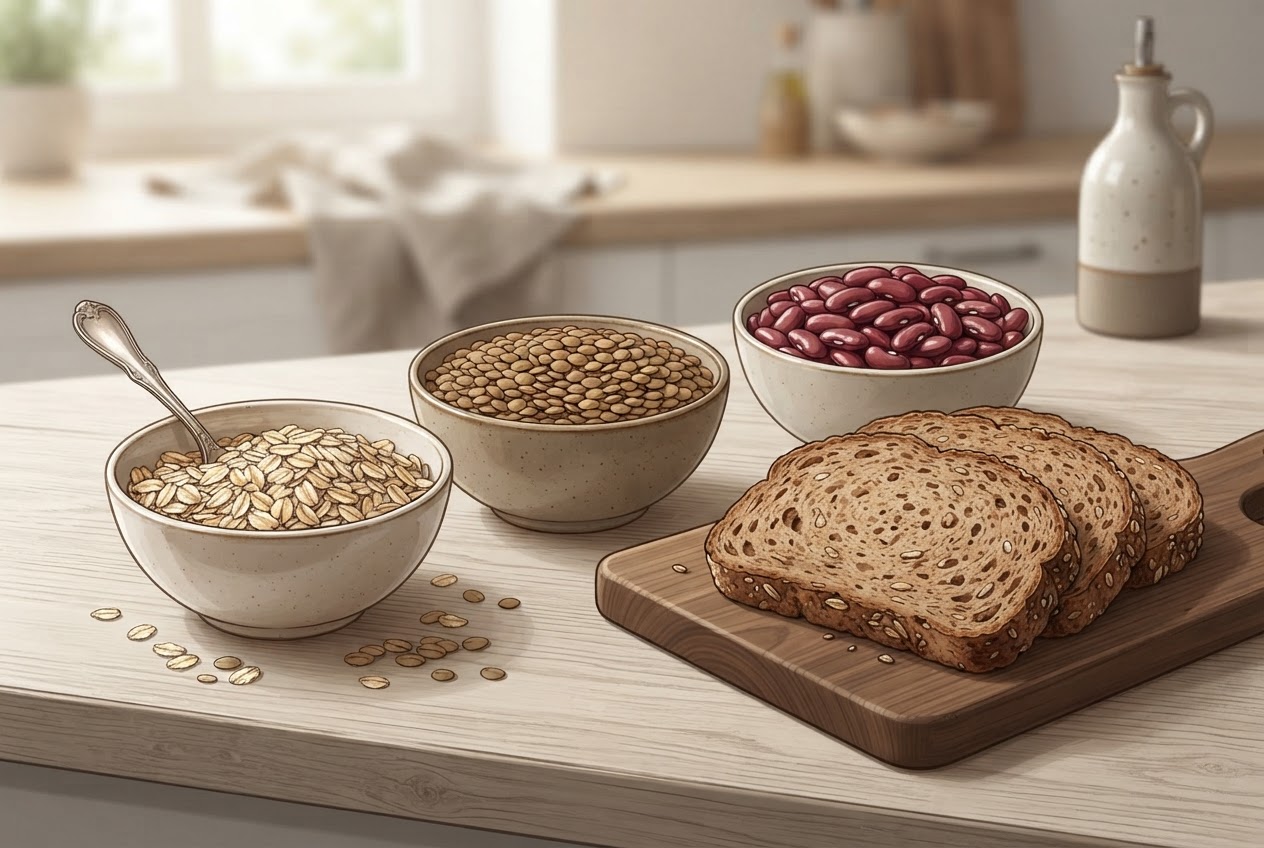
Wholegrain products also affect blood sugar. Finely ground wholegrain products and large portions can raise blood sugar more than coarse wholegrain in a smaller portion. When shopping, look for the label “wholegrain”: a dark color alone is not a reliable sign that a bread is made from wholegrain.
Potatoes, rice, pasta and bread don’t have to disappear from your menu altogether, either. What matters is how much of them is on your plate and what you combine them with. Legumes also provide protein and fiber, but they contain carbohydrates too.
Vegetables, Fruit and Portions
Make vegetables or salad a regular part of your meals. Broccoli, bell peppers, zucchini and other non-starchy vegetables go well with a source of protein and a moderate portion of potatoes, rice, bread or pasta. As a simple guide, half of your plate can be vegetables, a quarter a source of protein and a quarter carbohydrate-rich foods. This split is an everyday aid, not a binding rule.

Fruit is not banned across the board with type 2 diabetes. Whole fruit provides fiber and is a better choice in everyday life than juice or a sweet drink. Juice, smoothies and dried fruit contain sugar in concentrated form, which makes it easier to consume a larger amount. A practical guideline from dietary recommendations is at least three handfuls of vegetables and salad and up to two handfuls of fruit per day. The fruit figure is not a universal upper limit.

The glycemic index, or GI for short, describes how strongly a food affects blood sugar under specific test conditions. However, the GI alone is not enough for choosing foods in everyday life: it takes the usual portion size into account only to a limited extent. Preparation and combination with other foods matter too. For example, to get 50 grams of carbohydrates you would have to eat significantly more carrots than a normal portion.
Drinks and Sweets
In everyday life, drink mainly water, mineral water or unsweetened tea. Lemonade and other sugary drinks provide sugar that enters the blood quickly. Drinking less of them is a practical way to reduce your sugar intake.

Sweets don’t have to be met with a blanket ban. Pay more attention to the amount, and cut back on particularly sweet drinks and highly processed products in everyday life. Sweeteners are not necessary for treating diabetes. Nor do they make a diet balanced on their own.
Sugary drinks have one exception: in the case of low blood sugar, they can be part of treatment. In that case, follow your personal treatment plan. If a person is unconscious, do not give them anything to eat or drink, and call the emergency services.
Low-Carb Eating and Fasting
A low-carb diet helps some people manage their blood sugar in the short term. However, the available comparisons show no clear long-term advantage over other suitable ways of eating. Very strict rules are also not something everyone can stick to permanently. A Mediterranean, vegetarian or other balanced diet can work as well.
A specific number of meals is not prescribed for everyone either. Three meals a day can be a useful guideline, but your eating rhythm and number of meals should suit your personal needs and your treatment. So far, there is no evidence that intermittent fasting improves long-term blood sugar levels.
If you take insulin or blood-sugar-lowering medications that carry a risk of low blood sugar, you should not drastically cut carbohydrates, fast or start a ketogenic diet on your own. A significant change in diet may require an adjustment of your medication. Discuss such changes beforehand with your doctor’s office or care team, and clarify how you should monitor your levels.
Keeping an Eye on Your Weight
If you are overweight, losing weight in a way that suits you individually can improve blood sugar control and cardiovascular risk. This does not mean that everyone should lose weight regardless of weight, age or health status. Advice from a doctor or dietitian helps you find a suitable goal and a diet you can realistically follow.