With diabetes, foods that contain carbohydrates affect blood sugar. These include sugar and starchy foods such as bread, potatoes, rice and pasta. Suitable portion sizes and high-fiber, minimally processed foods help keep blood sugar levels steadier.
There is no single carbohydrate amount that suits everyone. The type of diabetes, your medication and your personal blood sugar levels also matter. Your meal plan can therefore still include carbohydrates. If you inject insulin or take certain blood-sugar-lowering medications, you should discuss any major dietary changes with your healthcare team first.
Which carbohydrates are a good choice?
Lentils and beans, vegetables, whole fruit and minimally processed whole grain products contain fiber as well as carbohydrates. They make a good foundation for many meals. Rolled oats, whole grain bread with whole kernels or brown rice are practical alternatives to heavily processed grain products.

Finely ground or heavily processed products labeled “whole grain” do not necessarily affect blood sugar more favorably than less processed varieties. Portion size matters even with nutrient-rich foods. Potatoes, bread, fruit and legumes contain carbohydrates and affect blood sugar.

The German Diabetes Association gives 30 grams of fiber per day as a practical guideline for people with type 2 diabetes. An exact target amount has not been equally established for everyone. It is therefore more helpful to eat high-fiber foods regularly than to stick rigidly to a number.
Estimating portions in everyday life
As a simple guide, you can divide your plate into three sections: about half with low-starch vegetables, a quarter with a carbohydrate-containing side dish and a quarter with a source of protein. This can help when putting a meal together, but it does not replace individual guidance. If you inject insulin with meals, you need to match the dose to the amount of carbohydrates you actually eat.
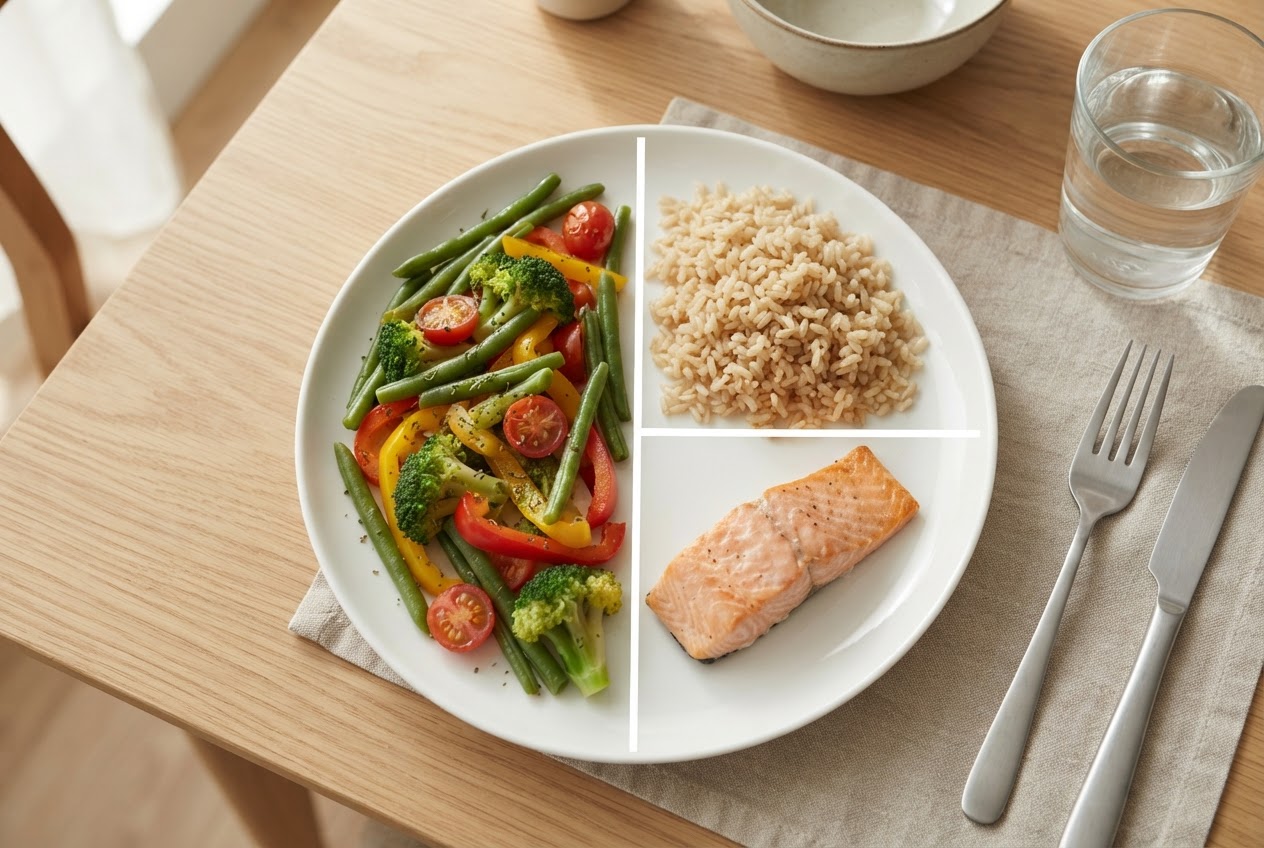
Examples of carbohydrate-containing side dishes are potatoes, rice, pasta, bread and legumes. How your blood sugar responds to a meal depends on factors such as the portion size and how the food is prepared. If your doctor’s office or diabetes educator has advised you to measure your blood sugar, your readings can show you how it repeatedly responds to particular meals.

Whole fruit does not generally need to be avoided. It does contain carbohydrates, but also fiber and other nutrients. Large amounts at once can affect blood sugar more strongly. Juice is easier to drink in large quantities than whole fruit is to eat. For everyday drinks, water, unsweetened tea and unsweetened coffee are good choices. A simple first step is to replace sugary drinks with water.
What the glycemic index tells you
The glycemic index, or GI, shows how much a carbohydrate-containing food raises blood sugar compared with a reference food. Legumes and oats, for example, are considered foods with a comparatively low GI.
The GI provides an additional clue, but its usefulness is limited. Experts use different cut-off values for “low,” and studies on a low-GI diet show inconsistent results. The GI also does not take into account how much someone actually eats. Portion size, fiber and processing therefore remain important points of reference.
Identifying carbohydrates on packaging
For packaged foods in Germany, the nutrition table and the portion size help you estimate the carbohydrate content. Pay attention to the stated amount of carbohydrates and to how large a portion you actually eat. Marketing claims such as “low in sugar” do not automatically describe the total carbohydrate content: starch also affects blood sugar.
Comparing products is especially useful for similar items. For example, you can check whether a bread is less processed or whether a breakfast product contains less added sugar. The ingredient list complements the nutrition table but does not replace it.
Coordinating medication and dietary changes
If you use fixed insulin doses, try to eat the same amount of carbohydrates at similar times as regularly as possible. If you adjust your insulin dose to the meal, follow your own training and your personal treatment plan. A significant change in eating habits may mean your therapy needs to be reviewed. Do not change insulin or other medication on your own.
A low-carbohydrate diet is a possible strategy for some people with type 2 diabetes, but it is not mandatory and not superior for everyone. A very low-carbohydrate or ketogenic diet in particular should be discussed with a doctor. The American Diabetes Association advises people who take SGLT2 inhibitors against ketogenic eating patterns because of the risk of diabetic ketoacidosis. For people on insulin, a sharp reduction in carbohydrates can also increase the risk of hypoglycemia if the therapy is not adjusted appropriately.
For type 1 diabetes, mealtime insulin also has special requirements: the amount of carbohydrates must match the individual insulin plan. General nutrition tips do not replace diabetes education.