If you have diabetes and want to influence your blood sugar through diet, you can change your meals step by step. For adults with type 2 diabetes, the German Diabetes Association (Deutsche Diabetes Gesellschaft) recommends a varied diet. This includes more vegetables, whole grain products and legumes. Sugar-sweetened drinks should be on the menu as rarely as possible. What matters most is choosing changes that fit your daily life and your treatment.
The following five steps will help you get started. They are not a substitute for medical treatment and are not a one-size-fits-all diet. The recommendations apply mainly to type 2 diabetes. With type 1 diabetes, gestational diabetes or insulin therapy, you need advice that takes your specific treatment into account.
1. Take stock of your daily routine and treatment
Before you change anything, write down what you eat and drink for a few days. Also note when you eat and which changes you find hard to make in everyday life. This shows you what is easy to swap, such as the drink with lunch or the bread in the morning.

At the same time, clarify which medications you take and whether you inject insulin. This matters because a significantly changed amount of carbohydrates or weight loss can affect your insulin needs. So discuss bigger changes in advance with your doctor or diabetes team. Do not change medications or insulin doses on your own.
2. Replace sugary drinks
Replace a drink that you regularly have with sugar with water or unsweetened tea. Fruit juice also contains sugar. Its effect on blood sugar cannot be equated with that of whole fruit. Coffee and tea are suitable drinks if you have them without sugar.

For adults with type 2 diabetes, the DDG gives 1.5 to 2 liters of fluid per day as a guideline. The right amount depends on your personal situation. If you have to observe a fluid restriction because of an illness, follow your doctor’s instructions.
3. Choose carbohydrates deliberately
Carbohydrates do not have to disappear from your menu altogether. Pay attention to which foods they come from. Minimally processed whole grain products made with whole grains, legumes and nuts provide fiber as well as carbohydrates. For example, you can eat whole grain bread more often instead of white bread, or add lentils to a dish you already know.

Whole grain products still contain carbohydrates. With insulin therapy, the amount therefore matters too, and any adjustment must fit the treatment you have agreed on. In addition, the blood sugar response to a food is not the same for everyone.
The German Nutrition Society (Deutsche Gesellschaft für Ernährung) gives at least 30 grams of fiber per day for adults as a general guideline, not as a fixed diabetes requirement. If you have eaten little fiber so far, increase the amount slowly. A sudden switch to meals very high in fiber can cause digestive problems.
4. Add to your usual meals
Start by changing one meal instead of planning your whole menu from scratch. For example, add a vegetable side dish or legumes to a dish you already enjoy. This makes it easier to stick with a new habit without completely replacing familiar meals.
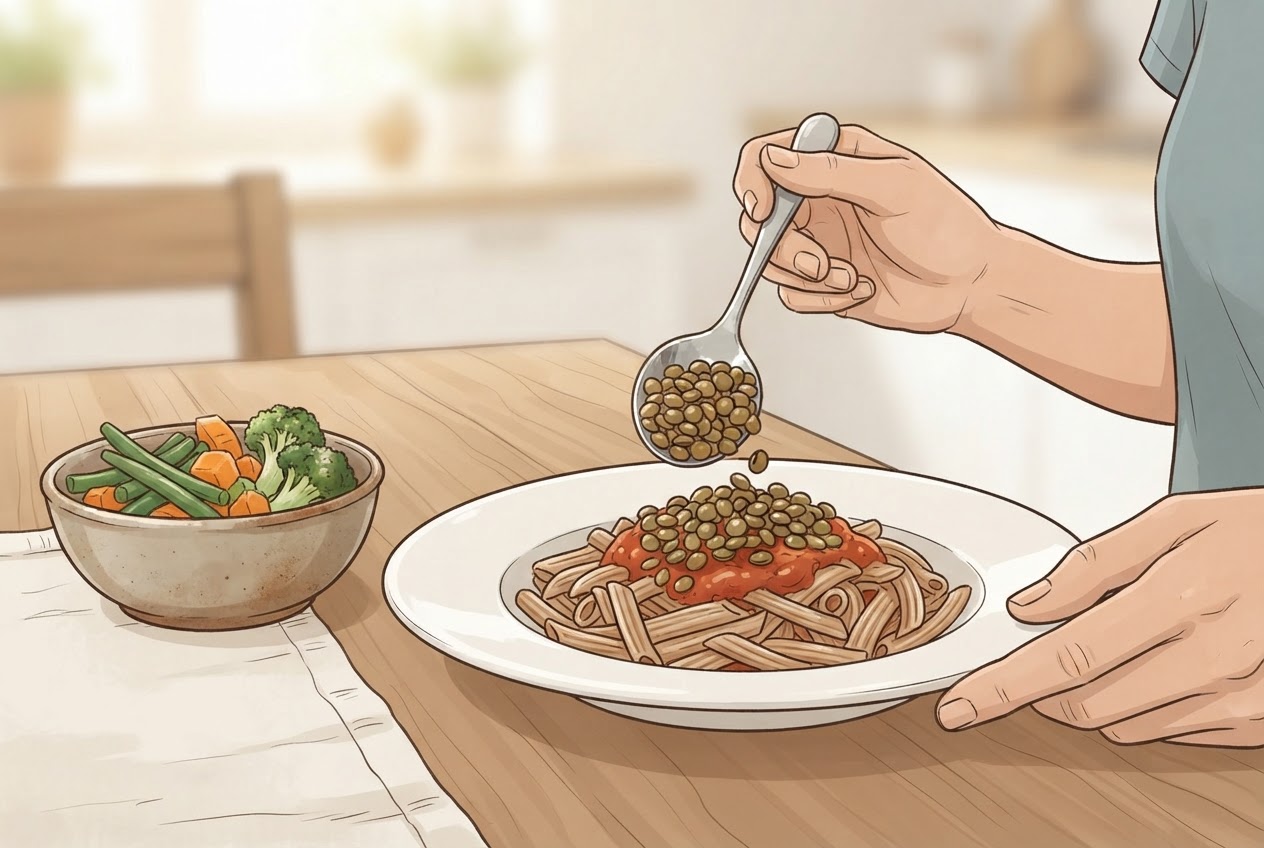
A fixed number of meals or a general ban on snacks does not apply to everyone with diabetes. A low-carbohydrate diet is not mandatory either. According to the DDG, a moderate reduction in carbohydrates can help with weight loss. Which diet suits you depends on factors such as your preferences and your treatment. Losing weight is not automatically the right goal. In older age, possible drawbacks of a calorie-reduced diet should be considered, such as the loss of muscle mass.
5. Observe your reactions and adjust
Check whether the new habit works in your daily life. If blood sugar measurements are part of your treatment plan, discuss any noticeable reactions with your diabetes team. The readings help you put changes into context. However, individual measurements do not automatically show which foods are right for you in the long term.
Special caution is needed with insulin therapy. Your insulin needs can change if you eat fewer carbohydrates. Weight loss or more exercise can also cause this. A dose that used to be right can then make low blood sugar more likely. When such changes occur, have your therapy reviewed by a professional, and follow your agreed treatment plan if your values are low.
Study results cannot reliably predict how a change in diet will affect an individual person. An analysis of 42 studies on more fiber and whole grains, summarized by the DDG, found on average a body weight about 0.5 kilograms lower and an HbA1c reduction of 0.2 percentage points. The HbA1c value shows your average blood sugar over the past weeks. The studies differed in how they were conducted and in how the participants were treated. The average therefore does not predict how much an individual person will benefit.