If you have diabetes and want to eat fruit, you face a choice: fresh whole fruit, juice, dried fruit, canned fruit or sweetened products such as fruit yogurt. The question behind it is usually which form puts the least strain on blood sugar while still fitting into everyday life.
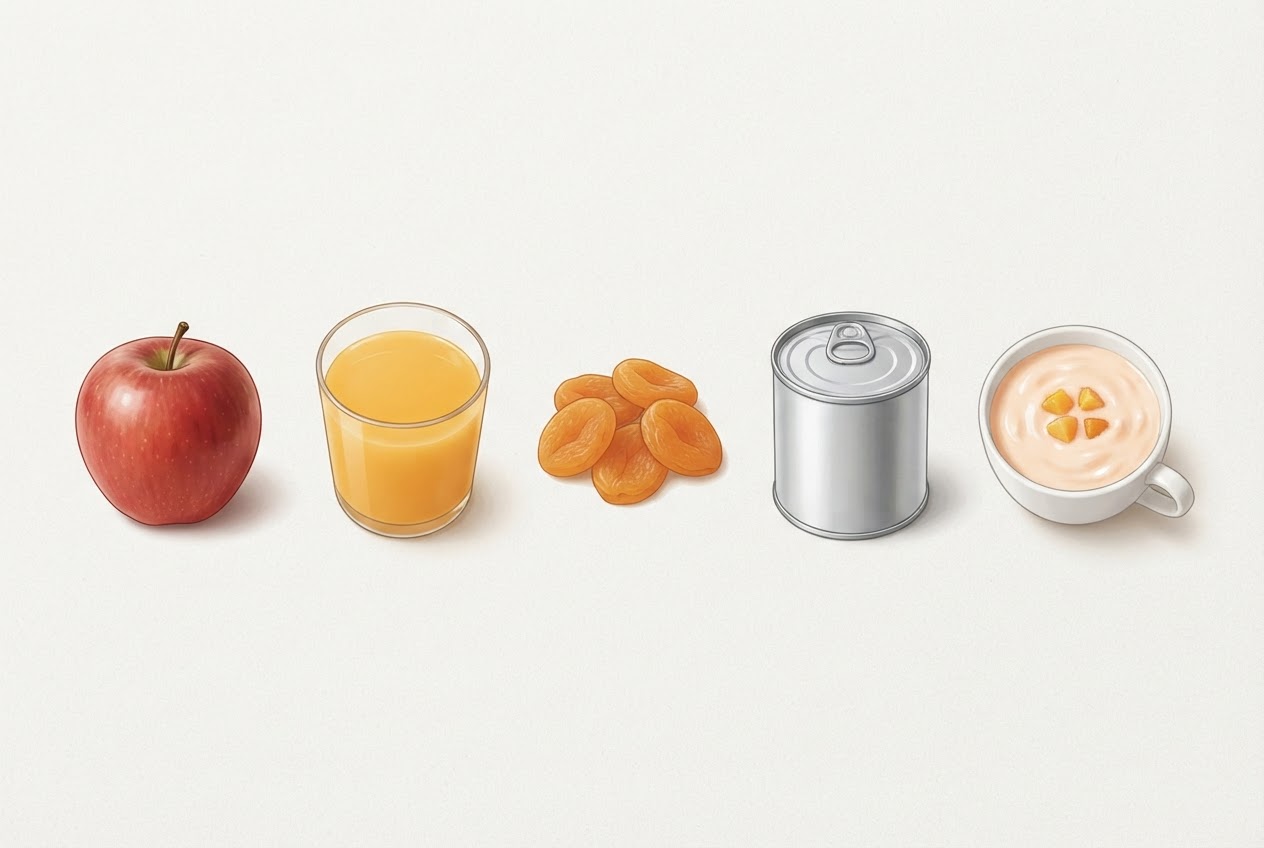
There is no simple answer. Recommendations differ depending on the source, and they do not apply equally to everyone. What is established is this: fruit contains carbohydrates, meaning sugar, and each form affects blood sugar differently. The glycemic index (GI) describes how quickly a food raises blood sugar. The reaction after eating is called the postprandial blood sugar rise.
So what matters is not a blanket verdict on individual forms of fruit, but processing, composition and the amount eaten. Whole fruit is usually the obvious everyday choice. Juice, dried fruit, canned fruit and sweetened products differ considerably from one another, though, and there are differences within each category too. The available studies do not allow any universally valid portion sizes or bans to be derived.
Whole fruit: the usual everyday choice
Whole fruit contains fiber and an intact fruit structure. Both contribute to satiety. The American Diabetes Association (ADA) names fresh and frozen fruit as particularly suitable, as well as unsweetened canned fruit. A specialist overview updated in 2026 regards fruit as an important source of vitamins, minerals and fiber. It notes that whole fruit is more filling than fruit juice because of its fiber.
Fruit is not neutral for blood sugar. It contains carbohydrates and must be included in the individual meal plan. People who inject mealtime insulin must account for the carbohydrates from fruit. For this, the ADA gives US-based calculation examples, such as a certain amount of fruit for roughly 15 grams of carbohydrates. These example amounts are not a universally valid portion guideline, because they come from a different context.
Juice, nectar and fruit drink
Fruit juice, fruit nectar and fruit juice drink are three different products. Fruit juice is 100 percent fruit. Depending on the fruit, fruit nectar also contains water and sugar or sweeteners. Fruit juice drinks have a lower fruit content and may contain other ingredients.

Juice delivers the carbohydrates of the fruit in drinkable form, but with less fiber. It is usually less filling than whole fruit. The National Disease Management Guideline for Type 2 Diabetes (supplement to version 3, 2024) points out that larger amounts of juice can cause a marked rise in blood sugar after eating in people with type 2 diabetes. The guideline distinguishes by treatment situation: during hypoglycemia, meaning low blood sugar, a rapid rise in blood sugar may be desirable. Juice is then one possible way to raise blood sugar quickly. The recommendation to minimize drinks with added sugar concerns soft drinks and industrially sweetened fruit juice drinks, not 100 percent juice in every situation. It is based on expert consensus and clinical experience, not on a systematic search of the literature on this question.
A systematic review and meta-analysis of 18 randomized controlled trials on 100 percent fruit juice found no statistically significant effect on fasting glucose, fasting insulin or HbA1c. HbA1c is the long-term blood sugar value covering the last two to three months. These results concern longer-term blood markers in studies, not the acute reaction after drinking. A neutral average effect in studies therefore does not refute the guideline’s warning about marked rises after larger amounts of juice. In addition, the studies examined only 100 percent juice and not exclusively people with diabetes. The results cannot be applied to nectars or sweetened fruit drinks.
Canned fruit: the liquid and the ingredient list decide
Whether canned fruit is suitable depends on the liquid it is packed in. The ADA names fruit preserved in its own juice or without added sugar as an acceptable option. What matters is whether sugar has been added and what the nutrition information shows for the specific product.
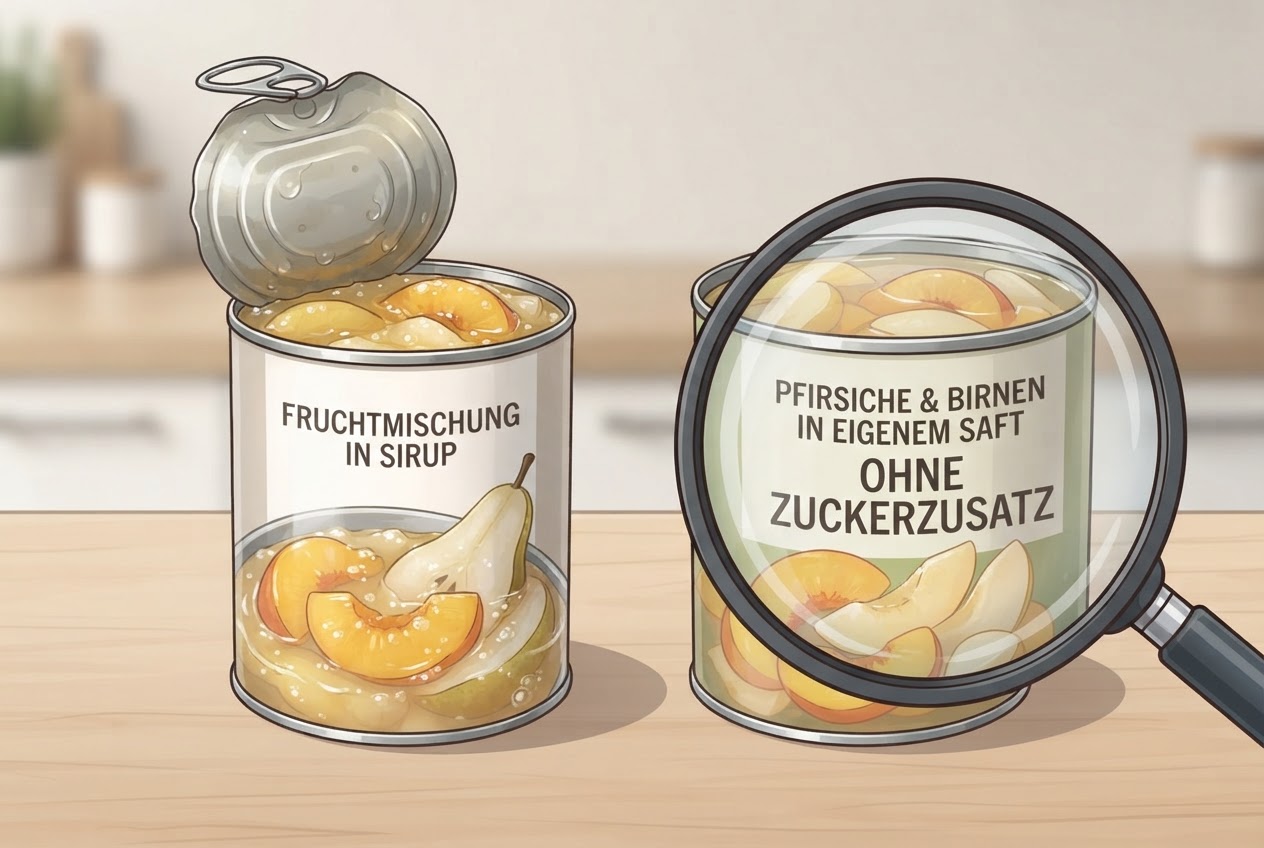
A label saying “no added sugar” does not mean the fruit is sugar-free. Fruit naturally contains sugar. Nor can the sources tell us in general how much sugar remains in a particular can after the liquid is drained. The practical advice is therefore to check the ingredient list and the nutrition table together and to avoid sweetened syrups, rather than treating every canned fruit the same.
Dried fruit: the amount matters
Drying removes water from fruit. As a result, carbohydrates and energy become concentrated in every bite. Smaller amounts quickly deliver a larger quantity of carbohydrates. The German Nutrition Society (DGE) gives 25 grams as a guideline value for dried fruit, because it has more calories than fresh fruit. The ADA gives the example that two tablespoons of raisins or dried cherries can provide about 15 grams of carbohydrates. Both figures come from different contexts and are guidance aids, not a universal diabetes-specific portion rule.

A small acute study with ten healthy adults found lower glycemic index values for dates, apricots, raisins and sultanas than for the white bread used. When part of the carbohydrates from white bread was replaced, the dried fruit lowered the glycemic response. The effect was statistically significant only for dried apricots. The study excluded people with diabetes and examined individual test meals, not long-term blood sugar control. It does not imply a long-term benefit in diabetes, nor a recommendation to use dried fruit in general for blood sugar control. But it also shows no basis for a blanket ban.
Sweetened products: ingredient list over product name
Fruit yogurt, fruit spreads, fruit nectars and fruit juice drinks may contain added sugar. The word “natural” is not a reliable guide here. Fruit yogurt can contain sugar from fruit and milk even without added sugar, and ready-made products may contain other sugars or syrups. It makes sense to look at the ingredient list and nutrition table together, without deriving a reliable rule for all products from a single threshold.
Smoothies vary greatly in composition. Products with a high proportion of fruit pulp, purée or fruit pieces and no added sugar are better. A smoothie is not the same as whole fruit, however. Smoothies and juices provide less fiber and are less filling than eating whole fruit.
Why the recommendations differ
The sources do not answer the same question. The ADA addresses its standards to people with diabetes and emphasizes whole fruit and unsweetened canned fruit. The German National Disease Management Guideline deals with type 2 diabetes and warns against larger amounts of juice, but names the hypoglycemia exception. The DGE gives general dietary recommendations for the population, such as two 200 ml glasses of juice over the course of a week and 25 grams of dried fruit. That is not an individual diabetes treatment recommendation. A specialist overview from 2026 recommends avoiding large amounts of sugar-rich fruit products, but bases this at the relevant point on clinical experience and at the same time suggests individualized nutrition counseling.
The evidence reviewed lacks direct head-to-head comparisons of all five forms with the same type of fruit and the same amount of carbohydrates. Observational studies, for example on whether fruit consumption influences the later onset of type 2 diabetes, concern the development of diabetes and not the blood sugar response in people already diagnosed with diabetes. They can complement the comparison of forms, but cannot justify a treatment recommendation on their own.