When you search online for diabetes, you will find figures, self-tests and treatment recommendations that are backed up to varying degrees. Reliable statements say who they apply to, what data they are based on and where their limits lie.

Check whether an article distinguishes between types of diabetes, interprets measured values correctly, and separates established knowledge from decisions that doctors make for individual patients. This helps you recognize when information is meant only as general guidance and does not replace a diagnosis or treatment.
Putting Diabetes Figures in Context
A figure on diabetes only makes sense once the time period and the reference group are clear. “Prevalence” describes the share of a population that lives with a condition at a specific point in time or over a specific period. It should be distinguished from new diagnoses and from estimates that also include undiagnosed cases.
The RKI (Robert Koch Institute) found for 2024 that 10.3 percent of adults reported having a doctor-diagnosed diabetes; the survey captures known diagnoses but not the number of people with undiagnosed diabetes. The German Diabetes Health Report 2026 cites at least 9.3 million people with type 2 diabetes, based on statutory health insurance data. Another widely cited estimate of around 11 million people with diabetes includes an estimated number of undiagnosed cases.
These figures are based on different measurements and therefore cannot be compared directly. When an article cites a number, check whether it states the year, the type of diabetes, the age group or other reference group, and the data source. An estimate that includes undiagnosed cases should be labeled as an estimate.
Distinguishing Types of Diabetes
Type 1 diabetes, type 2 diabetes and diabetes during pregnancy arise under different conditions and have different medical characteristics. Type 1 is an autoimmune disease: the immune system attacks the insulin-producing cells. It is not caused by an unhealthy lifestyle.

With type 2, genetic predisposition and lifestyle interact. Exercise and diet can influence the risk, but this does not mean that every case can be prevented, or that those affected are to blame. Gestational diabetes occurs in its own time frame and medical context. An article that lumps all types together in one blanket statement leaves out important differences.
Interpreting Blood Sugar and HbA1c Values
A single blood sugar or HbA1c value is not automatically a diagnosis. HbA1c is a lab value that shows the average blood sugar level over the past several weeks. It can be affected by various factors. Fasting blood sugar and an oral glucose tolerance test, which checks how the body responds to a sugar solution, are also among the methods used to diagnose diabetes.
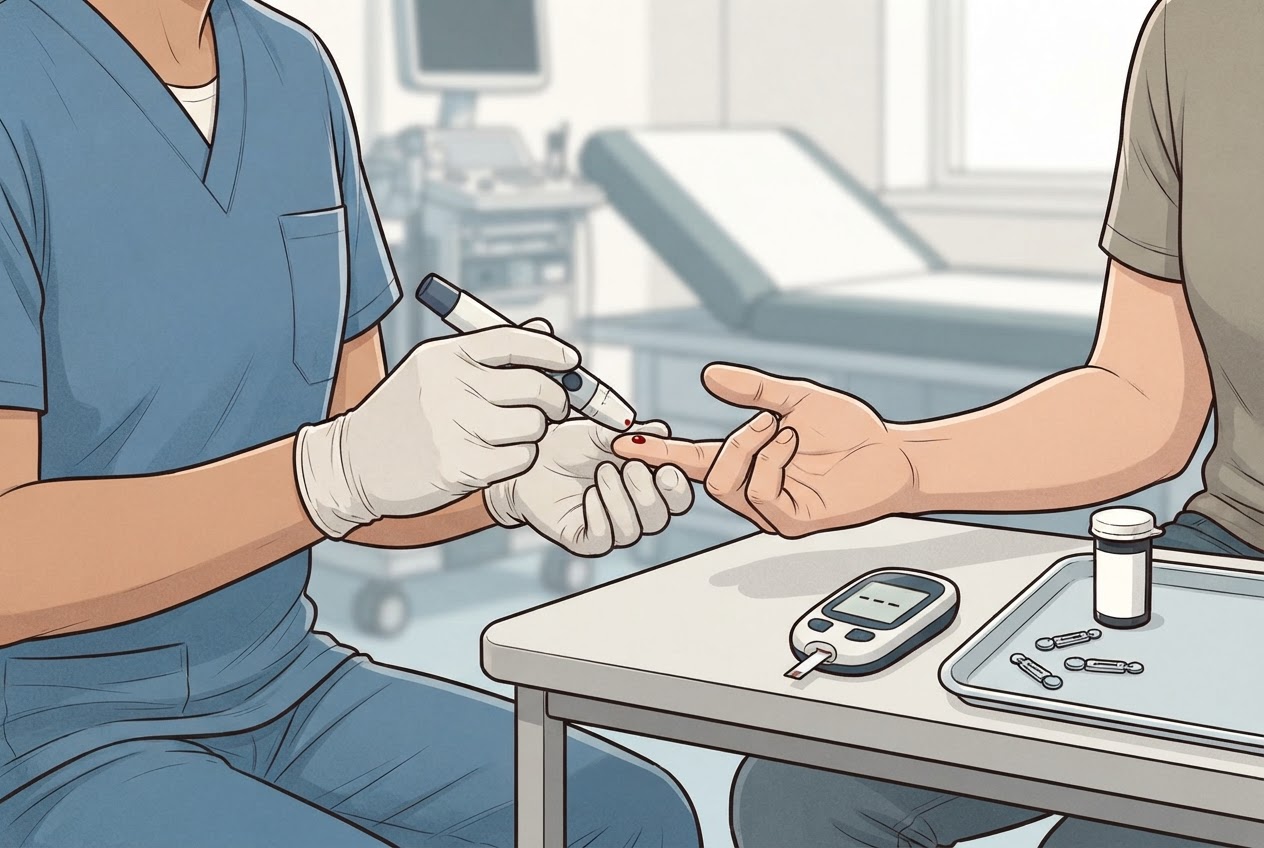
The German National Disease Management Guideline on type 2 diabetes recommends assessing lab values together with the medical history and the results of the examination. As a rule, at least two abnormal lab values should be present. If there are clear symptoms pointing to diabetes, one abnormal lab value may be enough. Measurement methods have limits, and a single value only captures a moment in time.
For this reason, do not use online information on threshold values to diagnose yourself. If a measured value is abnormal or you have symptoms, have it checked by a doctor. The guideline refers to type 2 diabetes; its statements cannot automatically be applied to every type of diabetes.
Preventing Type 2 Diabetes
In people at increased risk, changes in diet and exercise can delay a later type 2 diagnosis. It is unclear whether they completely prevent diabetes in every person affected. The phrase “prevents diabetes” therefore promises more than the findings described here support. A more precise statement refers to a possible risk reduction or a possible delay.
The types of diabetes must not be mixed up here either: the prevention statements mentioned refer to type 2. According to current knowledge, type 1 diabetes cannot be reliably prevented. Results for people at increased risk are also not a general treatment recommendation for everyone with diabetes.
Why HbA1c Targets Are Individual
An HbA1c target is not right for everyone with type 2 diabetes. The National Disease Management Guideline gives a range of 6.5 to 8.5 percent as a point of reference. Choosing a personal target depends, among other things, on other health conditions and life expectancy. The risk of hypoglycemia, the burden of treatment and the wishes of the person affected also play a role. In addition, this range does not apply to people with severe metabolic decompensation.
Lowering HbA1c further does not bring a clear benefit in every respect and increases the risk of hypoglycemia. A headline such as “The ideal HbA1c value for everyone” is therefore misleading. If an article names a target value, it should explain which group it applies to and that the personal target is set through medical consultation.
Recognizing Reliable Diabetes Articles
A reliable article shows who wrote it, when it was last reviewed and which sources it relies on. For figures, the article should name the group studied and how the data was collected. For a recommendation, it should distinguish whether it comes from a study, appears in a guideline or is the editorial team’s own assessment.
Also check whether the text openly acknowledges uncertainty. If two things occur together statistically, that alone does not prove that one causes the other. Percentages need a clearly named reference group; for risks, the time period and comparison group should also be stated. Articles should also disclose their funding and any potential conflicts of interest.
Guidelines apply only to the topics and groups they cover, and they reflect knowledge at a particular point in time. The National Disease Management Guideline on type 2 diabetes was adopted in 2023. It consists of individual modules and does not automatically address every treatment question. Check, therefore, whether an article uses the appropriate and current version of the guideline.
When Online Information Is Not Enough
Personal measured values, new symptoms and questions about medication belong in a conversation with healthcare professionals. A web article can explain which questions are worth asking, but it can neither make an individual diagnosis nor set a personal dosage. Do not start, stop or change a treatment based on a general online recommendation.
In case of unconsciousness, a seizure or any other sudden severe deterioration, call emergency services. Do not give an unconscious person anything to eat or drink. For urgent symptoms where there is no immediately apparent danger to life, contact a medical service.