If you have type 2 diabetes and feel dizzy, don’t automatically assume the cause is your blood sugar. Dizziness can feel like spinning, swaying, light-headedness, or a sense that you are about to faint. The sensation alone does not reliably show what is causing the dizziness.

Low blood sugar is a possible cause, especially with certain diabetes medications. A drop in blood pressure or a lack of fluids can also be responsible. Other medications and a disorder of the inner ear can also cause dizziness. Sudden neurological deficits, loss of consciousness, or severe chest pain require immediate help.
Possible causes
Low blood sugar occurs especially in people treated with insulin, sulfonylureas, or glinides. The risk also depends on whether a meal is skipped. Unusually high physical activity is another factor, as is alcohol consumption. With metformin alone, the risk of low blood sugar is low.

Dizziness on standing up is consistent with a possible drop in blood pressure. In this case, blood pressure falls when you move from lying or sitting to standing; light-headedness and visual disturbances can result. Nerve damage caused by diabetes can affect automatic body functions such as blood pressure regulation. Medications and other conditions can also be triggers.
Very high glucose levels can come with intense thirst and frequent urination. Frequent urination can contribute to fluid loss. With severe high blood sugar, marked fatigue, nausea, visual disturbances, and light-headedness are possible warning signs. However, dizziness alone proves neither high blood sugar nor a lack of fluids.
Some dizziness is related to the inner ear. Brief attacks of spinning vertigo triggered by certain head movements can occur, for example, with positional vertigo. Other medications can also cause dizziness. Migraine, infections, and anemia are further possible causes. For this reason, you should not stop or change medications on your own.
Understanding low blood sugar correctly
A glucose level below 70 mg/dl (3.9 mmol/l) is considered a warning range for low blood sugar. Below 54 mg/dl (3.0 mmol/l), the American Diabetes Association classification speaks of clinically significant low blood sugar. Low blood sugar is considered severe when the person affected needs help from someone else. A specific measured value alone is not what counts here.
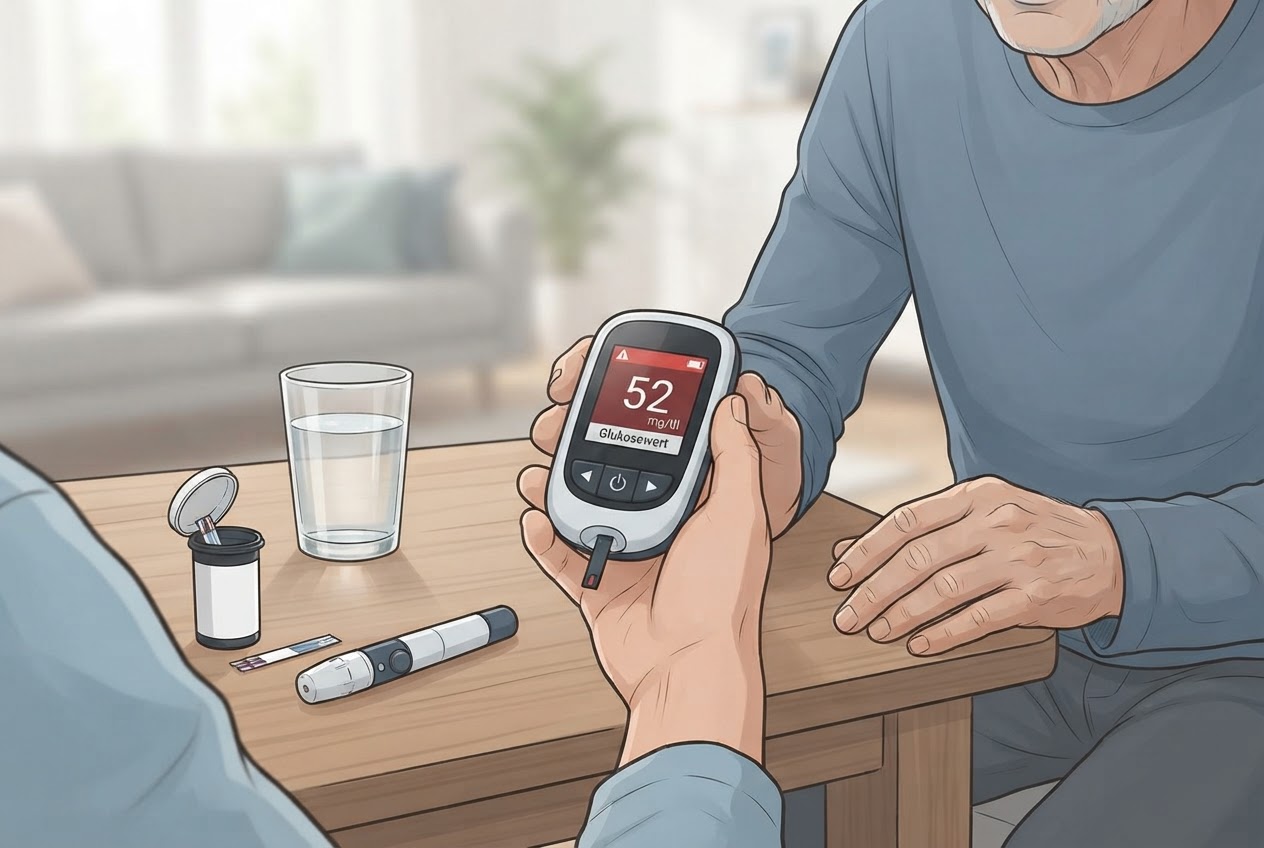
With low blood sugar, dizziness can occur together with trembling, sweating, palpitations, hunger, or confusion. However, symptoms differ from person to person. Some people notice them only faintly or not at all. A single measured value or a feeling of dizziness alone therefore does not reliably explain the cause.
If the dizziness returns, describe to your doctor when it occurs and how it progresses. For example, say whether the symptoms occur after standing up, before a meal, or together with other symptoms. Your medications and any measured values you have are also important.
When immediate help is needed
With sudden signs of a stroke or other severe symptoms, every minute counts. In Germany, call 112 if dizziness occurs together with any of the following signs:

- weakness or paralysis on one side, numbness, or a drooping corner of the mouth
- speech or vision problems, or a suddenly unsteady gait
- loss of consciousness or fainting
- severe chest pain or shortness of breath
- marked drowsiness or confusion in possible acute diabetes complications
With a possible stroke, you should not wait to see whether the symptoms go away on their own. Even temporary neurological deficits must be checked out immediately.
Have new, persistent, or recurring dizziness checked by a doctor promptly, especially if you almost faint, fall, or have new vision or hearing problems. For urgent symptoms that are not life-threatening, the on-call medical service in Germany can be reached at 116117.