
With type 2 diabetes, there is no universal list of forbidden foods. What matters is the type and amount of carbohydrate-containing foods, high-fibre foods, few highly processed products, and an energy intake that suits your personal needs. Treatment, other health conditions and personal blood glucose targets also play a role.
The table gives adults with type 2 diabetes some guidance for everyday life. It does not replace individual nutrition counselling. If you take insulin, sulfonylureas or SGLT2 inhibitors, or if you have kidney disease, are underweight, are older or are pregnant, your diet must be discussed with a doctor.
Nutrition table for everyday life
| Food group | Often a good choice | Rarely or in small portions | Why it matters | Portion tip |
|---|---|---|---|---|
| Vegetables | Lettuce, tomatoes, peppers, cucumbers, cabbage, broccoli, courgettes, mushrooms | Vegetable dishes with lots of cream, breading, sugar or large amounts of fat | Vegetables provide fibre and usually raise blood glucose only slightly in normal amounts, provided they are prepared in a low-starch way. | Side dishes and preparation count too. |
| Fruit | Fresh, whole fruit, such as apples, pears or berries | Juice, smoothies and larger amounts of dried fruit | Whole fruit contains fibre. Liquid fruit and dried fruit provide sugar in concentrated form. | A whole piece of fruit is a better choice than juice. If you take insulin, fruit counts towards the carbohydrates in your meal. |
| Bread and grains | Wholegrain bread, oats, wholegrain pasta, minimally processed grain products | White bread, sugary breakfast cereals, pastries, and large portions of pasta or rice | Thanks to their fibre, wholegrain foods are more filling, but they still contain carbohydrates and affect blood glucose. | The amount remains decisive. If you take mealtime insulin, the carbohydrates must be estimated or calculated. |
| Potatoes | Boiled potatoes as a measured side dish | Chips, crisps and highly processed potato products | Potatoes contain starch. Fried versions also provide a lot of fat and energy. | Plan potatoes as a side dish and don’t treat them as equivalent to vegetables. |
| Legumes | Lentils, beans, chickpeas and peas | Sweetened products or ready meals high in salt and fat | Legumes provide protein and fibre but also contain carbohydrates. | If you are on insulin therapy, include them in the carbohydrate amount of the meal. |
| Nuts and seeds | Unsalted, natural nuts and seeds | Caramelised, sugared or heavily salted varieties | They mainly provide unsaturated fatty acids and are filling. | A small handful is usually enough as a snack, because nuts are high in energy. |
| Protein sources | Legumes, tofu, unsweetened soy products, fish, eggs, plain yogurt and, depending on your diet, lean meat | Sausage, processed meat, breaded products and heavily processed meat products | Minimally processed protein sources fit well into a plant-focused diet. | With chronic kidney disease, the amount of protein should be determined individually. |
| Dairy products | Plain yogurt, kefir and unsweetened dairy products | Fruit yogurt, milk-based drinks and sweetened desserts | Milk and yogurt contain carbohydrates. Added sugar increases the amount of carbohydrates. | Look at the carbohydrates per serving, not just at the “of which sugars” figure. |
| Plant-based alternatives | Unsweetened products, ideally fortified with calcium | Sweetened varieties and products with little protein or many additives | Depending on the product, protein, calcium, iodine and vitamin B2 differ considerably. | Check the label and don’t automatically assume the alternative has the same nutrients. |
| Oils and fats | Rapeseed oil, olive oil, linseed oil, walnut oil, nuts and seeds | Large amounts of saturated fats and high-fat convenience foods | Plant oils provide mainly unsaturated fatty acids. | Even high-quality oil is high in energy. Adjust the amount to your weight and energy goals. |
| Sweets and baked goods | Occasionally, consciously and in small portions | Regular large portions, especially together with sweet drinks | Sweets and baked goods often combine sugar, white flour and fat with little satiety. | “Sugar-free” doesn’t automatically mean low in carbohydrates or calories. |
| Drinks | Water, mineral water, unsweetened tea and coffee without sugar | Soft drinks, energy drinks, sweetened coffee drinks, iced tea and juice | Liquid carbohydrates raise blood sugar quickly and are less filling than solid foods. | Choose water as your default drink. Juice is not an equivalent substitute for a whole piece of fruit. |
| Alcohol | Avoiding it is the safest option | Regular consumption, cocktails, sweet wines and larger amounts of beer | Alcohol can promote hypoglycemia, especially together with insulin or sulfonylureas, even with a delay. | Don’t derive a general rule on alcohol without consulting your doctor about your medication. |
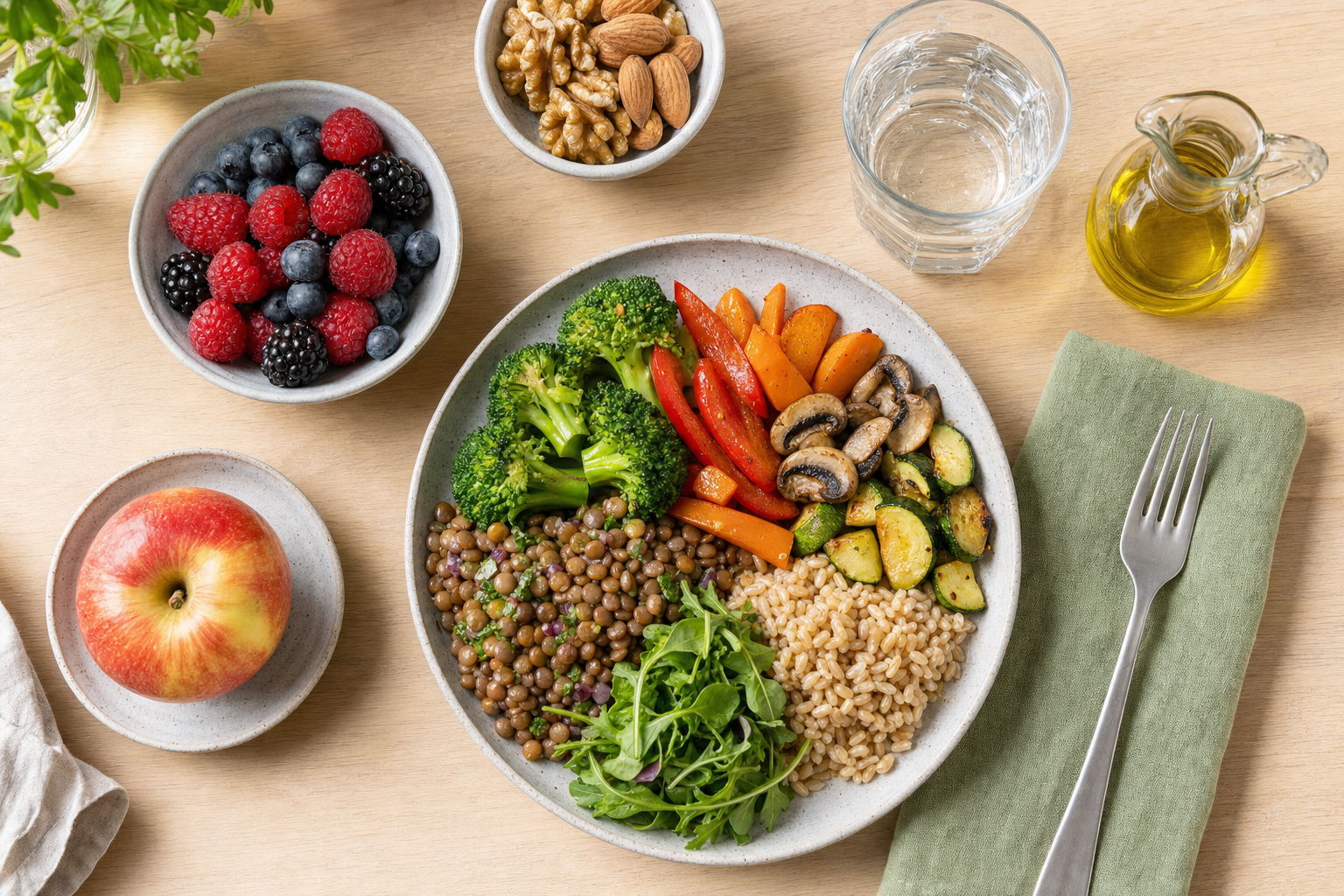
The German National Disease Management Guideline recommends a calorie-appropriate, high-fiber diet with plenty of vegetables, fruit and suitable plant-based fats. The patient recommendations of the German Diabetes Association name water and unsweetened drinks, whole grains, legumes, whole fruit and unsalted nuts as a good guide.
Putting carbohydrates into perspective
During digestion, the body breaks carbohydrates down into sugar units. They have a particularly strong effect on blood sugar after a meal. Carbohydrates are found not only in sweets and sugar, but also in bread, grains, rice, pasta, potatoes, legumes, dairy products and fruit.
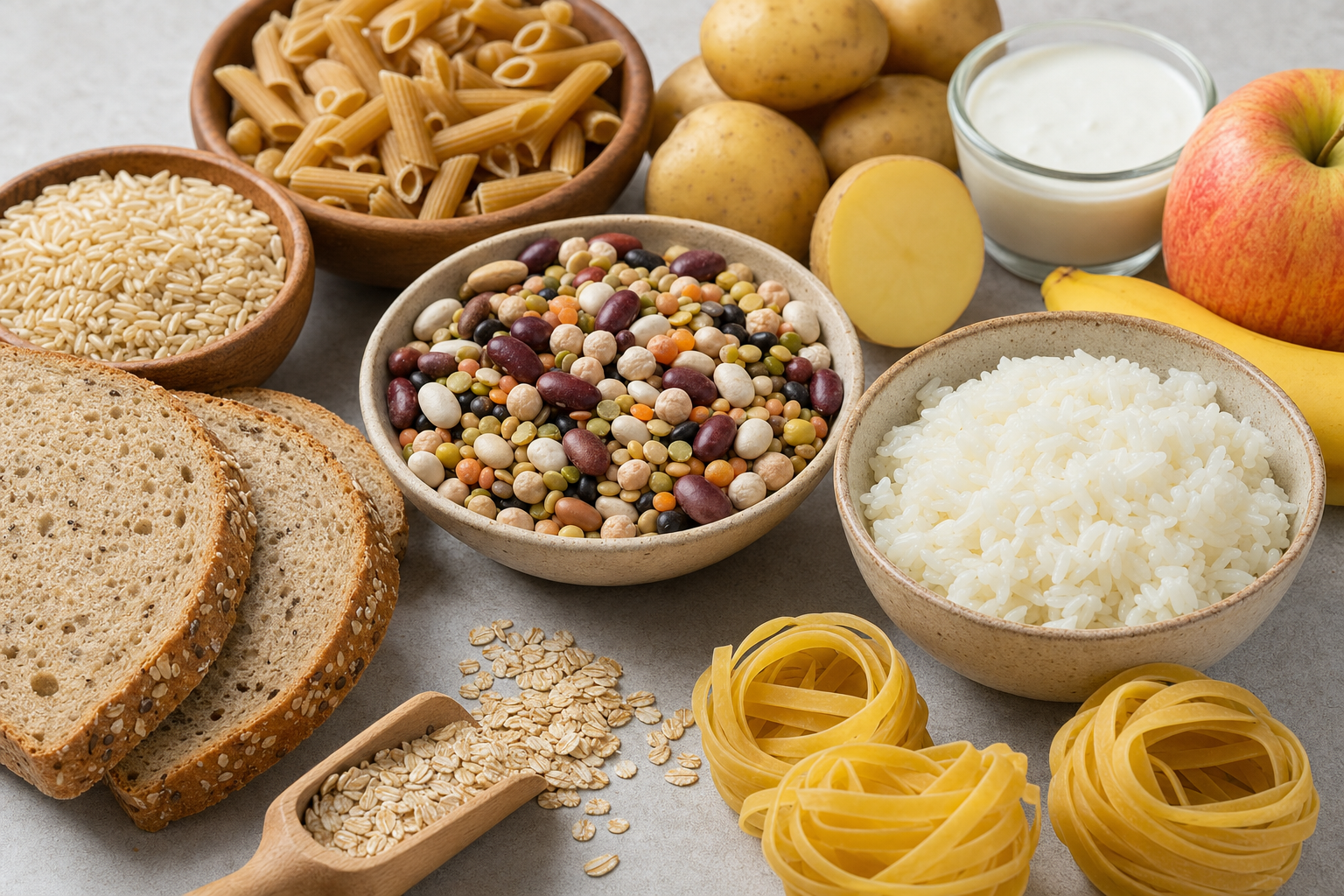
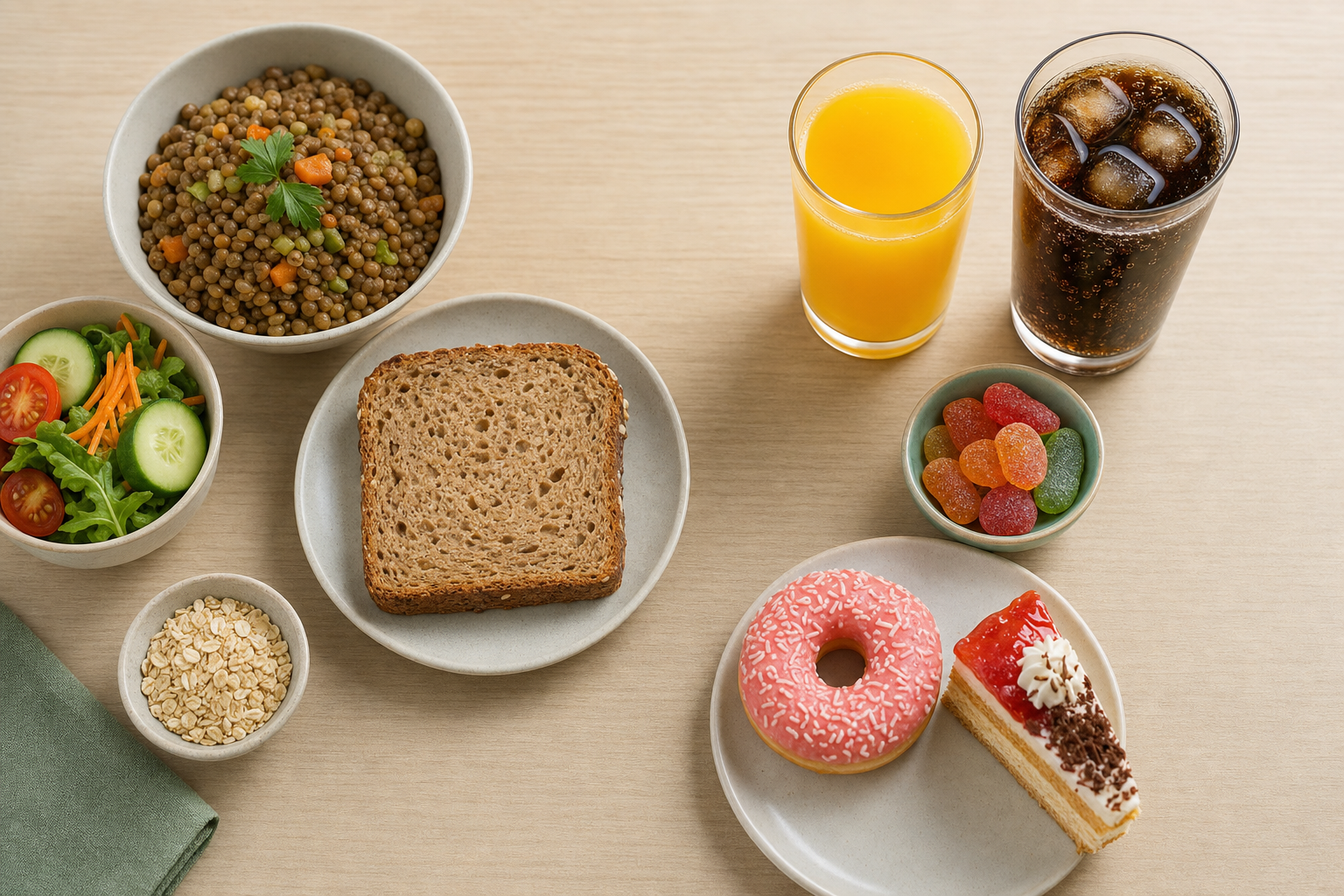
These foods provide carbohydrates in different forms. A serving of lentils or wholegrain bread also contains fiber and often protein. Soda, juice and sweet pastries, on the other hand, provide quickly available carbohydrates and are not very filling. That is why the whole meal matters, not just the amount of carbohydrates.
Wholegrain is usually a better choice than white flour, but it also affects blood sugar. A large portion of wholegrain pasta can contain more carbohydrates than a small portion. The glycemic index shows how quickly a carbohydrate-containing food raises blood sugar. It does not take portion size into account. It also reflects mixed meals only to a limited extent, as Diabetes UK explains.
With mealtime insulin therapy, the amount of carbohydrate is especially important. Bread, fruit, dairy products, legumes and starchy side dishes all need to be included in the calculation. Nutrition counseling can help you estimate portion sizes and carbohydrates reliably in everyday life.
Which eating patterns help?
A Mediterranean-style diet includes plenty of vegetables, legumes, wholegrains, fruit, nuts, fish and plant-based oils. Different eating patterns can influence HbA1c. However, studies do not arrive at entirely consistent results. HbA1c refers to the proportion of the red blood pigment to which sugar is bound. The value shows the average blood sugar over the past weeks.
A reduced-carbohydrate diet can also work. A review found an average HbA1c reduction of 0.47 percentage points compared with control diets when carbohydrates made up less than 26 percent of energy intake. A later meta-analysis of 27 studies found a smaller overall effect of 0.29 percentage points. The benefit was greatest after about three months, after which the difference became smaller.
A vegetarian diet is another possible option. A summary of randomized trials found an average HbA1c reduction of 0.40 percentage points with vegetarian diets, along with a decrease in body mass index of 0.96 kg/m². However, vegan does not automatically mean nutrient-rich. Vitamin B12 must be reliably supplemented; depending on food choices, calcium, iodine, vitamin B2 and protein also need attention. The German Nutrition Society describes these requirements in more detail.
The evidence on intermittent fasting is mixed. Some studies show weight loss and better blood sugar levels, while others show no additional HbA1c benefit compared with a control diet. Fasting is therefore not a standard recommendation for everyone with type 2 diabetes. If you take insulin, sulfonylureas or SGLT2 inhibitors, a fasting period must be discussed with your doctor beforehand.
Why low carb alone is not enough
A low-carb table looks clear at first glance: bread, pasta, rice, potatoes and fruit appear as a problematic group. This classification falls short. A rapid review of ten randomized trials compared diets higher in fiber and also higher in carbohydrates with diets lower in fiber and lower in carbohydrates. The higher-fiber diet was associated with an average HbA1c difference of 0.50 percentage points in favor of the higher-fiber group.
This result does not mean that more carbohydrates are generally better. It shows that quantity alone does not describe food quality. A sensible decision takes four questions into account:
- Does most of the carbohydrate come from vegetables, legumes, wholegrains or whole fruit?
- How big is the portion?
- Is the food liquid or highly processed?
- Does the meal fit your treatment and your personal blood sugar pattern?
If you achieve better values with a reduced-carbohydrate diet and can sustain it in a balanced way, that is one possible strategy. Another person achieves an equally good result with a high-fiber Mediterranean diet. What matters are nutrient quality, energy balance, blood sugar values and long-term feasibility.
Weight loss and remission
In people who are overweight, losing weight improves insulin sensitivity. Remission means that blood sugar levels are no longer in the diabetes range without glucose-lowering medication. It is possible but not guaranteed, and it does not mean a definite cure.
The five-year follow-up of the DiRECT study found remission in 11 of 85 people with available data in a structured program. The program consisted of a time-limited formula diet, the gradual reintroduction of normal foods and long-term support. The results therefore cannot be applied to a crash diet done on your own.
In everyday life, a step-by-step approach helps: replace sugary drinks, eat vegetables and legumes more often, check the portions of energy-dense side dishes, and keep a record of your weight and blood sugar. In cases of unintentional weight loss, underweight, older age or frailty, the main goal is to avoid malnutrition and muscle loss.
Taking medication into account safely
If you eat significantly fewer calories or carbohydrates, you may need a different dose of glucose-lowering medication. This is especially important in the following situations:
- Insulin: Eating less, losing weight or being much more active can lower your insulin requirements. Without a suitable adjustment, the risk of hypoglycemia rises.
- Sulfonylureas: These medications can promote hypoglycemia if you skip meals, eat much less or drink alcohol.
- SGLT2 inhibitors: A very low-carbohydrate or ketogenic diet, prolonged fasting, dehydration and heavy alcohol consumption increase the risk of ketoacidosis. A current recommendation from the American Diabetes Association advises against a ketogenic diet when this risk is present.
- Kidney disease: Protein, potassium, phosphate and fluid may need to be adjusted individually. A general standard table is then not sufficient.
- Pregnancy: Pregnancy with diabetes comes with its own requirements for carbohydrates and nutrients. A general low-carbohydrate table is unsuitable for this.
If you experience trembling, cold sweats, palpitations, severe weakness or confusion, follow your personal emergency plan for hypoglycemia. Loss of consciousness, seizures, persistent vomiting, deep or unusual breathing and severe abdominal pain require immediate medical help. With an SGLT2 inhibitor, symptoms of ketoacidosis can occur even without extremely high blood sugar levels.
Key takeaways
- Choose your carbohydrate source: Wholegrains, legumes, vegetables and whole fruit are usually a better choice in everyday life than soft drinks, juice, sweets and highly processed white-flour products.
- Limit the portion instead of banning foods across the board: Wholegrains, potatoes, fruit and legumes also contain carbohydrates and need to fit the meal.
- Adapt your diet to your treatment: With insulin or sulfonylureas, eating less and drinking alcohol can trigger hypoglycemia; with SGLT2 inhibitors, a ketogenic diet and prolonged fasting are risky.
- Choose a sustainable eating pattern: Mediterranean, vegetarian and reduced-carbohydrate diets are possible options, provided they are nutrient-rich and sustainable in the long term.
- Get support for major changes: Diabetes counseling is especially necessary with kidney disease, pregnancy, underweight, older age, complex insulin therapy or when aiming for remission.