Diabetes mellitus is a group of conditions in which too much sugar stays in the blood. The causes and courses differ: type 1 often begins quickly, while type 2 frequently develops over years. Gestational diabetes is usually picked up during a check-up. The following fictional examples show how differently diabetes can be discovered and treated in everyday life. They are not a substitute for a medical diagnosis.
The examples highlight different situations: a rapid onset, an incidental finding and an abnormal test during pregnancy.
When type 1 begins quickly
A 16-year-old has recently been drinking noticeably more than usual, needs to go to the toilet often and feels increasingly exhausted. These symptoms are consistent with possible type 1 diabetes. Typically, the symptoms get worse within a few days or weeks.
In type 1 diabetes, the body’s own immune system usually attacks the insulin-producing cells of the pancreas. As a result, the body lacks insulin, which moves sugar from the blood into the cells. The condition is not the result of an unhealthy lifestyle.
With symptoms like these, the teenager should see a doctor quickly. If type 1 is confirmed, she will need insulin every day, for example via a syringe or a pump. Doctors adapt the treatment to meals, physical activity and daily routine. With insulin, school and leisure time can be planned. However, insulin remains necessary.
When type 2 is found by chance
A 56-year-old office worker feels healthy. A routine check-up shows elevated blood sugar levels. This is a typical way in which type 2 is discovered: the condition often develops gradually and causes no clear symptoms for a long time.
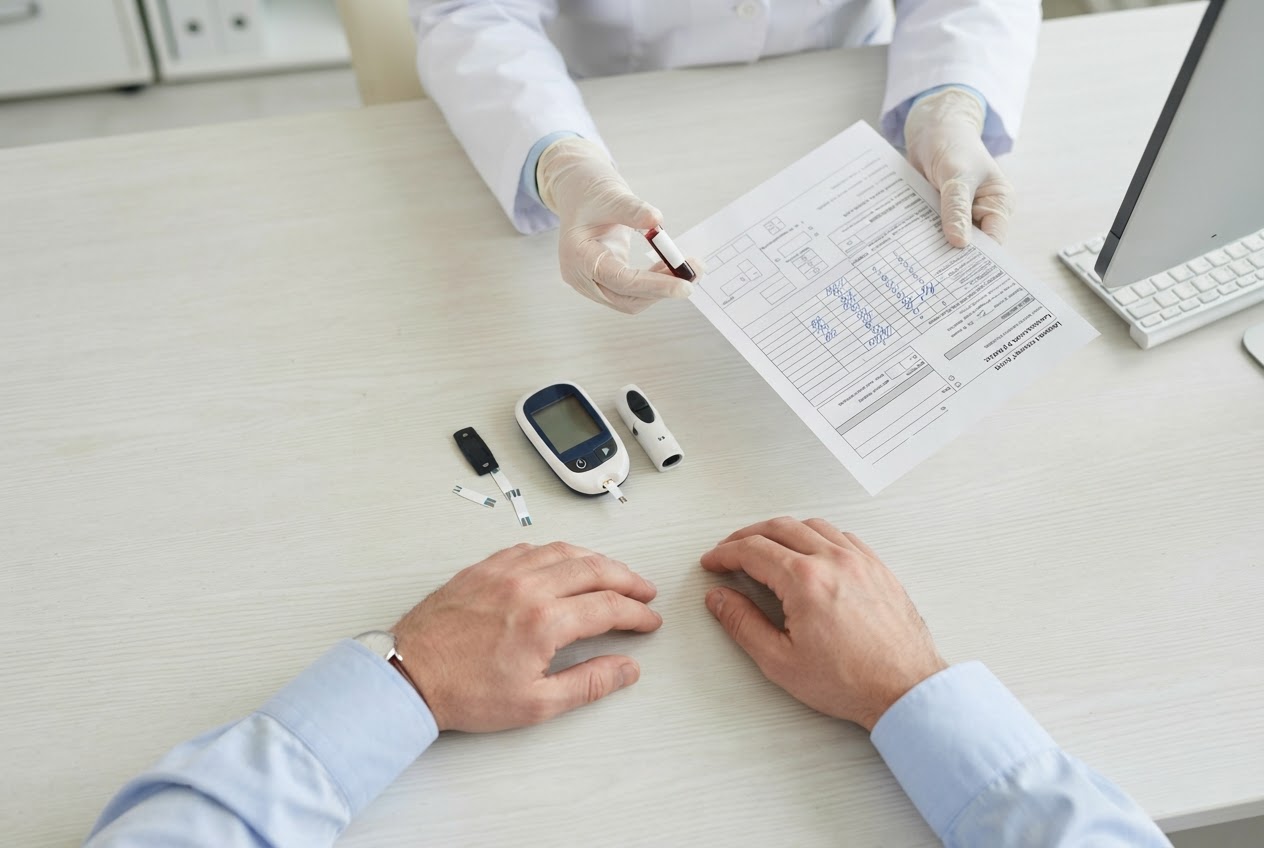
In type 2 diabetes, the body’s cells respond less and less well to insulin. Genetic predisposition, physical activity and body weight can play a role. However, the condition cannot be reduced to a single cause or to personal behavior. According to the Robert Koch Institute, more than 90 percent of people with diabetes have type 2.
Doctors make the diagnosis based on laboratory values and the person’s state of health. Guideline values include a fasting blood sugar of 126 mg/dl (7 mmol/l) or higher or an HbA1c value of 6.5 percent or higher. In the glucose tolerance test, a two-hour value of 200 mg/dl (11.1 mmol/l) or higher serves as a guideline. The HbA1c value gives an indication of blood sugar over the past few weeks. Doctors often confirm an abnormal result with a further measurement. A single reading from a home device is not enough for a diagnosis.
The man discusses with his doctor goals and changes that fit his daily life. Regular physical activity and an adapted diet can support treatment. Whether medication or insulin is also needed depends, among other things, on his measured values and any coexisting conditions, as well as on his personal treatment goals.
When diabetes is detected during pregnancy
A pregnant woman does not feel ill. Yet her result in the scheduled sugar test is abnormal. Gestational diabetes often causes no noticeable symptoms and is therefore usually detected through screening. According to the German Federal Health Portal, a first test takes place between the 24th and 27th week of pregnancy. If the result is abnormal, a further examination follows.
Gestational diabetes is linked to the metabolic changes during pregnancy. After medical evaluation, treatment often begins with nutritional counseling and exercise; some pregnant women also need insulin and close monitoring. The woman coordinates her treatment with her prenatal care practice. A follow-up medical check is important after the birth.
What the examples have in common
With elevated blood sugar, strong thirst and frequent urination occur, along with tiredness and weakness. How these symptoms develop provides clues but does not prove a particular form of diabetes. Type 1 often appears quickly, type 2 can go unnoticed for a long time, and gestational diabetes often has no symptoms. Other forms of diabetes also exist.
The Robert Koch Institute reported for 2024 that 10.3 percent of adults in Germany stated they had a medically diagnosed diabetes. The figure excludes gestational diabetes and does not allow a reliable statement about how many people have undiagnosed diabetes. Diabetes can also be present without any symptoms.
When immediate help is needed
With very high blood sugar, vomiting, abdominal pain and deep breathing can point to an acute emergency. Severe drowsiness or impaired consciousness can also be such warning signs. If the person is unconscious, call the emergency number immediately and do not give anything to eat or drink. If the condition worsens significantly, prompt medical help is needed.