In continuous glucose monitoring (CGM), a sensor measures glucose levels in the tissue under the skin. Alongside the current value, the device often shows a trend arrow. It indicates whether the most recent readings are rising or falling and how quickly they are changing.
An upward arrow indicates rising sensor values, and a downward arrow indicates falling ones. A horizontal arrow stands for a slow change, as defined by the particular device. The arrow helps you put the current value in context. However, it does not predict exactly what value your glucose will reach later.
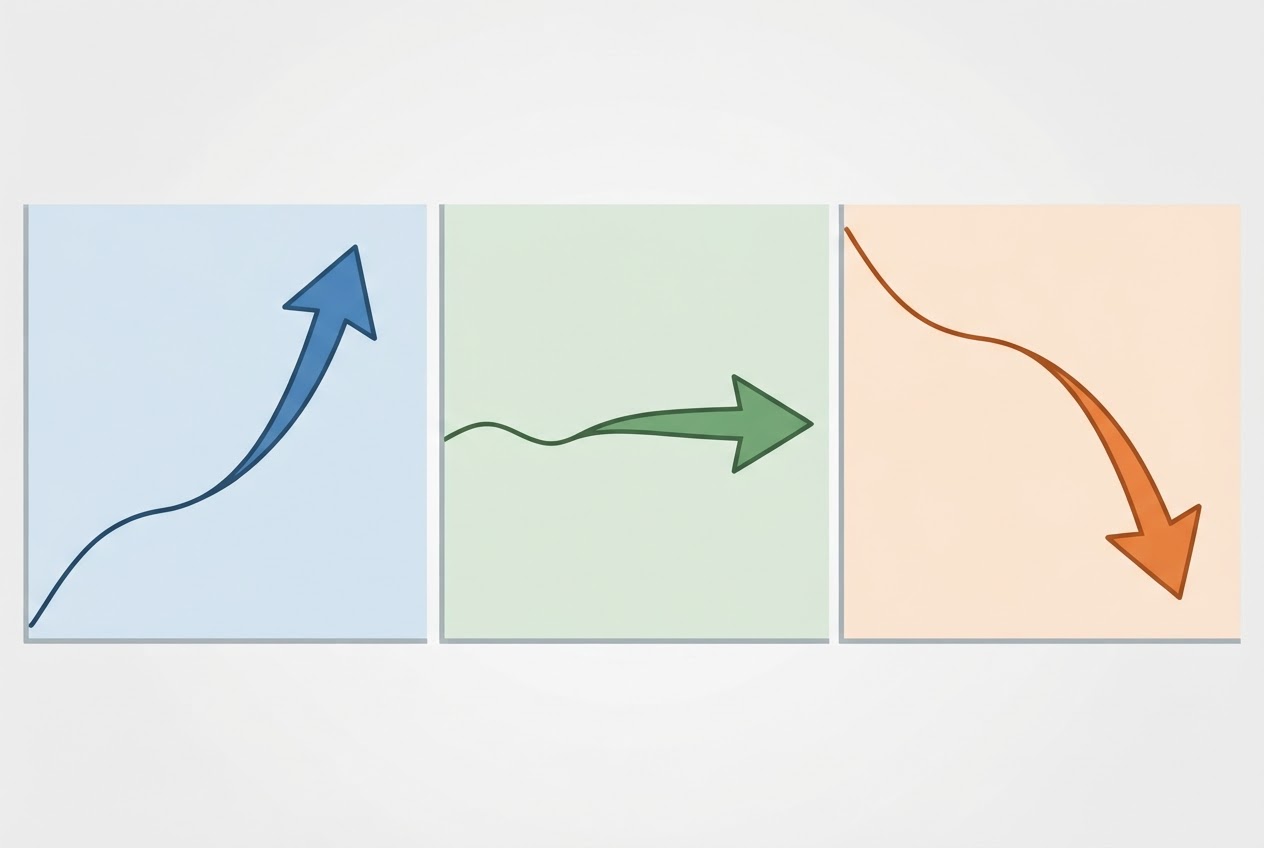
What the arrows show
Trend arrows describe the most recent development of the sensor values. Some devices distinguish between several speeds, for example by using one or more arrows. The meaning of the symbols and thresholds varies depending on the CGM system. That is why the instructions for the device you use take precedence.
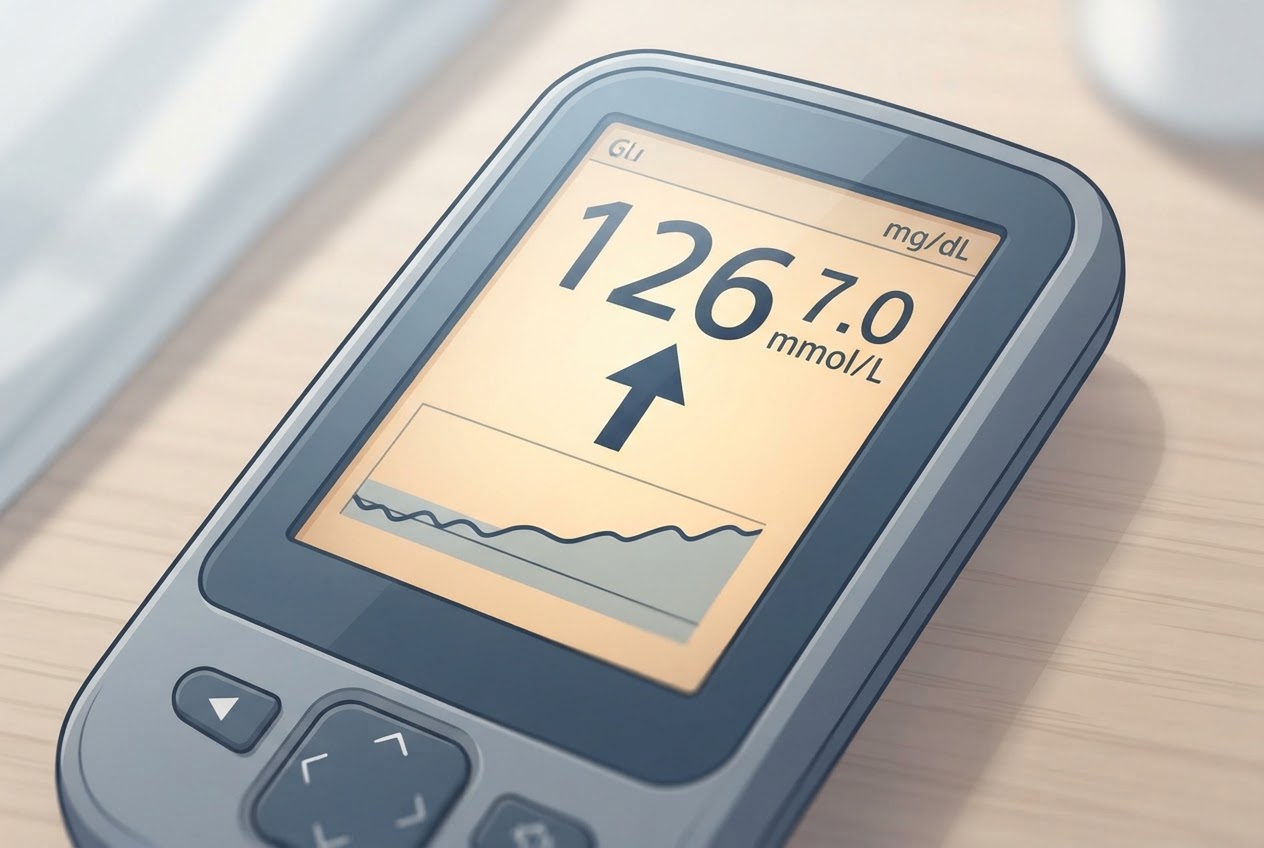
An upward arrow, for example, means that the most recent sensor values are rising. It does not indicate how long the rise will continue or what value the sensor will show next. A horizontal arrow also does not mean that the value will stay the same: it only shows that the values have recently been changing slowly.
Why the arrow is not a prediction
The arrow is based on readings that have already been recorded. The trend can change afterwards, for example because of food, physical activity, insulin or other diabetes medication. An infection can also affect glucose levels. These factors cannot be read from the arrow alone.

The sensor measures glucose in the fluid between the cells under the skin, not directly in the blood. During rapid changes, the sensor value and the blood glucose value can differ. The German Diabetes Society therefore describes trend arrows as simplified categories for short-term changes. The arrow helps you put things in context when you keep the current sensor value and the trend of the last few hours in view and also take into account how you feel.
When a blood glucose check makes sense
A measurement with a blood glucose meter makes sense if the CGM display does not match your situation or if you have doubts about its reliability. This usually involves testing blood from the fingertip. The German Diabetes Society recommends a blood glucose measurement if symptoms do not match the sensor display or if values are close to important safety limits. The American Diabetes Association also recommends considering a blood test when CGM data is missing, for example a missing trend arrow.
Check your blood glucose especially if:
- you have symptoms of possible low or high blood glucose that the sensor value does not explain;
- the sensor value seems implausible, or a reading or trend arrow is missing;
- your glucose is changing rapidly or the device recommends a product-specific measurement.
The specific instructions differ depending on the device and sensor generation. Follow the instructions for use of your own system. Do not make a treatment or dosing decision based on a trend arrow alone. If someone is unconscious, has seizures or has another acute, severe impairment, call emergency services.