People with diabetes don’t have to avoid bananas altogether. The fruit contains carbohydrates, which affect blood sugar. What matters most is the amount, how the banana is prepared and the other carbohydrates in the meal. Blood sugar responds differently from person to person. Ripeness and preparation do not allow an exact prediction of an individual’s blood sugar curve.
A whole banana, a smoothie and banana chips should therefore not be judged the same way. Size matters too: a small banana provides fewer carbohydrates than a large one. If you count carbohydrates, include the banana in your personal meal planning.
What effect does ripeness have?
A firmer, less ripe banana may raise blood sugar more slowly or less sharply than a very ripe one. As a banana ripens, part of its starch is converted into sugar. However, ripeness is not a reliable predictor of your personal response.
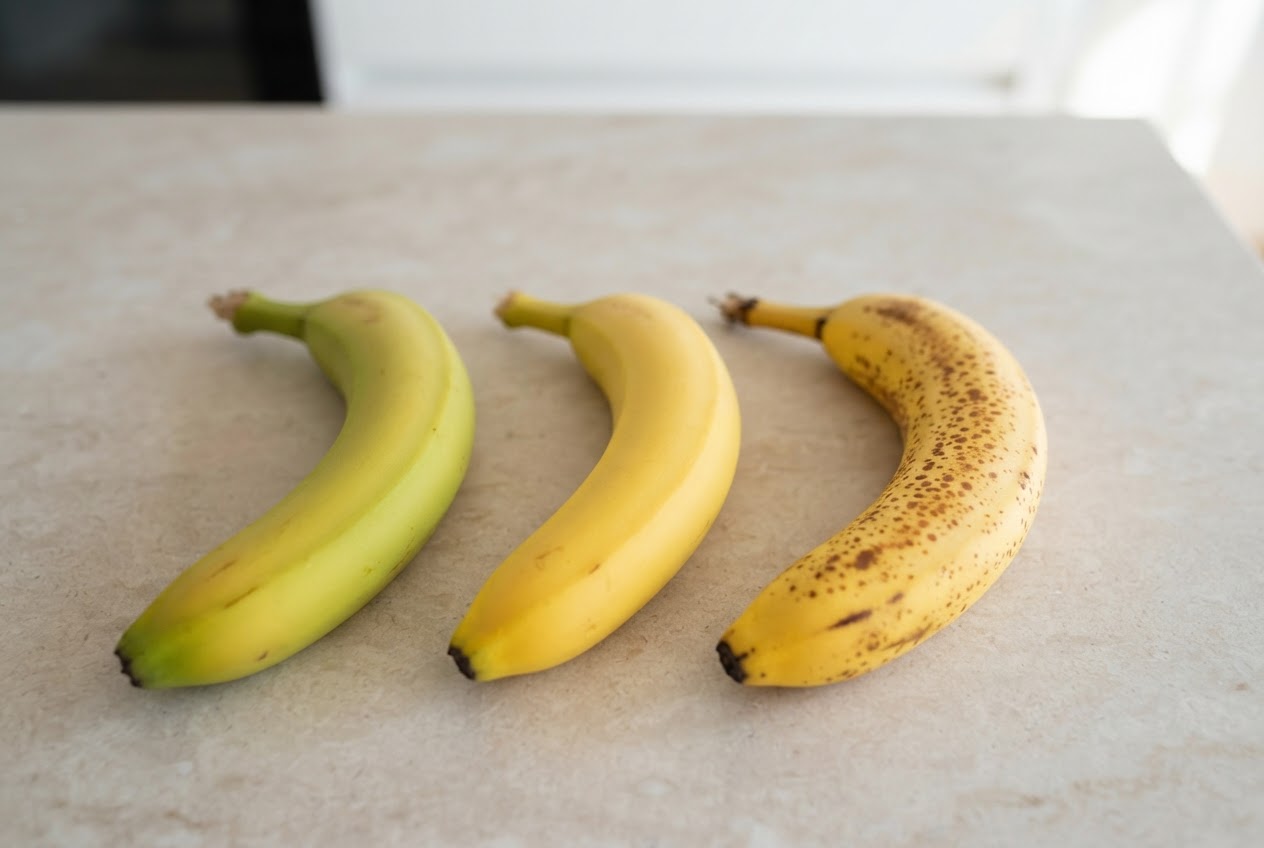
A small study from 1992 examined ten people with type 2 diabetes. After 120 grams of less ripe banana, blood sugar rose less than after the same amount of overripe banana. The result points to a possible influence of ripeness, but because of the small number of participants and the age of the study, it is not enough to establish a general rule. Other figures for the glycemic index, a reference value for the rise in blood sugar after a food, are closer together.
If you want to see differences in your own body, you can eat a similar amount of banana in comparable meals, once less ripe and once riper, and look at your own readings, without this guaranteeing future values.
What portion size is right?
A banana is not a standard portion size. diabetesDE gives about 125 grams as a rough guide for one portion of fruit. 100 grams of banana flesh contain roughly 20 grams of carbohydrates. Diabetes UK puts a large banana at about 30 grams of carbohydrates. These figures are approximations, since weight and size vary.
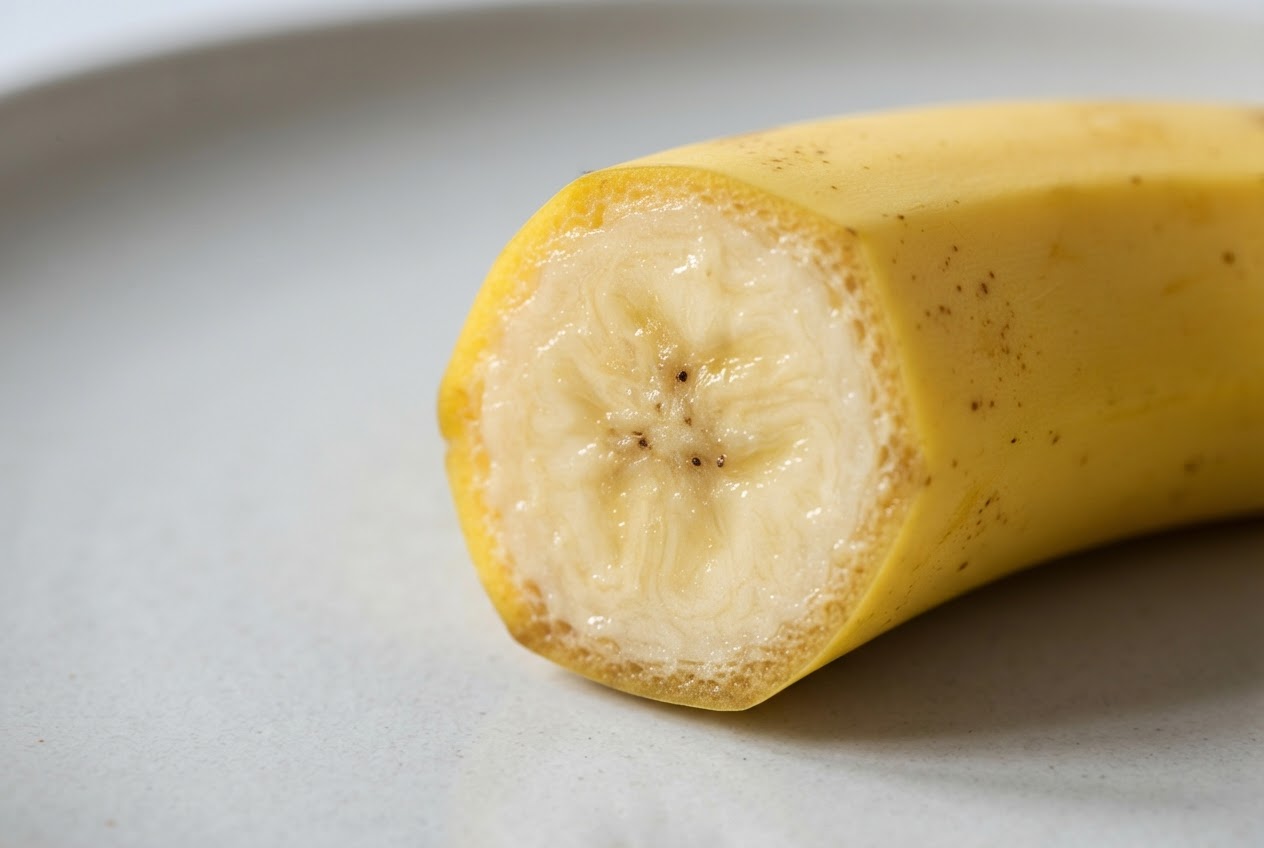
If you count carbohydrates, you can weigh the edible flesh or use the nutritional information for the amount you eat. With a large banana, don’t automatically assume it is a small portion of fruit. If you use insulin, take the amount of carbohydrates into account according to your personal treatment plan, which also guides your insulin dose.
Whole fruit or processed?
A whole banana is usually easier to judge by its size than a drink or dried fruit. Pureed banana is easier to eat. How much this affects blood sugar for the same amount of banana has not been studied directly enough in people with diabetes. More fruit in a puree also means more carbohydrates.

With a smoothie, you can drink a larger amount of fruit in a short time than you would eat as whole fruit. That’s why the carbohydrate content of the entire mixture counts. A homemade smoothie is not automatically equivalent to a single whole banana. Pureeing or blending is no reliable sign that blood sugar will rise less.
With dried bananas and banana chips, even a small handful can make a larger portion. Diabetes UK gives about 30 grams of dried fruit as a guide; this amount can contain up to 20 grams of carbohydrates. Banana chips vary depending on how they are made and the recipe. With sweetened chips, banana yogurt or desserts, additional carbohydrates come on top, depending on the product. The ingredient list and nutritional information show the actual amount.
How does a banana fit into a meal?
In meal planning, the banana counts toward the total amount of carbohydrates. If a breakfast already includes bread, muesli or a sweetened drink, the banana adds to that. A smaller banana or part of one is then easier to fit in than a large portion.
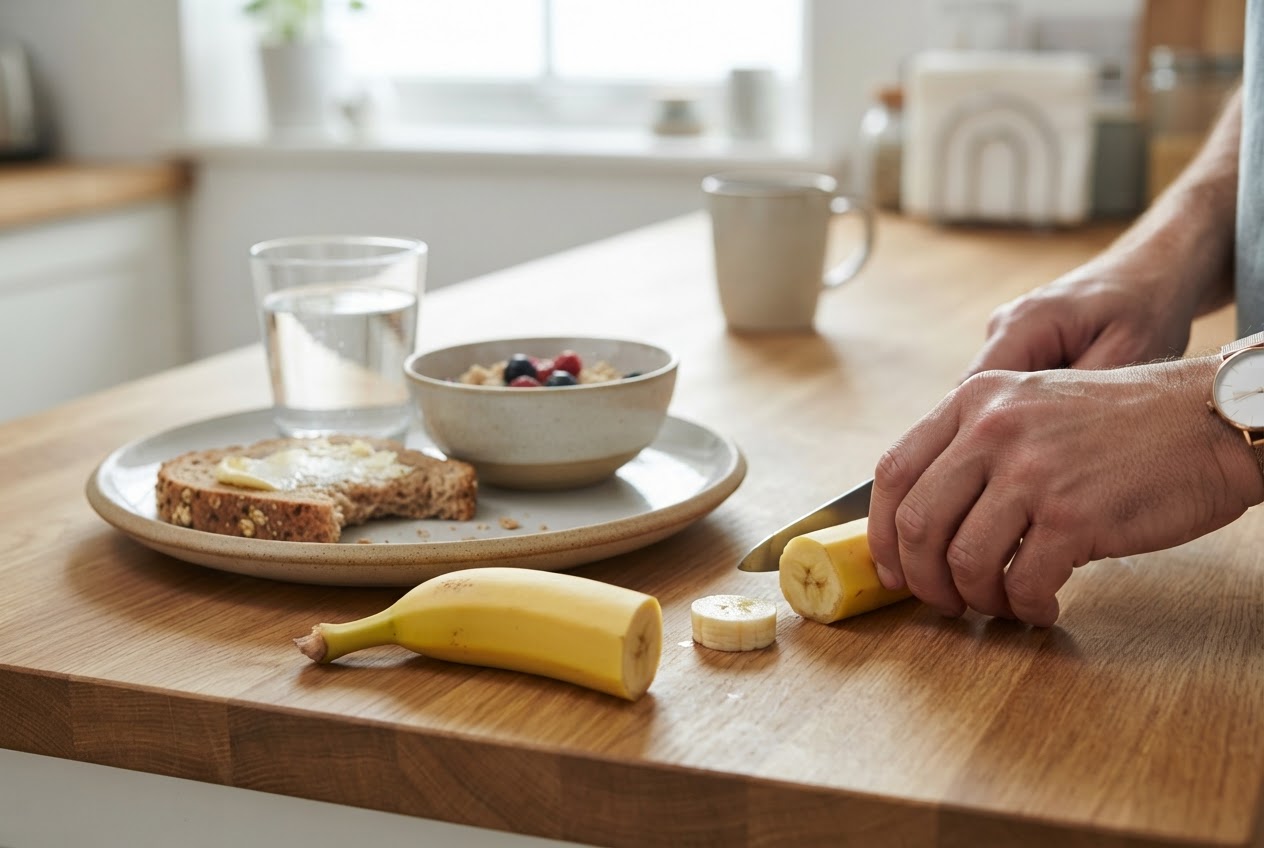
Combining fruit with yogurt, nuts or cheese can fit into meal planning. However, these foods do not cancel out the banana’s carbohydrates and do not prevent a rise in blood sugar. A smoothie or dried fruit should also be included in the total carbohydrate amount.