If you have diabetes and eat a banana, you should count it as a source of carbohydrates in your meal. Ripeness and preparation both play a role. The rest of the meal also affects blood sugar. The studies so far do not support a fixed rule that unripe or ripe bananas are better for everyone.
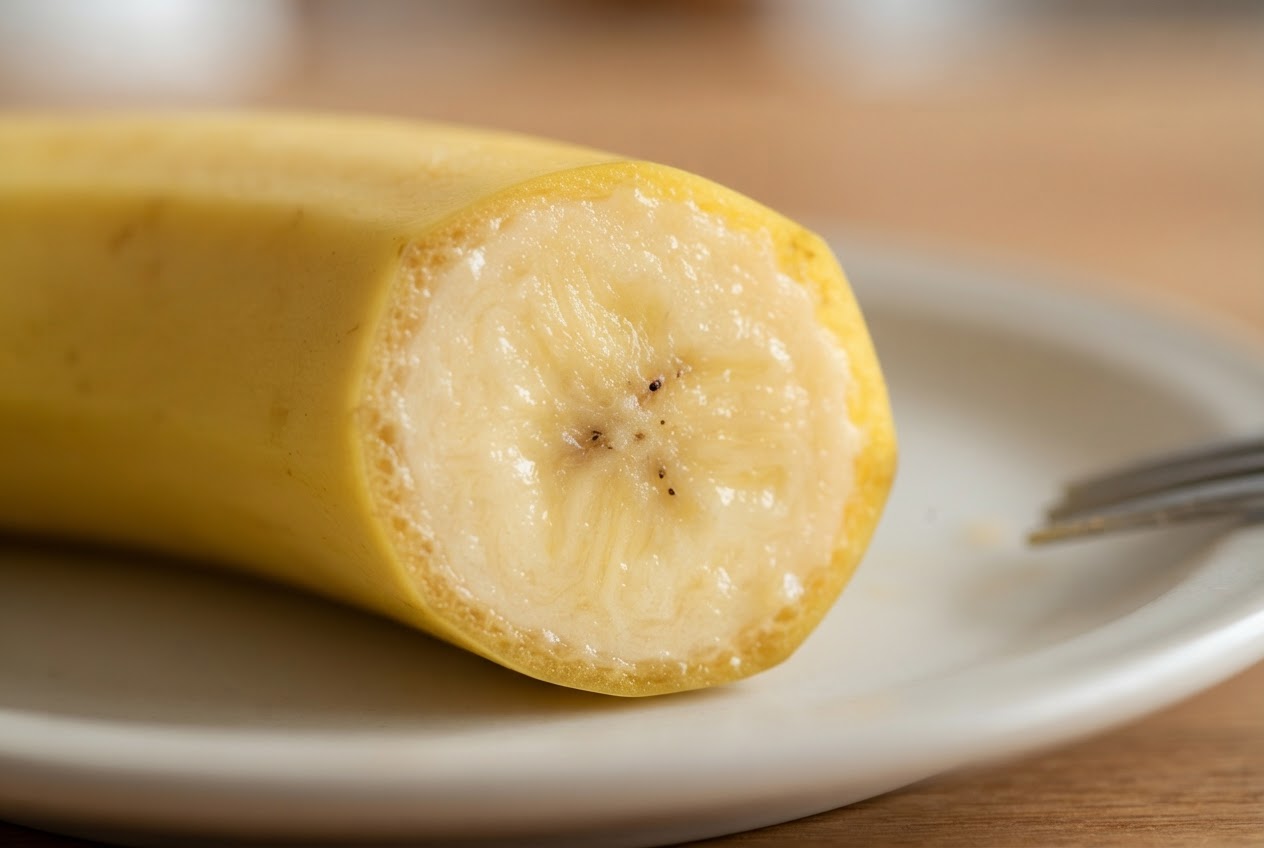
As a banana ripens, part of its starch is converted into sugar. This changes its composition, but that alone does not predict how a particular person’s blood sugar will behave after eating. A whole banana does not automatically have the same effect as a mashed or blended one.
What ripeness changes
Unripe bananas contain more starch, while ripe ones contain more soluble sugars. This can affect digestion and the rise in blood sugar. However, there are only a few direct studies in people with type 2 diabetes, and their results differ.
In a 1992 study, ten people ate the same weight of underripe or overripe banana on different days. In this experiment, the underripe banana raised blood sugar less. The calculated glycemic index, a reference value from standardized tests of the blood sugar rise after eating a food, was 43 for the underripe banana and 74 for the overripe one.
Another 1993 study examined seven men with type 2 diabetes and compared four stages of ripeness in portions with the same amount of carbohydrate. The blood sugar rises differed only slightly. Because of the differing study conditions and small numbers of participants, no reliable ranking of the ripeness stages can be derived; a greener banana therefore does not generally raise blood sugar less.
What role preparation plays
For people with diabetes, there are no reliable direct comparisons between whole, mashed, blended and heated bananas. It is therefore not possible to say with certainty that pureed or cooked banana affects blood sugar more or less than a whole fruit.
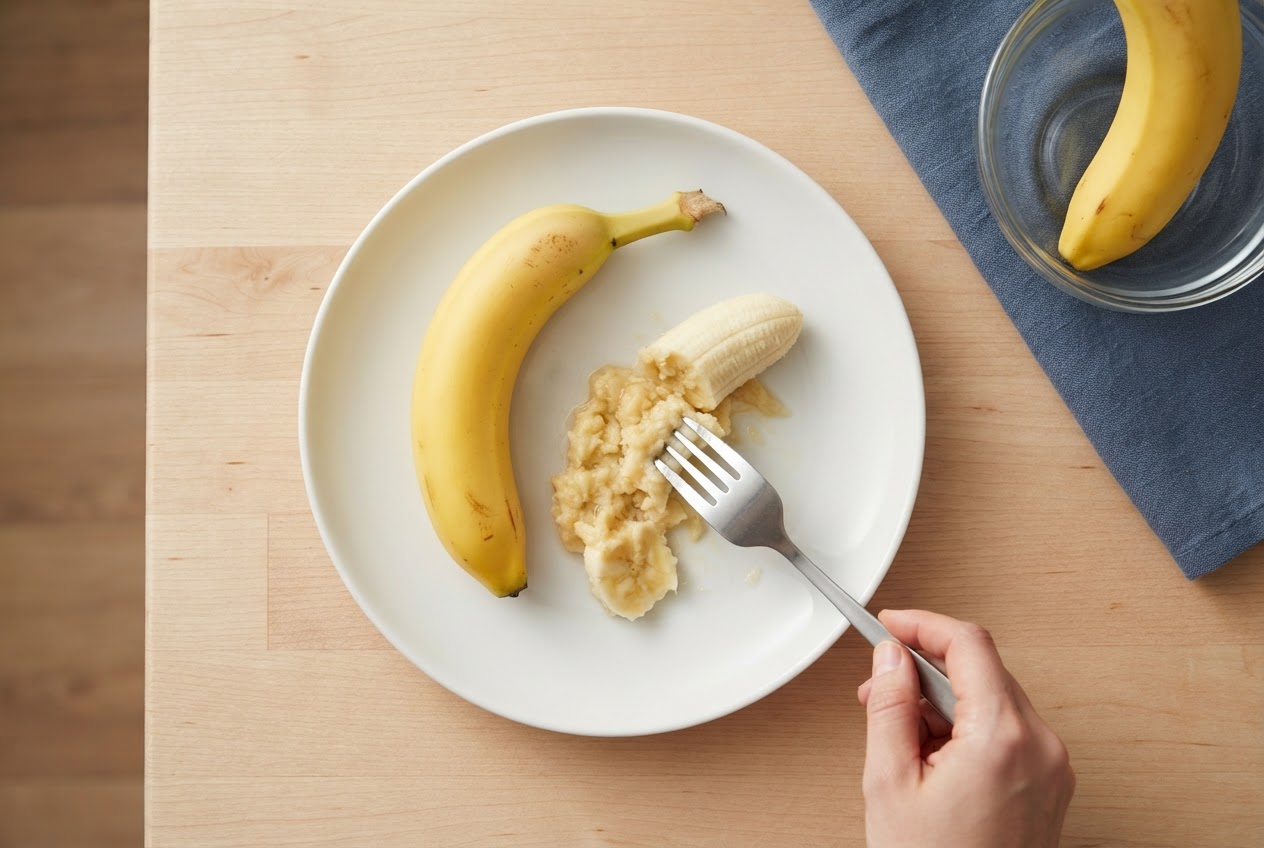
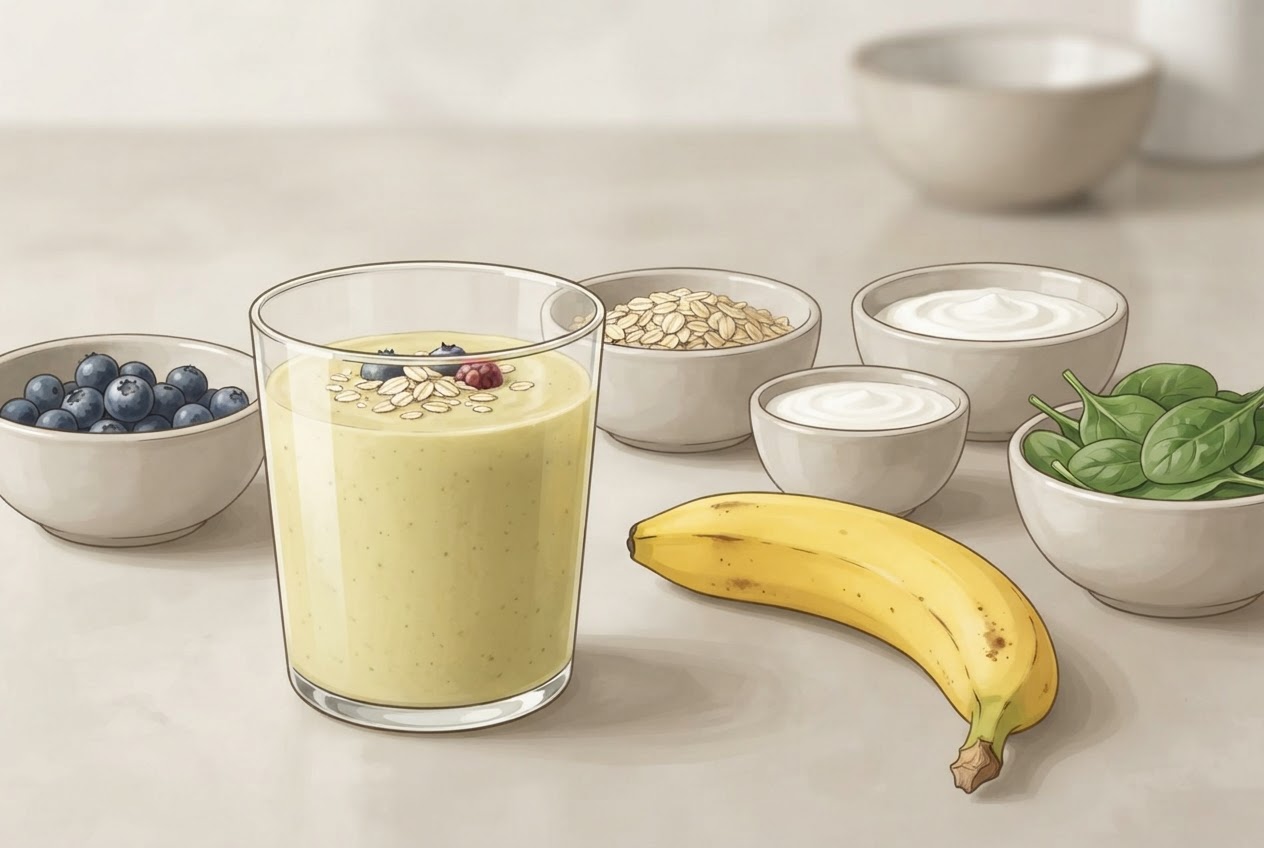
With smoothies, the ingredients and the total amount matter. A drink with several ingredients does not provide the same amount of carbohydrate as a single banana. General recommendations, for example from US health authorities, favor whole fruit over fruit juice: juice is easier to drink in larger quantities and contains less fiber. This does not guarantee a particular blood sugar response after a whole banana or a smoothie.
How the meal shapes the response
What also matters for blood sugar is how many carbohydrates the whole meal contains. Protein, fat and fiber can influence when and how blood sugar rises. However, combining a food with protein or fat does not reliably prevent a rise and says nothing certain about the overall course.
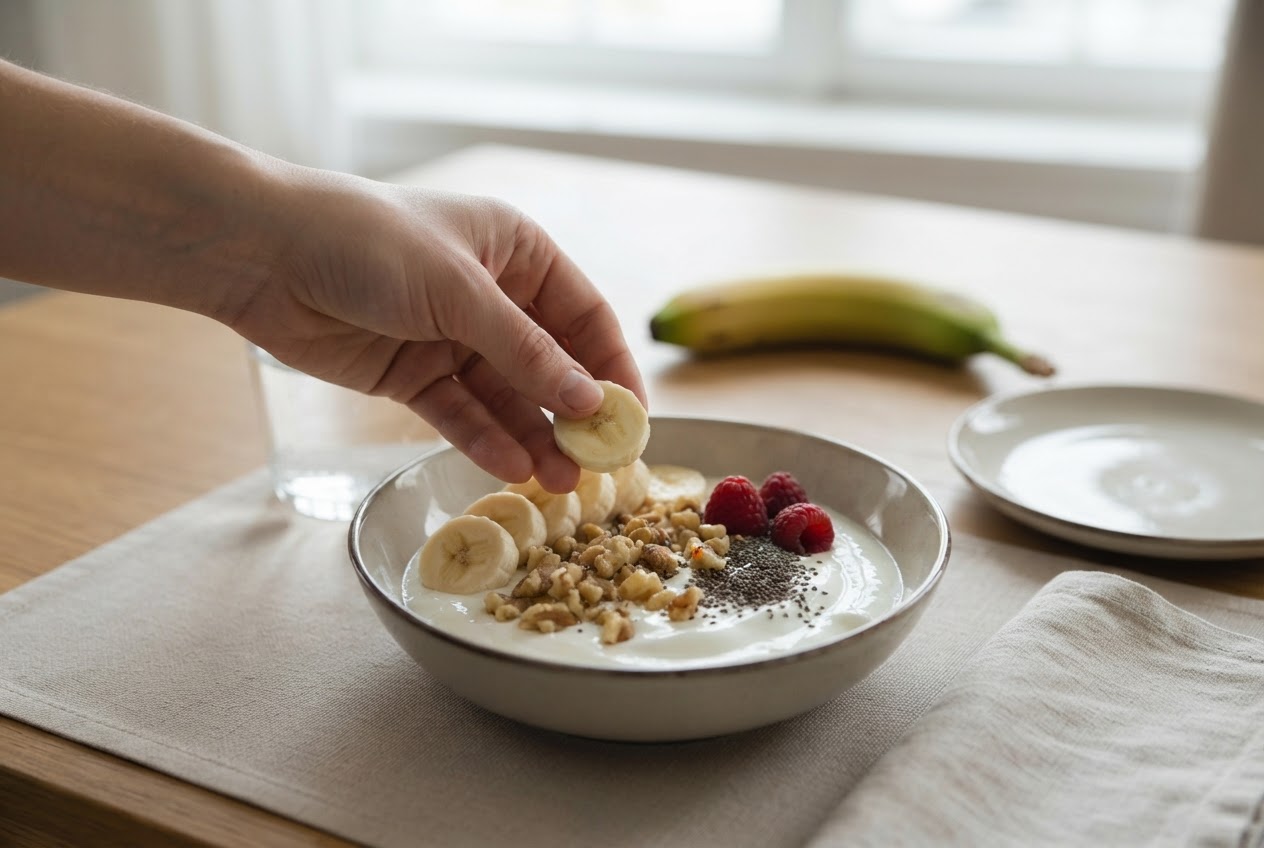
Blood sugar before eating and the effect of insulin and other medications influence the response. Personal reaction also plays a part. A banana’s glycemic index comes from a standardized test. It does not show how these conditions play out in everyday life. If you want to know how a banana affects your own blood sugar, you should factor it into your personal treatment and nutrition plan. If regular measurements are part of your treatment, you can discuss your own response to similarly composed meals with your healthcare professional.