With diabetes, a meal affects blood sugar mainly through its carbohydrates. Carbohydrates are found in sugar and sweets as well as in bread and pasta, rice and potatoes, and also legumes and fruit. The body breaks digestible carbohydrates down into glucose, which enters the bloodstream. How much blood sugar rises depends on factors such as the amount and type of carbohydrates, how they are processed, and the rest of the meal.

More vegetables and high-fiber foods, along with fewer heavily processed products, can have a positive effect on blood sugar. Carbohydrates do not have to be cut out across the board to achieve this. Which changes are suitable also depends on whether someone has type 1 or type 2 diabetes and which medication or insulin the person takes.
Which foods affect blood sugar?
Sweet drinks and sweets contain sugar, but starchy foods such as bread and potatoes also affect blood sugar. That is why the whole meal is what matters: a portion of pasta with vegetables and legumes can have a different effect than the same portion of pasta without side dishes. Individual responses also differ. A single food therefore does not reliably show how your own blood sugar will react to it.
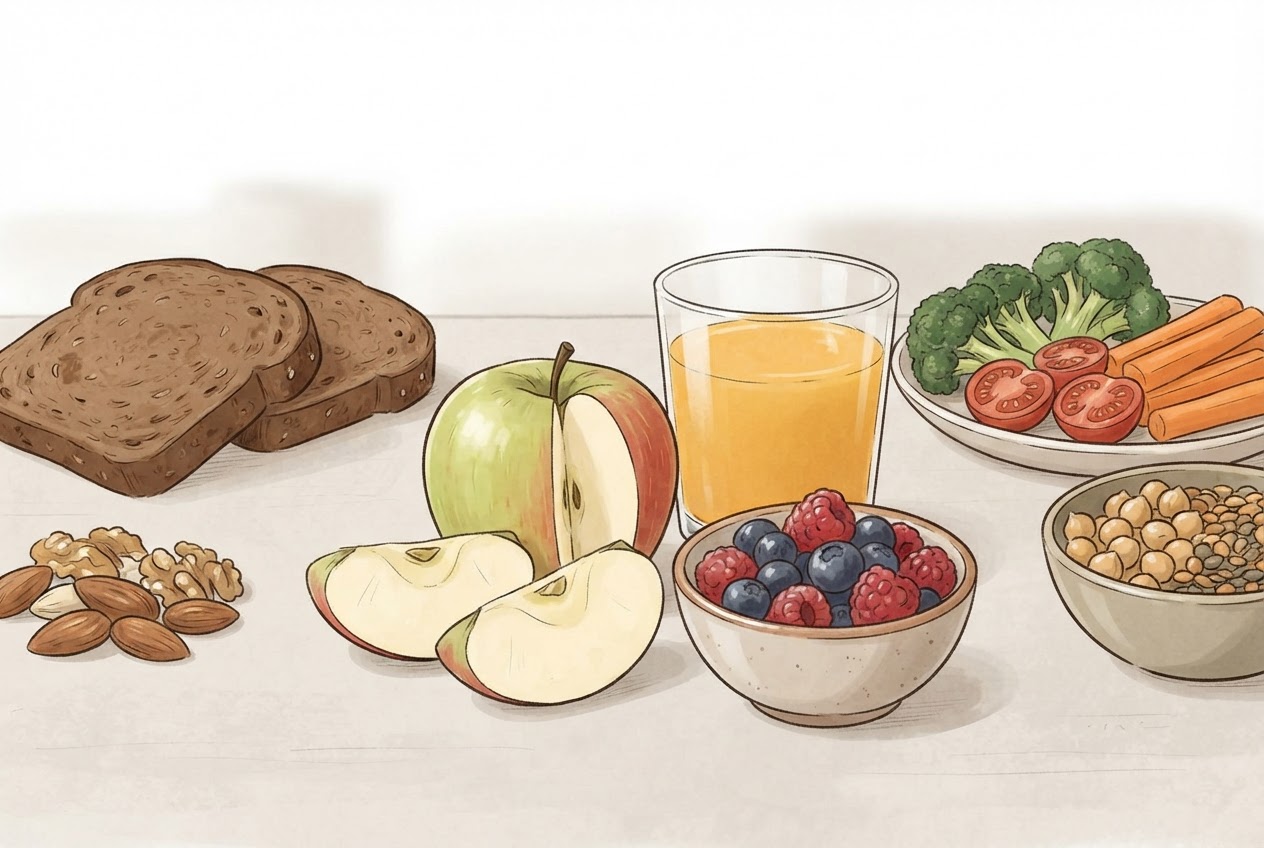
Fiber is found especially in vegetables, legumes, whole grain products, nuts, and whole fruit. It slows the absorption of sugar from a meal and can help blood sugar rise more slowly. Whole fruit is not the same as juice, though: juice contains less fiber and can be drunk quickly, so larger amounts of sugar can add up in a short time.
Putting together balanced meals
A simple guide is the plate method from the US National Institute of Diabetes and Digestive and Kidney Diseases. About half of the plate is reserved for non-starchy vegetables. One quarter each goes to a high-fiber carbohydrate source and to protein-rich foods. The plate method serves as a practical portion guide for general orientation and is not binding for any individual.

A meal could, for example, consist of vegetables, lentils, and a portion of whole grain bread. Potatoes or rice can also be included, for example together with vegetables and a source of protein. If you currently often eat white bread or refined pasta or drink heavily sweetened drinks, you can start by swapping individual products: choose whole grain more often and reach for water or unsweetened tea. The German Diabetes Association recommends drinking as few sugar-sweetened drinks as possible. It also advises regularly eating vegetables, legumes, and whole grain products as well as minimally processed fruit.
For people with type 2 diabetes, diabinfo gives at least 30 grams of fiber per day as a guideline. This guideline does not necessarily apply to every person and does not guarantee a particular blood sugar level. In case of illness, symptoms, or special dietary needs, a suitable amount should be discussed with a doctor or a qualified nutrition professional.
Distinguishing between type 1 and type 2 diabetes
With type 1 diabetes, the amount of carbohydrates must match the insulin treatment. Anyone who injects insulin with meals therefore needs a reliable estimate of the carbohydrates and an individual agreement on dosing. With type 2 diabetes, treatment and life circumstances also differ. There is no single way of eating that is prescribed for everyone affected.
If you take insulin or certain blood-sugar-lowering medications such as sulfonylureas, you should not skip meals or significantly reduce them on your own. This can lead to hypoglycemia. A significant change in the amount of carbohydrates or an attempt at fasting should also be discussed with your treatment team beforehand. Medication and insulin doses should not be adjusted on your own.
Reduce carbohydrates or not?
A low-carbohydrate diet can be a suitable option for some people with type 2 diabetes. However, the available studies do not support a general recommendation to restrict carbohydrates sharply. A 2022 Cochrane review showed that, compared with balanced diets, there was little to no difference in the long-term blood sugar marker HbA1c after one to two years. HbA1c reflects average blood sugar over the past weeks and months.
Besides blood sugar levels, the decision also depends on whether the diet is practical to follow, what preferences someone has, and which other conditions and medications are involved. A change that fits into everyday life in the long term makes more sense than a strict diet that is hard to stick to. If you want to reduce carbohydrates significantly while on insulin or certain medications, you should discuss it with your doctor first.
Start with small changes
A good starting point is to look more closely at one meal: Which components provide carbohydrates, how big is the portion, and can vegetables or a high-fiber alternative be added? If you regularly drink sugary drinks, you can replace these with water or unsweetened tea first. With whole grain products, legumes, and whole fruit, the aim is to include them more often, not to design every meal according to a rigid plan.

If your treatment includes blood sugar monitoring, the agreed measurements help you see how your own blood sugar reacts to meals. Individual readings should be considered in the context of the meal, medication, and daily routine. If readings are repeatedly abnormal or you are unsure about your diet, it makes sense to consult your diabetes practice.