If you have diabetes and would like to eat pineapple, you don’t have to avoid it altogether. What matters is the form, the amount you eat and the carbohydrates in the meal as a whole. Carbohydrates from pineapple affect blood sugar. However, a particular portion or form of preparation cannot predict exactly how your blood sugar will respond.
Fresh pineapple, juice and canned pineapple differ mainly in how easy it is to eat larger amounts and whether sugar has been added. The solid fruit and a measured portion are easier to gauge in everyday life than a large glass of juice. For canned products, the ingredients list and nutrition table help you choose.
Weigh fresh pineapple
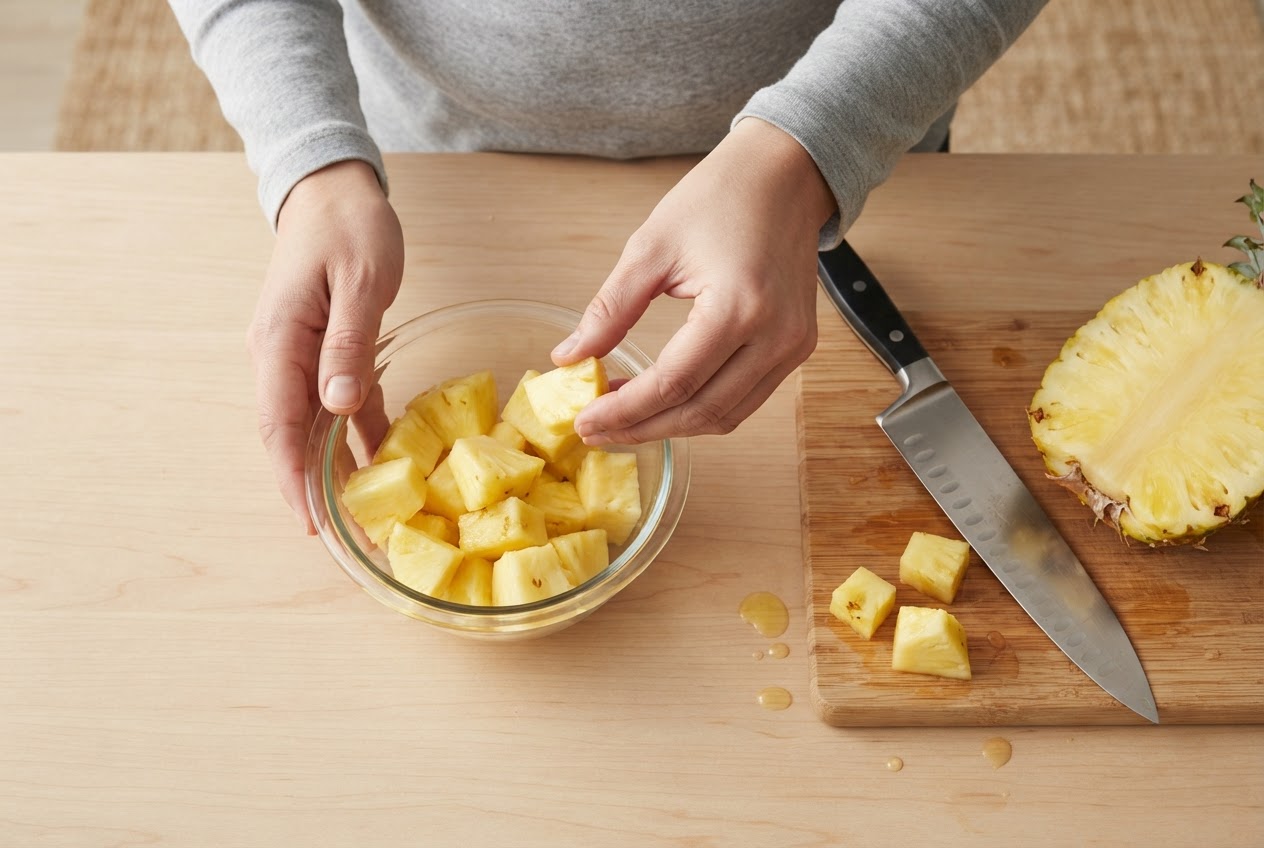
Fresh pineapple contains carbohydrates. If you eat the fruit in pieces, its firm structure and fibre are retained. The carbohydrate content depends on the amount eaten; variety and ripeness also play a role. For fruit in general, the American Diabetes Association (ADA) gives one small whole fruit or about half a cup of canned fruit as a guide for roughly 15 g of carbohydrates. This is not a portion size set specifically for pineapple.
Keep juice to a small amount
Pineapple juice can be drunk faster and in larger amounts than pineapple pieces can be eaten. Juice also contains less fibre than the whole fruit. If you drink juice, pay attention to the glass size and the nutrition information.

For fruit juice in general, the ADA gives about one-third to one-half of a cup as an amount with roughly 15 g of carbohydrates. This guideline does not apply exclusively to pineapple juice. For the specific drink, the nutrition information on the packaging is what counts.
The type of product matters too: 100% juice is not the same as nectar or a fruit drink with added sugar. In everyday life, the whole fruit is often easier to portion. However, this does not mean that juice is unsuitable for all people with diabetes. A review of various 100% fruit juices found, on average, no statistically significant effect on certain longer-term blood sugar and metabolic markers. It did not specifically examine pineapple juice, nor the immediate response to a single glass.
Choose canned pineapple by its ingredients
With canned pineapple, it’s worth checking the ingredients list and nutrition table. The ADA recommends looking for fruit without added sugar or in its own juice. Pineapple in syrup is packed in a different liquid than pineapple in its own juice, so the two labels do not mean the same thing.

Carbohydrate figures vary from product to product. Figures for drained pineapple cannot simply be applied to pineapple in syrup, other brands or the liquid you drink along with it. If you drain the fruit, you should also take into account the amount of drained pieces.
| Form | What matters when assessing it |
|---|---|
| Fresh pieces | Carbohydrates depend on the amount eaten; the fruit’s structure and fibre are retained. |
| Juice | Glass size, carbohydrates according to the label, and the distinction between 100% juice, nectar and fruit drink. |
| Canned | Ingredients list, added sugar, liquid and drained amount. |
Nutrition information can vary depending on the product and how it is prepared. It does not allow a universal ranking in which one form always contains less sugar or has a more favourable effect on blood sugar.
Consider the whole meal
Pineapple is a carbohydrate-containing part of a meal. Besides the fruit, other carbohydrate-containing foods such as bread, rice or potatoes therefore count as well. As a guide, the ADA describes a plate with one half non-starchy vegetables and one quarter each of protein-rich and carbohydrate-containing foods. This helps you look at the meal as a whole, but it does not predict an individual blood sugar curve.
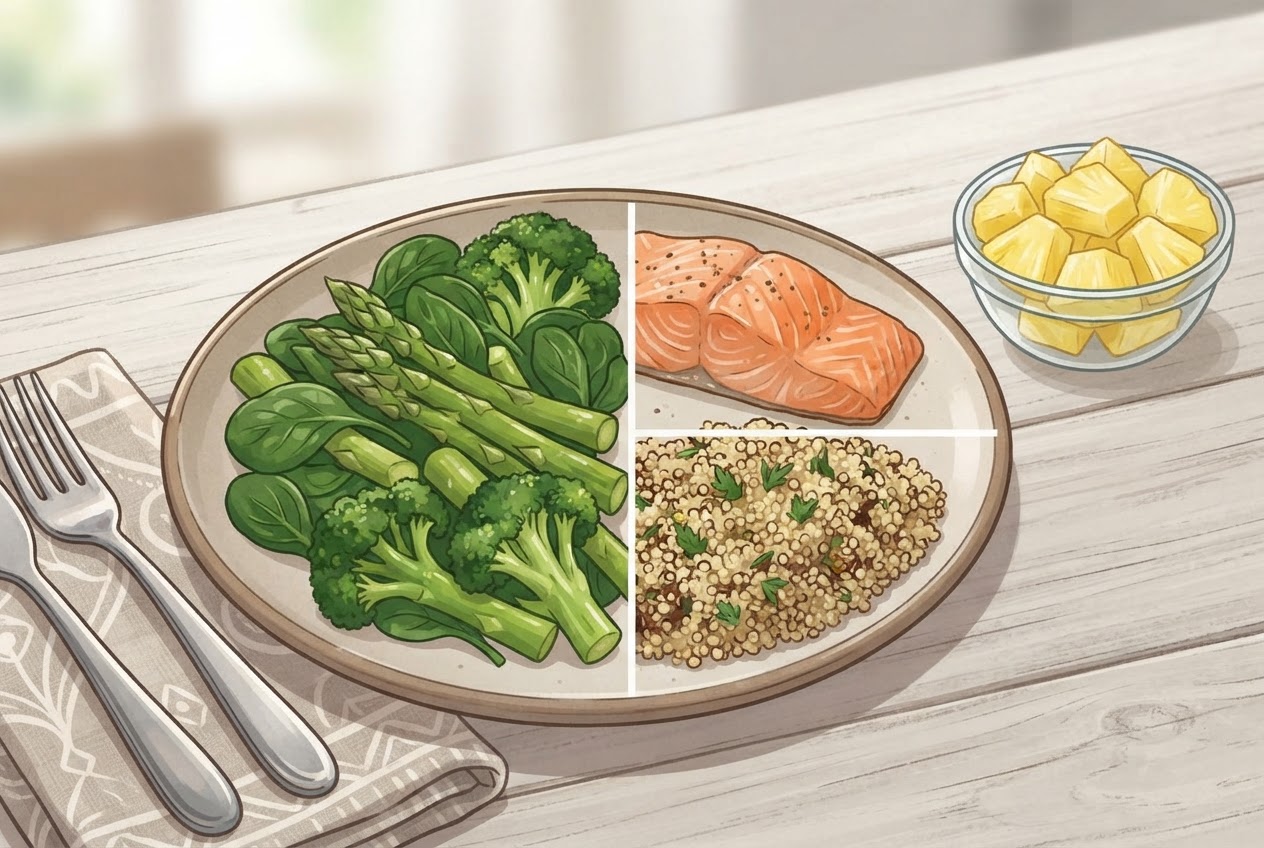
Spreading fruit throughout the day tends to keep the amount of carbohydrates per meal manageable. One example would be a measured portion of pineapple as part of a meal instead of a large amount all at once. Combining it with protein or fat does not reliably prevent a rise in blood sugar.
Understanding GI values correctly
The glycaemic index (GI) describes how much a carbohydrate-containing food raises blood sugar compared with a defined reference food. For pineapple, however, there are values from different products, countries and studies. One small study, for example, examined Malaysian fruits in ten healthy people; other database entries for canned products are based partly on unpublished observations.
These figures do not allow a reliable direct comparison of fresh pineapple, juice and canned pineapple. The GI also does not say how large the portion is or how many carbohydrates it contains. It does not predict how an individual person will respond to pineapple.